Industrial manufacturing
Industrial equipment

At first glance, lathes are odd tools. The workpiece is mounted horizontally, for starters, so the entire machine is oriented side-to-side. In addition, the tool itself doesn’t spin; the workpiece rotates instead, and the tool slides along the length of the bed. In other words, lathes don’t
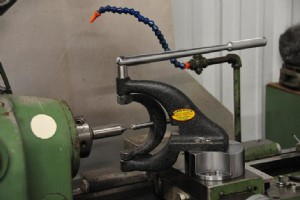
Metal lathes operate on simple basic principles – a rapidly rotating workpiece and a cutting tool to shave, trim, and cut the piece into shape. But while the basic design of a lathe provides a huge amount of flexibility, it does pose some challenges when it comes to holding and cutting ce
In the high-tech world of CNC machining, old-fashioned blueprints may seem a bit out of touch. Why bother learning how to read them when everything can be drawn up on the latest CAD and CAM programs? When you have the latest 3D model spinning around on your computer, ready to be exported to a v
Proper maintenance is crucial to keeping your lathes – and your shop – running at peak efficiency. Metal lathes are typically used in industrial environments full of dirt, grit, metal shavings, and other particles that can cause serious damage to your equipment if not properly maint
Adding a CNC lathe to your shop’s arsenal vastly increases the services you can offer. Turning operations from threading to boring, advanced finishes, and combined lathe and millwork provide new opportunities to cut different parts and attract new clients. Unfortunately, as with any new tool
A lathe is one of the more versatile types of cutting machines available for small and large-scale machinists today. One of the keys to that versatility is the wide range of cutting tools a lathe can be equipped with. In this article, we’ll take a quick look at some of the different categories
Mills and lathes are some of the standard machinery tools any metalworker or hobbyist will have. They differ a little bit in how they work. In the simplest terms, a lathe holds a workpiece on a rapidly-spinning chuck; a cutting head or tools then moving along the length of the workpiece, formin
Lathes cut rounded edges, threads for bolts and screws, interior threads for nuts, and cylinders of all kinds. But boxy, square-edged parts? That’s work for a mill! So goes the conventional wisdom, at least. The truth is, there’s always been a bit more overlap than it seems. A mill can, in a pi
A long long time ago, in a galaxy – well ok, in this galaxy – machine tools made tremendous advances with the advent of Computer Numerical Control (CNC technology). CNC makes the automation of machine functions possible, as well as opening a new range of operations. Originally, t
Getting Close to a Proximity Switch What’s in a name? In the case of a proximity switch, everything! A proximity switch is exactly what it sounds like. It’s something that switches on (or off) when it comes close to something. Proximity switch. Pretty straightforward! Proximity switches a
What’s a lathe? A lathe is a machine tool used to work with metal or wood. Unlike a drill or a mill, where the workpiece is stationary and the cutting bit rotates, on a metal lathe the workpiece is held and rotated. The cutting bit doesn’t spin but is moved into the rotating workpiece. This pro
A lathe is a machine tool that rotates a workpiece rapidly; the cutting tool is then slowly moved into the workpiece, removing material as the piece spins against it. Lathes are a common part of professional and amateur workshops, and are highly versatile tools. The cutting bits for a lathe,
What is a metal lathe chuck? A chuck is a simple device that allows you to hold a workpiece in a lathe from one end. By using a chuck on the headstock, you can turn the workpiece and work on the free-spinning end. Then, if needed, the workpiece can be reversed and you can finish any necessar
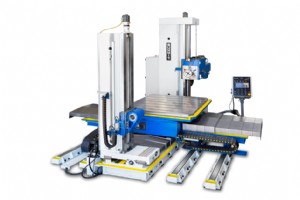
Modern milling applications, along with the different types and styles of milling machines, can be confusing. When your machine shop or manufacturing facility is faced with production deadlines, time is of the essence, and operational budgets matter. Fortunately, these concerns could soon b
Lathes are a mainstay of professional and amateur machine shops around the world. They range from industrial, fully-automated CNC lathes to amateur woodworking or metalworking lathes. Maintenance on most lathes doesn’t require a lot of extra work, but it is important to know some of the basics.
When you’re discussing lathes, you will hear a lot of jargon and different terminology. Some of those make sense – vertical lathes, horizontal lathes, etc. Others are a bit more obscure. Take the term, “engine lathe.” What is an engine lathe? How is it different from a “normal” lathe?
Machine tools feature a number of intricate moving parts, and lathes are no exception. There’s the motor in the lathe headstock driving the spindle, which may rotate thousands of times per minute. Add to that the slide for the tailstock on the lathe bed, and you’ve got lots of moving parts a
MarquipWardUnited Purchases Custom, Heavy Duty Summit Lathe MarquipWardUnited designs and manufactures corrugating, finishing and sheeting machinery for the corrugated box and paper converting industries. MarquipWardUnited focuses on continuous improvement and are always striving to increase pe

THE PERFECT MATCH Find The Tools You Need With Our Shop & School Package Searching for a machine package that fits your shop or school? Check out Summit’s new lathe and mill package! The Summit EVS-349B Mill is perfect for your precision tooling needs. With fewer moving p
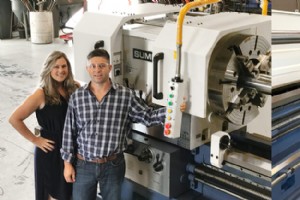
Growing a business into the leading marine and industrial maintenance company in the Southeast is no small feat. Owners David and Pam Faye of Lightning Bay Companies have worked hard to provide customers with consistent parts and services since opening their doors in 2004. They handle it
Industrial equipment