



OSM Standard Sets New Benchmark for Miniaturized Computer‑on‑Modules
A new industry‑wide standard has been unveiled to unify the footprint and interface set of low‑power and ultra‑low‑power application processors across MCU32, ARM and x86 architectures, regardless of socket, manufacturer or architecture.
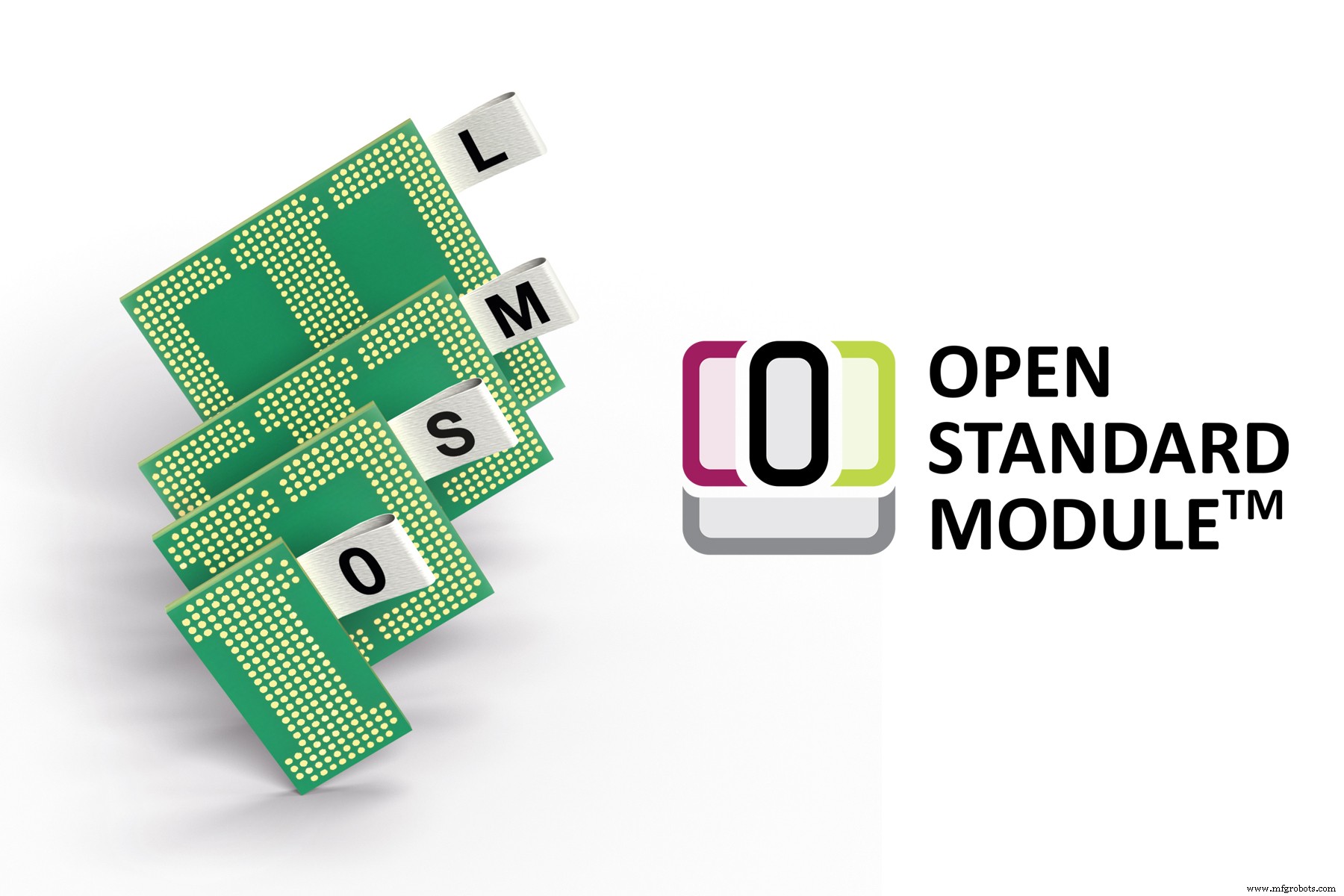
Version 1.0 of the Open Standard Module (OSM) specification is one of the first standards that enables directly solderable and scalable embedded computer modules. It marks a significant step forward in the miniaturization of modular COM/carrier designs, replacing credit‑card‑sized units with postage‑stamp‑sized ones capped at a 45 mm × 45 mm footprint.
The specification is authored by SGET (Standardization Group for Embedded Technologies), a Munich‑based not‑for‑profit association. It targets IoT‑connected embedded and edge systems that run open‑source operating systems and must operate reliably in harsh industrial environments.
“OSM modules give ODMs and OEMs an ultra‑miniature form factor with attractive pricing and high scalability. Since the modules are application‑ready and come with all necessary software drivers and BSPs, and since the specification is open source – both in terms of the hardware and software – we expect them to be of high interest for the globally active embedded and IoT system development community,” said Martin Unverdorben, chairman of the SGET STD.05 standard‑development team, which began work in October 2019.
Like other computer‑on‑module standards, OSM simplifies and accelerates processor integration. It also makes applications processor‑agnostic, thereby enhancing scalability and future‑proofing. According to SGET, the standard protects NRE investments, extends long‑term availability, and boosts ROI and sustainability of embedded systems. In addition, the BGA design and automated surface‑mount technology (SMT) provide extra ruggedness and lower production costs for serial production.
 All OSM modules are published and licensed under a Creative Commons Plus (CC+) dual license. This model offers an open‑licensing option such as the Creative Commons Attribution‑ShareAlike 4.0 (CC‑BY‑SA 4.0) for a defined set of materials, components and software, and a commercial license for everything else. Development data—including block diagrams, libraries and BOMs—remains publicly available, while the intellectual property of carrier board designs can still be licensed commercially without violating the open‑source ethos.
The new OSM specification expands SGET’s portfolio with solderable BGA mini‑modules that are substantially smaller than earlier offerings. The largest OSM module, measuring 45 mm × 45 mm, is 28 % smaller than the µQseven (40 mm × 70 mm) and 51 % smaller than SMARC (82 mm × 50 mm).
Other sizes in the OSM family include:
- Size‑0: 30 mm × 15 mm, 188 BGA pins
- Size‑S: 30 mm × 30 mm, 332 pins
- Size‑M: 30 mm × 45 mm, 476 pins
- Size‑L: 45 mm × 45 mm, 662 pins
What feature sets are available in the various size configurations?
Interfaces vary by module size. In its maximum configuration, an OSM module provides every function required for an open‑programmable embedded, IoT or edge system, including GUI support.
Video interfaces: Size‑S and larger support up to one RGB port and a 4‑channel DSI. Size‑M adds two eDP/eDP++ ports, while Size‑L includes one LVDS port. A maximum configuration can deliver up to five video outputs in parallel. All modules from Size‑S upward also offer a 4‑channel camera serial interface (CSI). Size‑L supports up to ten PCIe lanes; Size‑M offers two PCIe x1 lanes; Size‑S provides one PCIe x1 lane. Size‑0 modules, due to their minimal footprint, do not expose I/Os but can support up to five Ethernet ports per the OSM specification.
Communication area: 18 antenna pins for wireless or field‑bus integration; up to four USB 2.0 ports or two USB 3.0 ports (Size‑L only); up to two CAN, four UART, UFS flash storage, and up to 19 manufacturer‑specific pins.
Additional features: up to 39 GPIOs, SPI, I²C, I²S, SDIO, two analog inputs, and 58 pins reserved for future expansion, ensuring backward compatibility.
Embedded
- ADLINK Launches COM-HPC Modules Powered by Ampere Altra SoCs for Embedded Edge Computing
- ATP Electronics Secures DDR3 Supply with In‑House 8‑Gb Modules Amid DDR4 Transition
- VadaTech Unveils the VTX350: A Robust 6U VPX Chassis with High‑Density Fiber Optic I/O
- Kontron Unveils COM HPC: A New High‑Performance Embedded Computing Standard
- Fischer Elektronik’s 19‑inch Variable‑Dimension Cassette: Tailored for Every PCB
- congatec Introduces SMARC 2.0 Module Powered by NXP i.MX 8M Mini Processor
- Hailo Unveils High‑Performance M.2 & Mini PCIe AI Acceleration Modules for Edge Devices
- New Feature: Standard Failure Codes – Streamline Maintenance & Cut Costs
- CatalystEX 4.5: New Features, Enhanced Compatibility, and GrabCad Print Integration
- 5G & IoT: Driving the Next Wave of Digital Transformation