



New Feature: Standard Failure Codes – Streamline Maintenance & Cut Costs
New Feature: Standard Failure Codes – Streamline Maintenance & Cut Costs
At Fiix, we’re constantly evolving our CMMS to help you keep operations running smoothly. This week we’re proud to introduce a game‑changing capability for our Enterprise customers: Standard Failure Codes.
What are failure codes? Think of them as concise, pre‑defined reasons that explain why an asset, machine, or component failed. By pre‑populating these codes in your system, technicians can select the exact cause of a breakdown right from the work order, reducing guesswork and speeding up resolution.
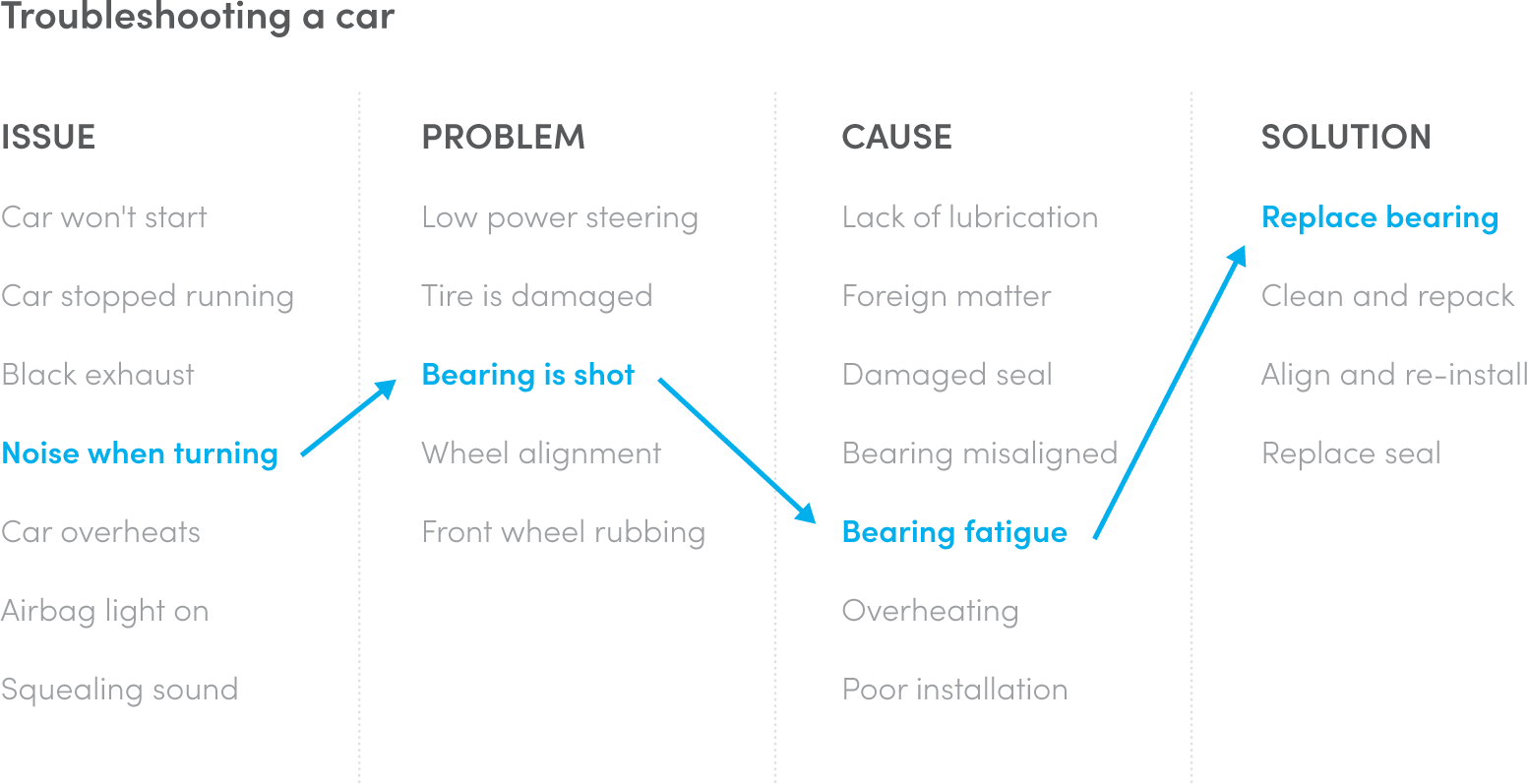
The concept builds on the proven problem → cause → action framework—a decision tree that guides users from identifying a problem, to diagnosing its root cause, to selecting the corrective action. Below is a visual example of how this hierarchy looks in a real‑world maintenance scenario:
Why Adopt Standard Failure Codes?
Organizations that don’t use standardized codes often have to sift through stacks of paper work orders or endless spreadsheets, relying on best guesses that waste valuable time.
With a unified failure code system, everyone—engineers, technicians, managers—speaks the same language. It streamlines reporting, empowers technicians to find the fastest solution, and equips managers with clear data to drive preventive actions.
Key Benefits
- Accelerate troubleshooting and reduce mean time to repair
- Standardize work practices across teams
- Identify and eliminate recurring issues
- Assess the need for additional preventive maintenance tasks
- Improve overall equipment reliability
- Lower maintenance costs over time
Real‑World Application
Imagine you manage a fleet of backhoes that have been breaking down frequently. Previously, you’d manually review work‑order history to spot patterns. With Standard Failure Codes, technicians log the exact failure during repair. The maintenance manager can then run a report to see, for example, that 70 % of failures are due to pneumatic hose rupture.
Armed with that insight, you can investigate whether operator handling, environmental conditions, hose quality, or installation practices are to blame—enabling you to address the root cause rather than the symptoms.
Getting Started
Our Help Centre hosts a full suite of knowledge‑base articles that walk you through enabling the feature, building your hierarchy, using codes in work orders, and generating root‑cause analysis reports. Access them by clicking the Help button in the bottom‑left corner of the CMMS.
Equipment Maintenance and Repair
- OSM Standard Sets New Benchmark for Miniaturized Computer‑on‑Modules
- MIT Study Introduces Comprehensive Life‑Cycle Assessment for Paving and Building Materials
- Introducing the New Interactive Calendar: Streamline Technician Scheduling
- Introducing Rotating Assets: Streamlined Asset Lifecycle Management
- Introducing Custom Maintenance Reports: Build Tailored Insights in Fiix
- Introducing Hyperlinks Everywhere: Seamless Navigation in Fiix CMMS
- Discover Our New Searchable MRO Parts Database – Effortless CMMS Data Import
- New Feature: Multi‑Asset Work Orders – Streamline Maintenance Inspections
- Revolutionizing CMMS Adoption: The Power of Inline Training
- MIPI Alliance Unveils I3C v1.1: A Modern Data Communications Standard