



Melexis Launches ASIL‑Ready Hall‑Effect Sensor for Safety‑Critical Automotive Systems
A Hall‑effect sensor generates a voltage proportional to the magnetic field it encounters. These devices serve as durable proximity, position, speed, and current sensors, prized for their long life since they contain no moving parts that can wear out.
Melexis has introduced the MLX91377, an ASIL‑ready linear Hall‑effect IC engineered for safety‑critical automotive environments such as electric power‑assist steering (EPAS). Developed as a Safety Element Out of Context (SEooC), the MLX91377 meets ISO 26262 requirements and has earned AEC Q‑100 Grade 0 qualification.
Hall Effect SensorsThe Hall effect produces a measurable transverse voltage in a conductor or semiconductor when a current passes through it in the presence of a magnetic field. The resulting voltage is the balance of Lorentz and electric forces and can be harnessed to detect magnetic fields.
Designing a Hall‑effect sensor requires a magnetic system that responds to the target physical parameter, coupled to an electronic interface that converts the sensed magnetic field into a standard analog or digital signal suitable for the host system.
Because they operate without contact, Hall sensors are widely employed in proximity, positioning, and speed applications.
In their most basic form, Hall sensors act as analog transducers, producing a voltage that varies with magnetic field strength, which can be interpreted as distance to the Hall plate. They are also frequently configured as digital on/off switches or as speed indicators in speedometers, ignition systems, or anti‑locking braking systems.
Automotive applications demand performance across a broad temperature range—from −40 °C to 160 °C—while enduring high vibration and potential contamination by dust, liquids, and other contaminants. Hall sensors must maintain reliability for many years under these harsh conditions.
Melexis SolutionWith an operating temperature range up to 160 °C, high linearity, and excellent thermal stability—including low offset and minimal sensitivity drift—the MLX91377 delivers accurate, dependable torque sensing for EPAS systems, supporting both conventional and autonomous driving modes.
The MLX91377 addresses a variety of automotive and industrial contactless position‑sensing use cases, including steering torque sensors, acceleration, brake, or clutch pedal sensors, absolute linear position sensors, float‑level sensors, non‑contacting potentiometers, small‑angle position sensors, and small‑stroke position sensors.
“The MLX91377 brings enhanced performance across the board, enabling highly demanding safety‑critical applications such as automotive torque sensing. While no development board is currently available, the device is supported by Melexis' standard programming tool, the PTC‑04,” explained Nick Czarnecki, Global Marketing Manager, Position and Speed Sensors, at Melexis.

Figure 1: MLX91377 block diagram
Programmable measurement ranges and multi‑point calibration provide designers with flexibility, while multiple output protocols allow a single IC to serve diverse applications, reducing requalification efforts and costs. The Short PWM Code (SPC) protocol enables synchronized measurements—up to four MLX91377 sensors at 2 kHz—by transmitting data after a trigger pulse is detected, guaranteeing deterministic latency and high accuracy (Figure 1).
“Depending on the output type, the MLX91377 can be triggered by an external protocol or internally. With the SPC protocol, the sensor waits for a trigger pulse from the host microcontroller, then quickly acquires, digitizes, and compensates magnetic data, linearizes it using a programmable lookup table, and sends it in a digital SENT format. In analog mode, the sensor autonomously acquires and compensates the data before outputting a ratiometric voltage for the host to read. Both interfaces are widely used in automotive, with SPC being newer and generally preferred for multi‑IC configurations. The triggerable nature of SPC ensures all sensors capture the magnetic field simultaneously, minimizing measurement delay across ICs. Response time typically falls below 500 µs, and is even lower in analog mode.”
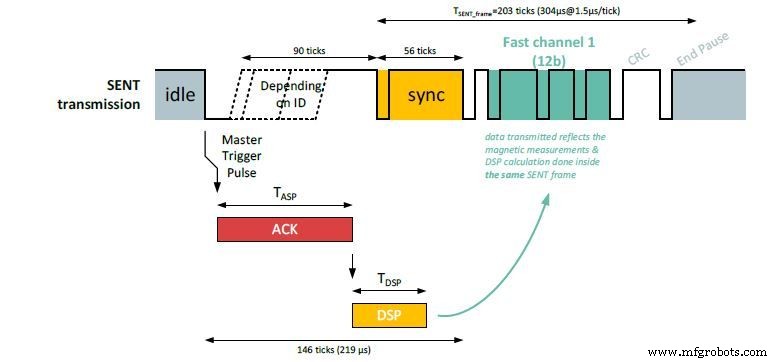
Figure 2: SPC timing illustration in 1.5 µs tick time mode and H.2 format
In SPC mode, the MLX91377 starts data acquisition immediately upon receiving the trigger pulse, regardless of the configured mode, and transmits the acquired data within the same SENT frame. This capability is available for any tick time equal to or greater than 1.5 µs (see Figures 2 and 3).
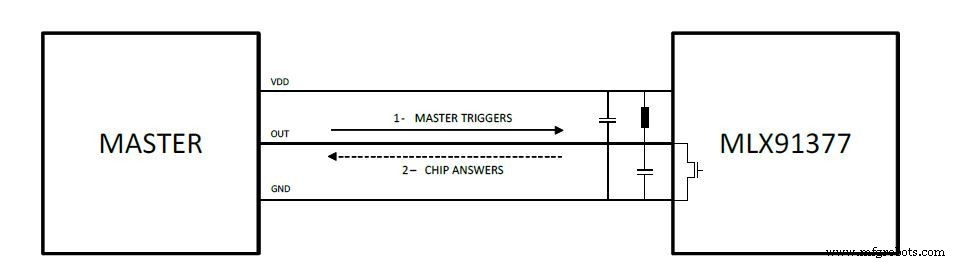
Figure 3: SPC standard master‑slave configuration
The MLX91377 achieves ASIL‑C functional safety in digital mode (SENT or SPC) and ASIL‑B in analog mode. It offers comprehensive die‑level diagnostics, detecting internal faults and entering a safe state to prevent unintended vehicle behavior.
Future challenges will involve increasingly demanding operating temperatures, enhanced immunity to leakage fields amid growing vehicle electrification, and ever‑higher functional safety standards.
>> This article was originally published on our sister site, Power Electronics News.
Embedded
- Strengthening Security in Automotive Systems: Safeguarding the Future of Connected Vehicles
- Overcoming Challenges in Automotive Camera Link Technologies
- Infineon Introduces Monolithically Integrated Linear Hall Sensor Certified for ASIL D Automotive Applications
- Digital Magnetic Hall Sensors: Fundamentals, Design, and Automotive Applications
- Advanced Sensors Empower Wearable Health Tech: From Heart Rate to Temperature Accuracy
- AImotive Launches aiWare3P Neural Network Accelerator for High-Performance Automotive Vision
- OmniVision Unveils 8‑MP OX08A/OX08B Sensors with Record‑Setting 140‑dB HDR
- MLX91377 Hall Sensor: High‑Linearity, Thermal‑Stable, ASIL‑Ready for Automotive Safety
- Digital Sensors in Industrial Machinery: Function, Types, and Best Practices
- Mastering Hall Effect Sensors: Principles, Applications, and Design