



How Software‑Configurable I/O is Revolutionizing Building Automation
Building automation systems (BAS) fuse lighting, energy, HVAC, safety, and security into one intuitive platform, delivering peak efficiency while prioritizing occupant comfort and productivity. Though the BAS market has traditionally been cautious, it has expanded rapidly, spurred by rising energy costs, growing awareness of conservation, and robust government initiatives around fire safety and security. New regulations—such as UL 217 for smoke alarms—further mandate safer, more efficient, and comfortable buildings, creating demand for next‑generation BAS products and solutions that can be developed and deployed faster than ever before.
At the heart of any BAS lies the controller, the decision‑making brain that interprets sensor data and orchestrates system responses. Controllers must accommodate a specific number of input and output channels, yet many legacy designs offer only fixed channel counts. The result? Architectural waste—unused channels that inflate cost without delivering value. A truly flexible system would keep spare channels to a minimum, allowing each channel to be reconfigured on demand and ensuring that customers pay only for the functionality they actually use.
Traditional BAS controllers rely on discrete implementations for both fixed and configurable channels. These designs can contain hundreds of individual components, a fact that has historically been mitigated through extensive optimization to keep bill‑of‑materials (BOM) costs low. However, the increasing appetite for rapid, agile development exposes significant shortcomings: planning complexity, a proliferation of product variants, and supply‑chain headaches. When evaluated across the full product lifecycle, total cost of ownership (TCO) far outweighs a simplistic BOM perspective.
Integrated versus Discrete
Reconfigurability is essential to eliminate waste, but the real advantage comes from integration. Software‑configurable input/output (I/O) transforms each channel into a versatile resource that can be shaped by firmware at runtime. This approach unlocks design reuse, platformization, and a dramatic TCO reduction across the controller’s life cycle (see Figure 1).
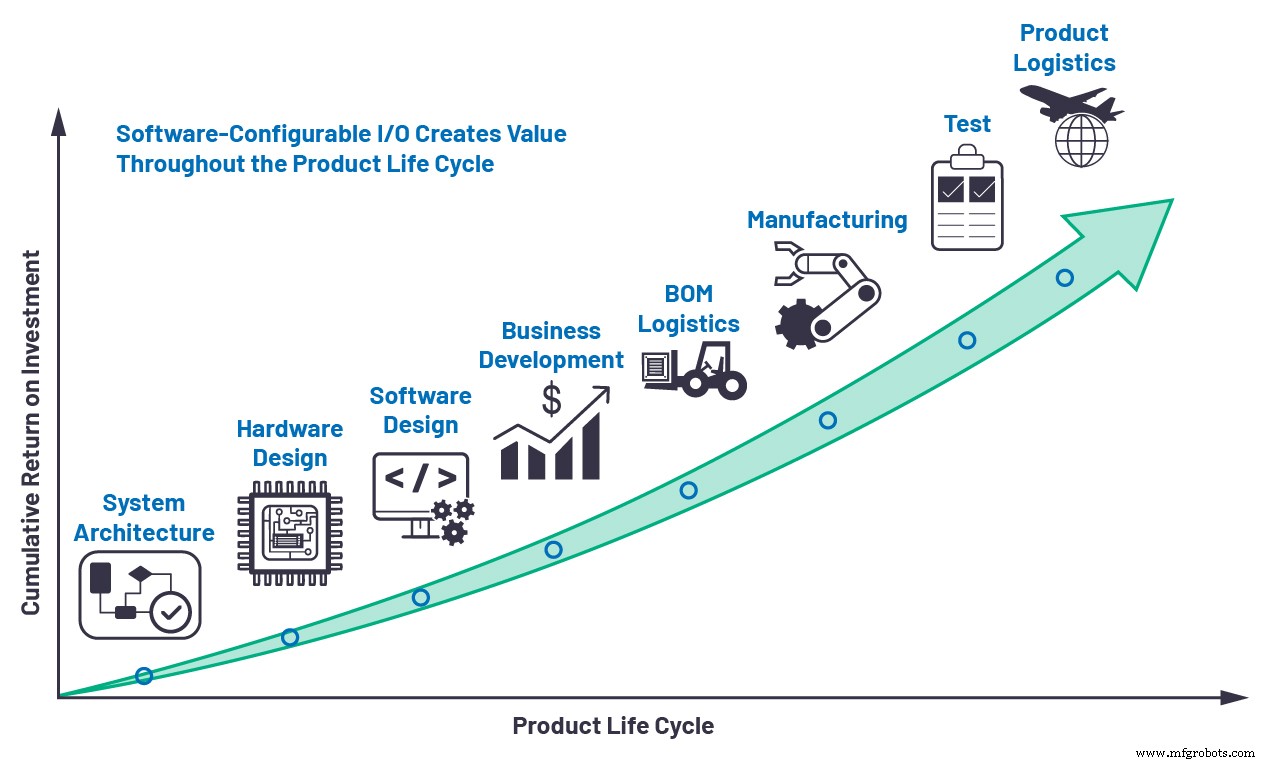
Figure 1. Improving return on investment at every stage of development with software‑configurable I/O. (Source: Analog Devices)
During the early architecture phase, a discrete controller’s rigidity forces multiple designs to accommodate varying customer requirements—such as differing input/output ratios—driving up cost and slowing market responsiveness. An integrated, software‑configurable platform, in contrast, lets designers prototype a single, reusable core that can be adapted to any configuration, drastically reducing both time and expense.
When the design phase begins, the benefits of integration become even clearer. Rapid iteration, fewer components, and a “any function on any pin” philosophy cut hardware and software development time, while preserving the reliability of a proven architecture (see Figure 2).
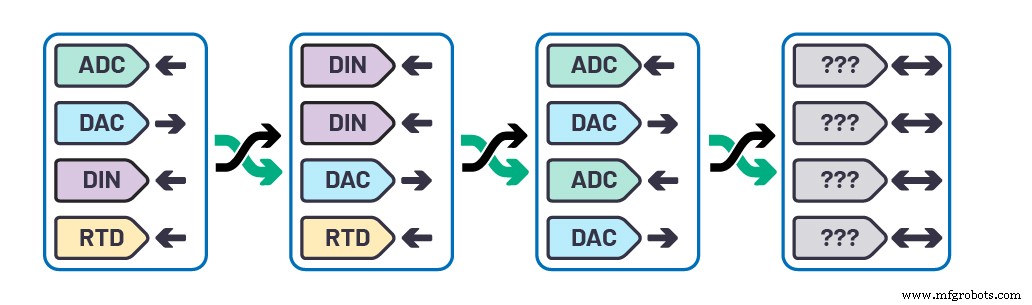
Figure 2. Any function on any pin with software‑configurable I/O. (Source: Analog Devices)
From a business perspective, a slower development cycle translates into lost opportunities and missed deadlines. The flexibility of integrated, configurable I/O keeps time‑to‑market—and consequently time‑to‑revenue—short, delivering higher returns on investment.
In production, the advantages compound. Discrete designs demand large, varied BOMs that require extensive inventory management and supplier coordination. A single‑chip, reusable solution streamlines procurement, shrinks board size by up to 40%, and reduces pick‑and‑place costs. The uniformity of the design also drives higher board volumes, unlocking further volume discounts. Figure 3 summarizes these differences.
click for full size image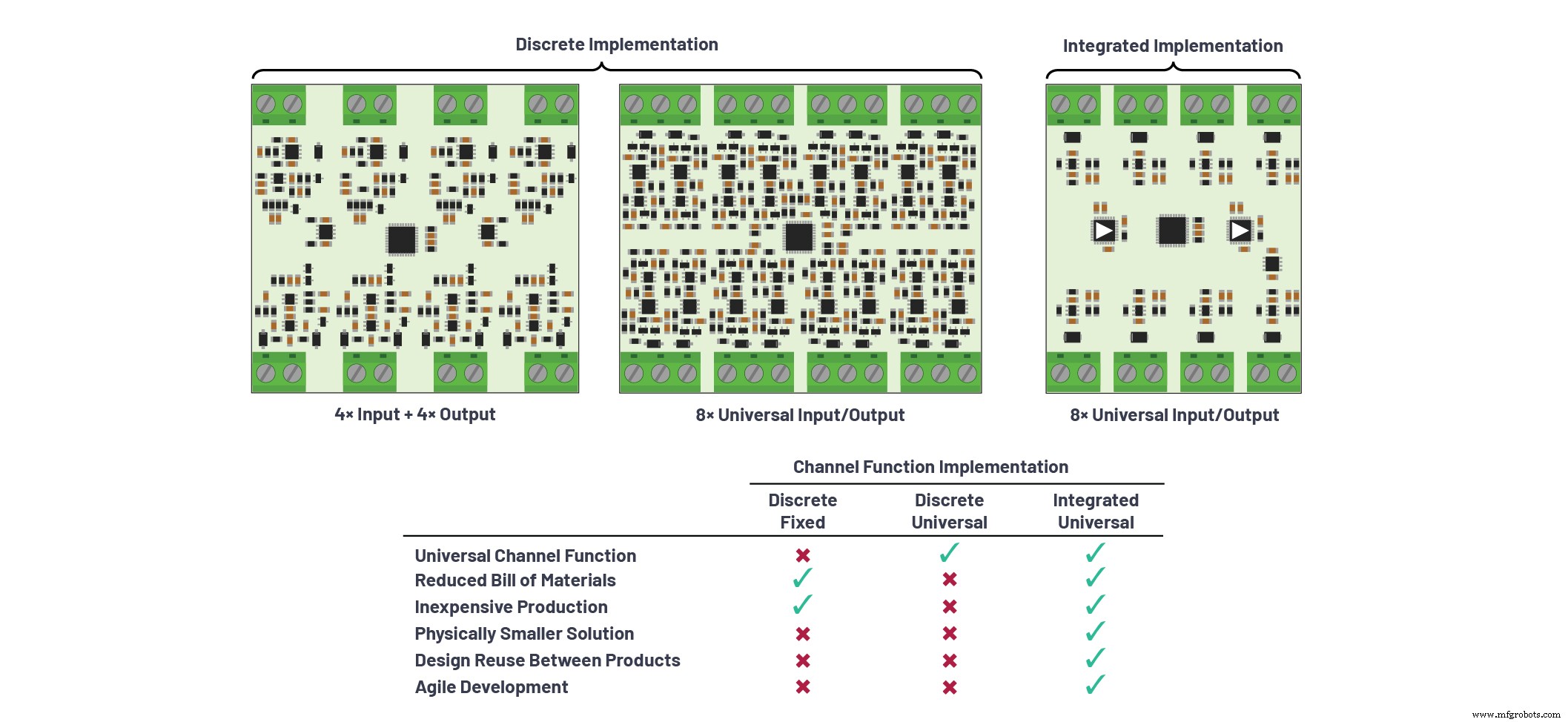
Figure 3. Comparison of discrete and integrated channel function implementations. (Source: Analog Devices)
Testing and certification also become more efficient. Unified test procedures replace variant‑specific scripts, reducing setup time and minimizing the risk of failures. Likewise, training for sales, technical support, and installation teams becomes more streamlined, as they need to master only one platform rather than multiple disparate designs.
Conclusion
Software‑configurable I/O is the catalyst that is reshaping a traditionally conservative industry, enabling BAS solutions that are faster, cheaper, and more adaptable to changing customer needs. While some may view the integrated approach as a mere BOM swap that could inflate costs, a holistic view of the entire product life cycle shows that the long‑term value—through design reuse, production efficiency, and operational simplicity—more than outweighs any short‑term price increase.
Devices such as Analog Devices’ AD74412R embody this philosophy by integrating a complete signal chain into a single chip and offering multiple fully configurable channels. This level of integration delivers tangible benefits from product definition through design, production, installation, and operation.
 Michal Raninec is a former systems applications engineer in the Industrial IoT Solutions Group within the Automation and Energy Business Unit at Analog Devices. His areas of expertise include electrochemical gas sensing and wireless sensor networks. Michal received his M.Eng. degree in electronic engineering from Brno University of Technology, Czech Republic.
Related Contents:
- Software‑configurable I/O devices target building control
- Designing power‑efficient and secure home automation systems
- Industrial IoT security builds on hardware
- Cutting the complexity of wireless connectivity, co‑existence
- How system level noise in digital interfaces can lead to spurious errors in serial Flash memory
- Interfacing with modern sensors: Interface design
For more Embedded, subscribe to Embedded’s weekly email newsletter.
Embedded
- ADI AD74412R/AD74413R: 4‑Channel, Software‑Configurable I/O for Modern Building Automation
- Process Automation I/O Systems: Market Trends, Decentralization, and Ethernet‑Based Field Connectivity
- Choosing the Right CAD Software for Jewelry Design: A Comprehensive Guide
- 3D Printing: Transforming Everyday Life Through Rapid Design, Production, and Repair
- Master Industrial Automation Design with E3.series – A Comprehensive Guide
- Unlocking Organizational Success: How Automation Drives Efficiency and Growth
- Unlock Automation Efficiency: Software‑Configurable I/O Transforms Machine Performance
- Design for Additive Manufacturing (DfAM): Revolutionizing Modern Production
- Ethernet for Industrial I/O: Benefits, Drawbacks, and Key Design Considerations
- Integrating Simulations into Factory Automation Design for Peak Efficiency