



Arduino Launches Portenta H7: Industrial‑Grade IoT Board Debuts at CES
At CES, Arduino unveiled the Portenta H7, its first industrial‑grade IoT board, priced at $99.99. The board is powered by STMicroelectronics' STM32H747 microcontroller, featuring a dual‑core Cortex‑M7 (480 MHz) and Cortex‑M4 (240 MHz) and a robust operating temperature range of –40 °C to 85 °C.
Laurent Hanus, ecosystem marketing manager at STMicroelectronics, highlighted that the Portenta H7 showcases the STM32H747's outstanding performance while providing an intuitive platform for cloud‑enabled applications.
Since the launch of the Arduino Uno in 2005, the maker community has evolved dramatically. While the iconic Uno form factor remains familiar, newer boards now adopt the MKR form factor—smaller, with integrated connectivity and an emphasis on IoT.
The MKR family was designed for engineers and makers seeking rapid time‑to‑market in industrial environments. Its 67.64 × 25 mm footprint, built‑in connectivity, and modularity set it apart from other Arduino families.
The transition began at Maker Faire Rome, where the Arduino Pro Development Environment replaced the legacy IDE, accelerating prototyping. Arduino also supplied Altium Designer symbols to streamline the move from prototype to production.
Portenta H7 runs native Arduino code and supports the open‑source ARM Mbed OS, delivering enterprise‑grade features while preserving the familiar Arduino workflow. It also runs Python and JavaScript, broadening its appeal.
The board's low‑power core can handle video capture and display via the USB‑C connector’s DisplayPort, while the Cortex‑M4 manages peripheral tasks such as sensor data acquisition and power management. In its full configuration, the Portenta H7 offers 32 MB of SDRAM, 128 MB of flash, Ethernet, high‑speed USB, Wi‑Fi, and Bluetooth 5.0 (see Figure 1).
Its wireless module supports simultaneous Wi‑Fi and Bluetooth operation—Wi‑Fi can act as an access point, and Bluetooth offers both Classic and BLE. The MKR form factor ensures scalability across a wide range of applications.
‘Portenta H7 is the ideal solution for applications demanding significant compute power under tight power budgets,’ said Fabio Violante, Arduino CEO. ‘Use cases include machine learning, motor control, IoT gateways, edge computing, human‑machine interfaces, and more.’
The board is fully compatible with the majority of Arduino libraries and can run TensorFlow Lite, JavaScript, MicroPython, Mbed OS, and Arduino itself. The Cortex‑M7 delivers compute performance comparable to many Linux processors, yet consumes less power, while the M4 core further optimises energy use and handles auxiliary tasks without the complexity of a multitasking OS.
‘The Portenta family’s scalability allows manufacturers to fine‑tune cost‑to‑feature ratios for high‑volume products,’ added Violante. ‘All of this, wrapped in Arduino’s renowned simplicity.’
Designed to combine scalable processing with a compact footprint, the Portenta family features a high pin count that reduces application size while ensuring robust signal integrity.
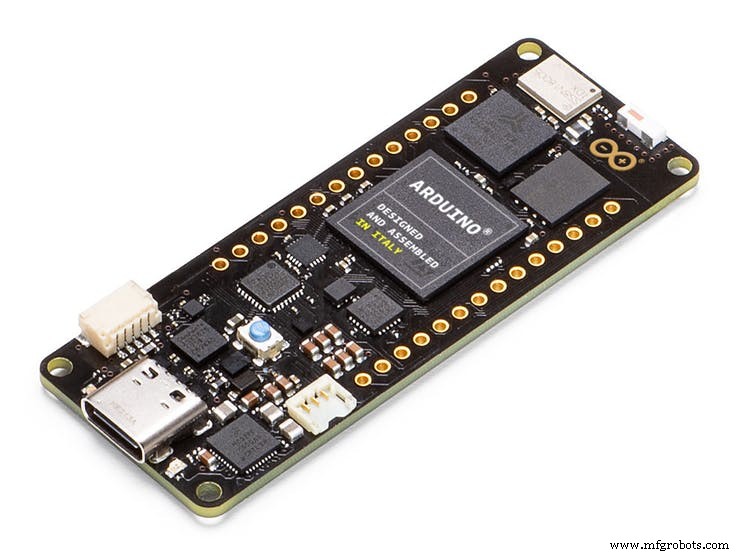
Figure 1: Arduino Portenta (Source: Arduino)
Embedded
- How 5G Will Transform Industrial IoT: Boosting Automation, Reliability, and Connectivity
- Securing the Industrial IoT: A Practical Roadmap
- Industrial IoT: How OTA Updates Transform Field Operations
- IoT and Industry 4.0: How the Fourth Industrial Revolution Is Shaping Manufacturing
- Technologic Systems' TS-7180 SBC Powers Industrial IoT
- Hardware Security Leads IIoT with Tamper‑Resistance, Faster Market Entry, and Strong Protection for Manufacturing, Transport, and Utilities
- Debugging the Arduino Portenta H7 Dual‑Core System with Segger J‑Link
- Industrial IoT Value Chains: From Device Data to Business ROI
- Top 7 Industrial IoT Applications Powering Market Growth
- Industrial IoT: Market Growth, Drivers, and Opportunities