



Cellular IoT: Comparing EC‑GSM‑IoT, NB‑IoT, and LTE‑M Performance
 Editor’s Note: The growing demand for ubiquitous IoT connectivity aligns perfectly with emerging cellular technologies designed for the Internet of Things. Developers now need detailed, reliable insights into these technologies and their real‑world applications. This article, extracted from the book Cellular Internet of Things, introduces the key concepts and technologies shaping the IoT landscape. In a previous series, the authors explored the evolving cellular ecosystem, its role in IoT, and the technologies driving massive machine‑type communications (mMTC) and ultra‑reliable low‑latency communications (URLLC).
Elsevier offers this and other engineering titles at 30% off. Use code ENGIN318 at checkout here.
Adapted from Cellular Internet of Things by Olof Liberg, Marten Sundberg, Eric Wang, Johan Bergman, and Joachim Sachs.
Chapter 9. The Competitive IoT Technology Landscape (Cont.)
9.3 Choice of CIoT Technology
9.3.1 Comparison of CIoT Technologies
Chapters 3–8 present an in‑depth analysis of EC‑GSM‑IoT, NB‑IoT, and LTE‑M. Here we synthesize the key performance metrics and characteristics. For NB‑IoT, we focus on in‑band and stand‑alone deployments; guardband mode shares similar performance and is covered in Chapter 8.
9.3.1.1 Coverage and Data Rate
The uplink and downlink data rates for all CIoT technologies are summarized in Figures 9.7 and 9.8 across varying coupling losses. Each technology offers extended coverage up to a 164 dB coupling loss (MCL), a dramatic improvement over legacy GSM, UMTS, and LTE networks. EC‑GSM‑IoT achieves 164 dB with a 33 dBm transmit power—10 dB higher than the power required for NB‑IoT and LTE‑M to reach the same coverage.
At the extreme coverage of 164 dB, NB‑IoT delivers a lower control‑channel block‑error rate than EC‑GSM‑IoT and LTE‑M, making it more robust. LTE‑M and EC‑GSM‑IoT can employ frequency hopping for added frequency diversity and coverage resilience.
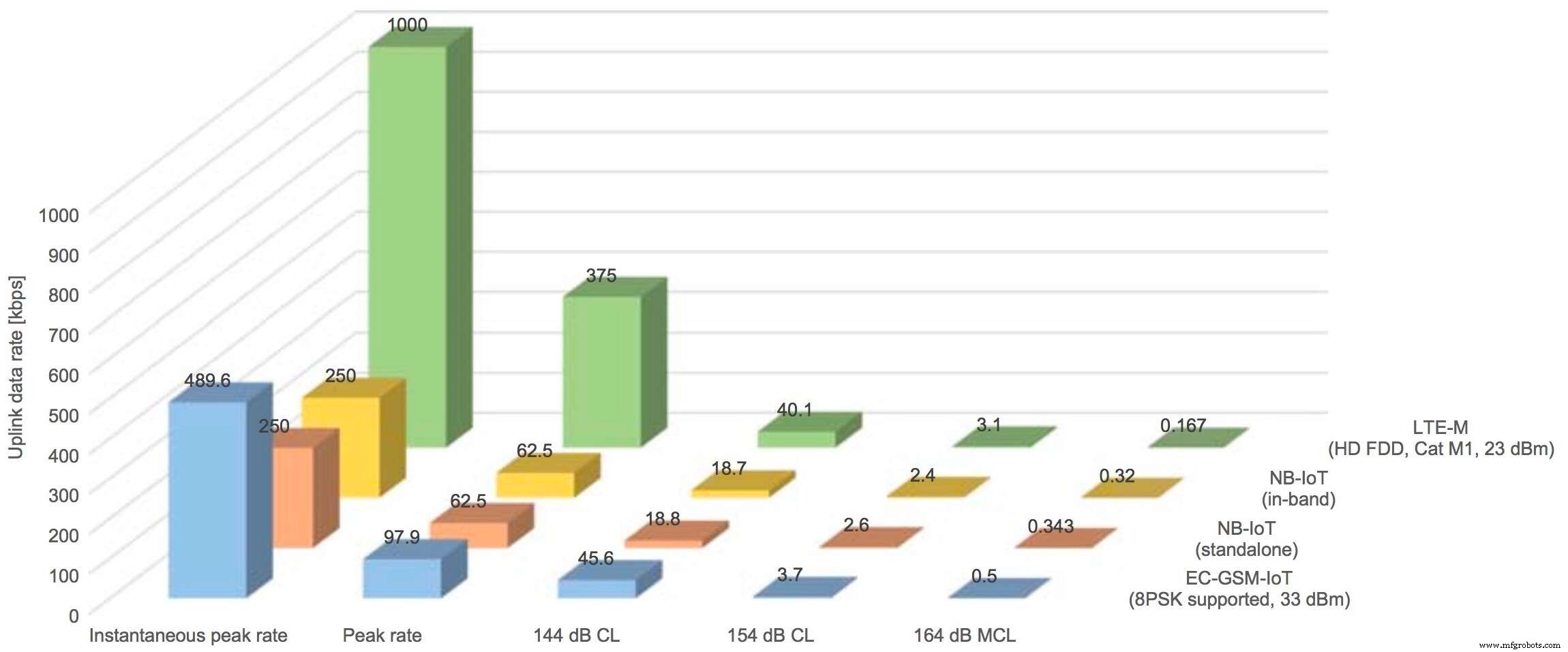
Figure 9.7: Coverage and Physical Layer Data Rate – Uplink.
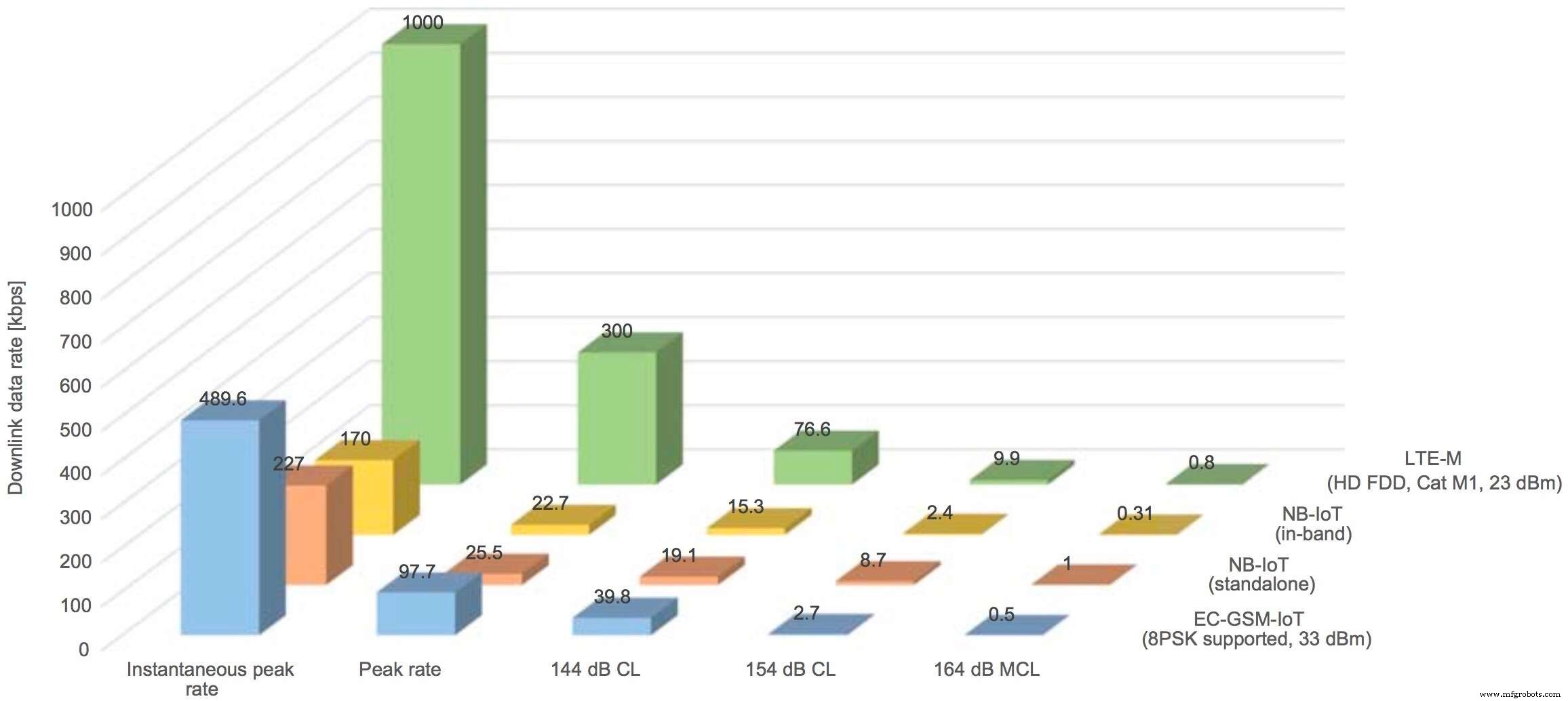
Figure 9.8: Coverage and Physical Layer Data Rate – Downlink.
The tables in Figures 9.7 and 9.8 show both instantaneous peak physical‑layer data rates (channel‑only) and effective rates that include scheduling and control overhead. We assume half‑duplex operation for all technologies; LTE‑M devices can also be configured for full‑duplex, approaching the instantaneous peak rate. Rates are shown for ideal links, 144 dB (cell‑edge), and 154/164 dB (10/20 dB extended coverage).
LTE‑M consistently outperforms NB‑IoT and EC‑GSM‑IoT in uplink and downlink data rates when devices are within normal coverage. In extended coverage, uplink rates are limited by transmit power, and all three technologies rely on repetitions to meet link quality. At 164 dB, the achievable rates converge; EC‑GSM‑IoT leads slightly due to its higher output power. LTE‑M also benefits from higher data rates within the same LTE carrier compared to in‑band NB‑IoT.
All three technologies satisfy the 3GPP requirement of 160 bps at a 164 dB MCL.
9.3.1.2 Latency
Latency was evaluated using an exception report—a high‑importance, infrequent message (85 bytes). All three technologies meet the 3GPP latency target of 10 s (Release 13). Within normal coverage, LTE‑M offers slightly lower latencies thanks to its higher data rates. In extended coverage, EC‑GSM‑IoT achieves the lowest latency because its higher transmit power yields higher data rates. Stand‑alone NB‑IoT also enjoys lower latency than in‑band NB‑IoT due to stronger downlink channels.
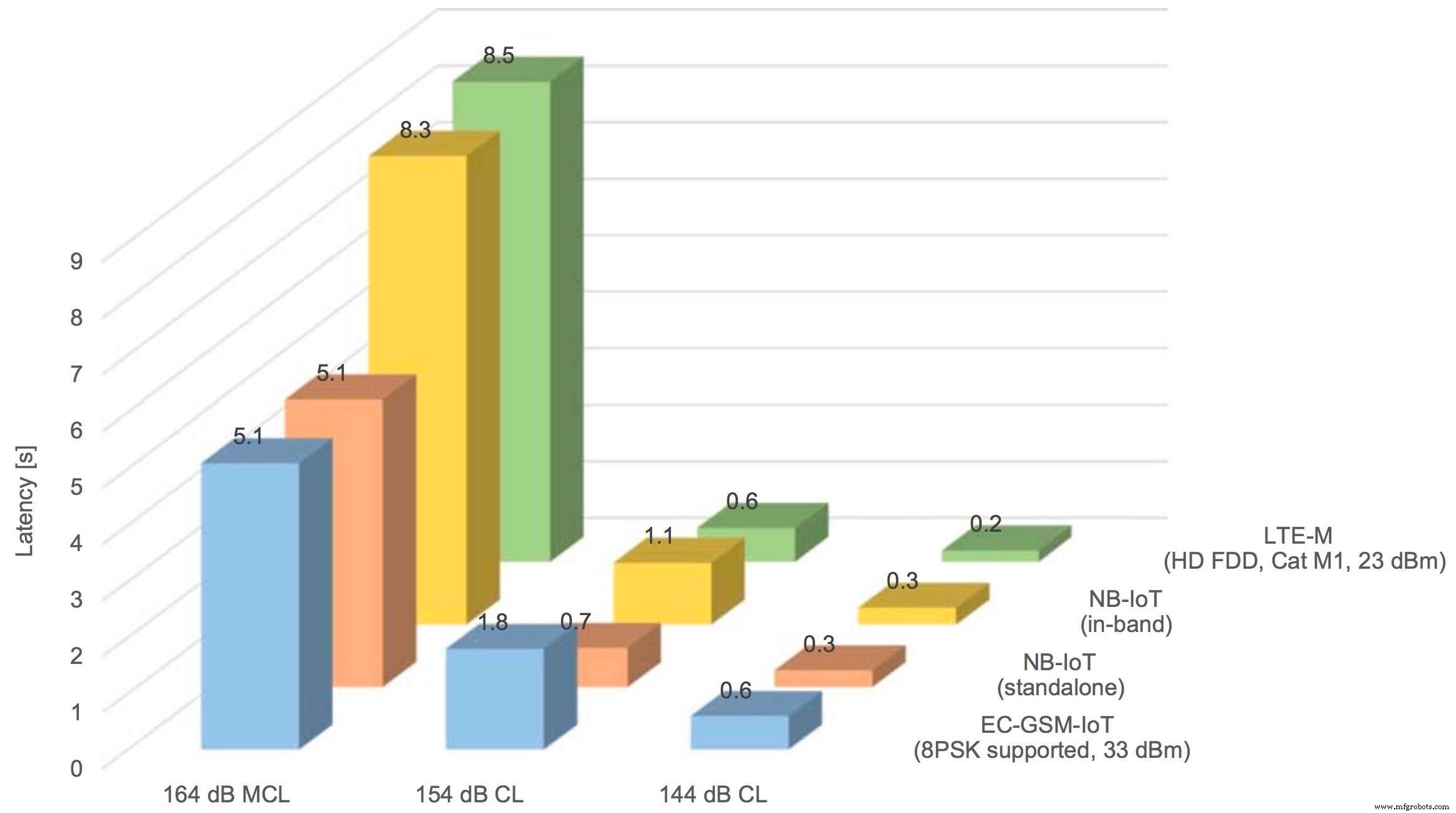
Figure 9.9: Latency for Exception Report.
9.3.1.3 Battery Lifetime
Battery life was assessed for all technologies using two AA batteries (5 Wh total) and a power‑amplifier efficiency of 45‑50%. All CIoT devices employ aggressive sleep cycles, activating only for data transfer and otherwise staying in low‑power mode. Efficient procedures reduce signaling overhead, which is critical for small‑message transmissions.
Figure 9.10 shows the lifetime for a daily 200‑byte report. Table 9.5 summarizes lifetimes across message sizes and periodicities. Each technology supports at least 10 years of battery life under typical conditions; in the worst‑case 164 dB MCL, 10‑year lifetimes are attainable only with daily transmissions. More frequent reporting (e.g., every 2 hours) reduces lifetime to 1–3 years at 164 dB.
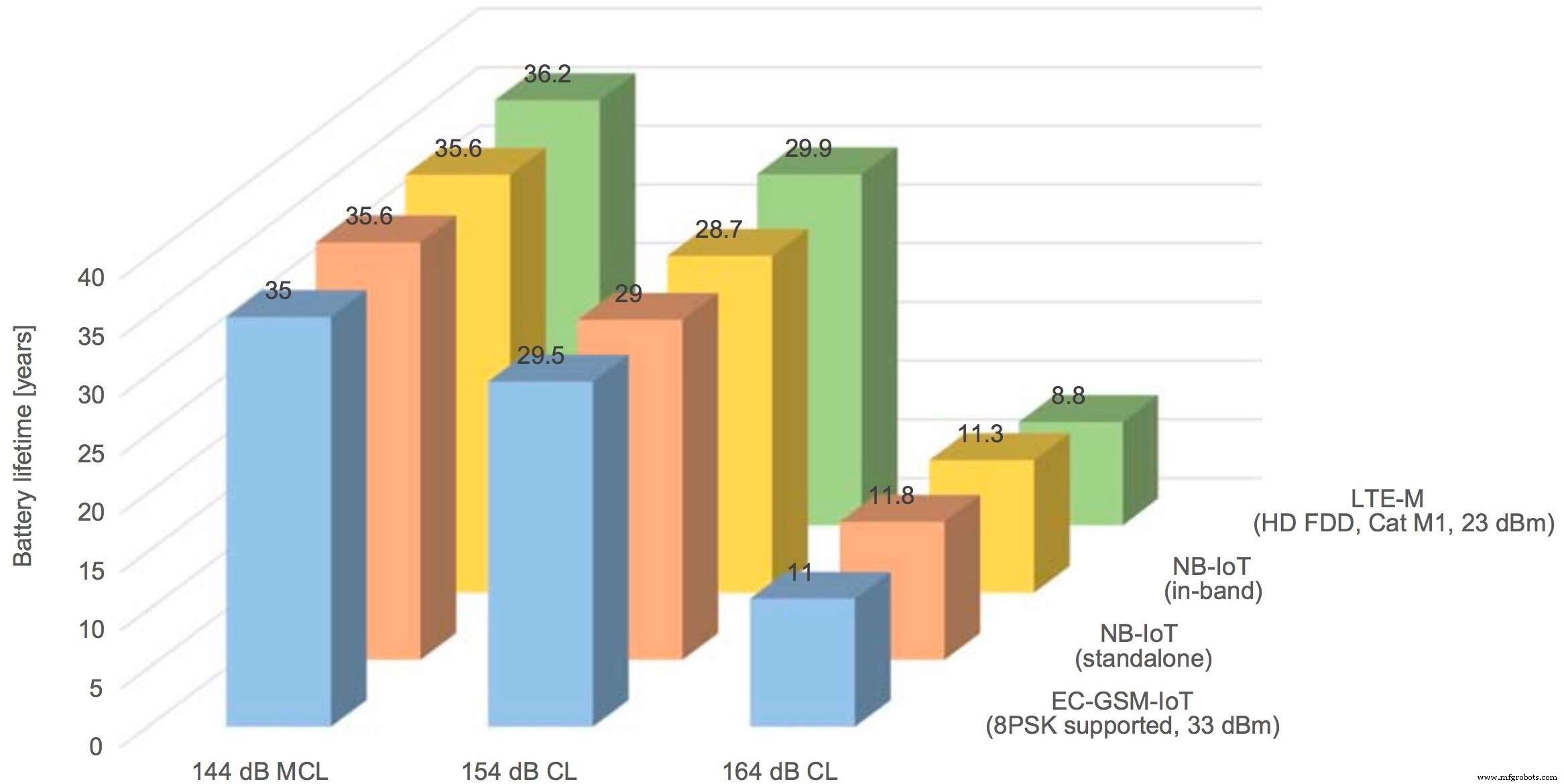
Figure 9.10: Battery Lifetime for a Device with a Daily Report of a 200‑Byte Message.
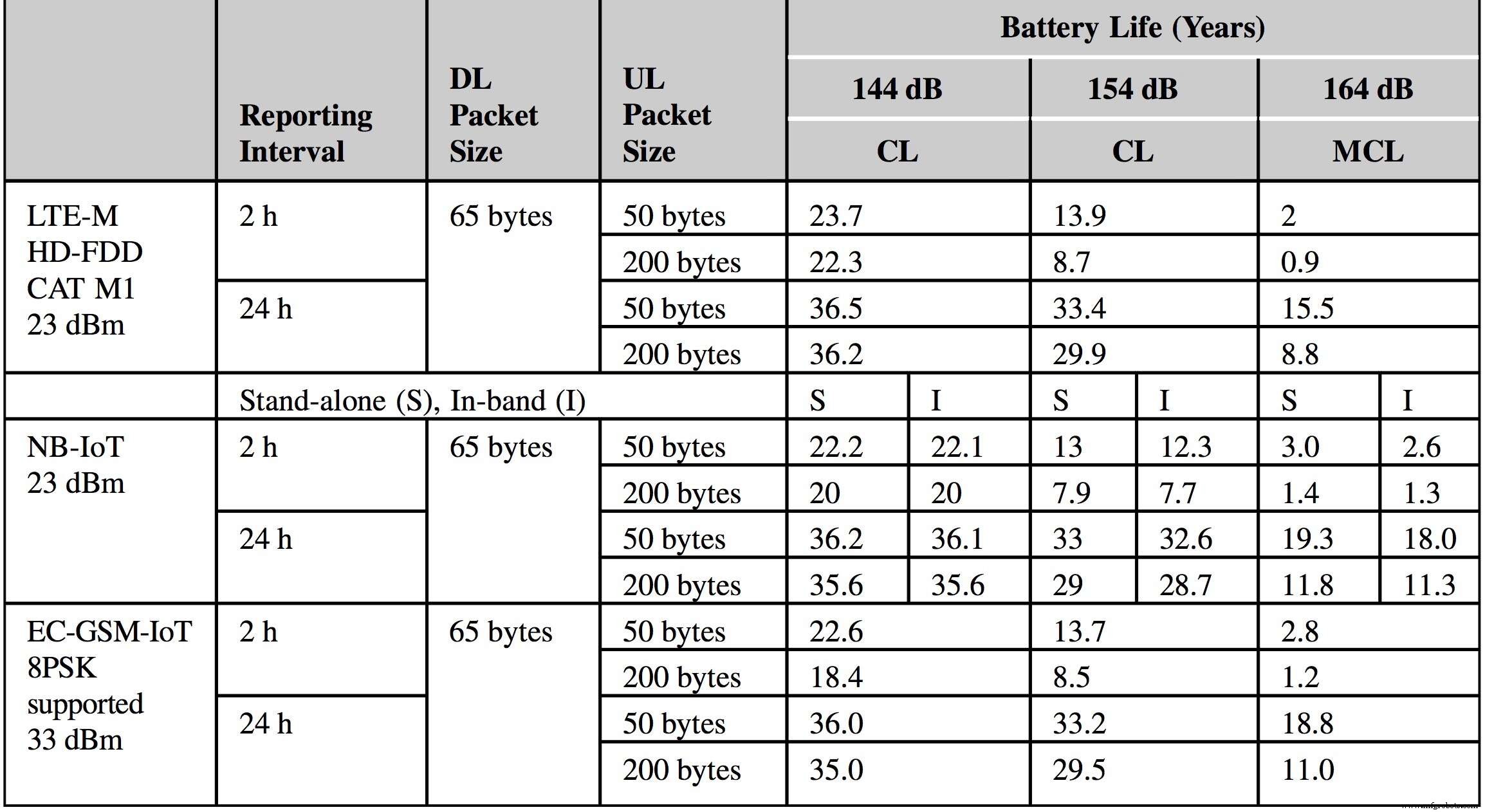
Table 9.5: Battery Lifetime.
All three CIoT technologies meet or are poised to meet the 3GPP 10‑year battery‑life requirement at a 164 dB MCL.
Internet of Things Technology
- IoT Edge Computing: Bridging Devices and Cloud for Real‑Time Insights
- Cellular IoT: Weighing Cost, Battery Life, and Data Use
- Harnessing Cellular IoT and Bluetooth LE: A Synergistic Approach for Next‑Gen Connectivity
- Ensuring Data Compliance in the Internet of Things
- Cellular IoT: Unlocking the Advantages of CIoT Connectivity
- Sustaining IoT Growth: Securing Connectivity and Business Models for Cellular IoT
- Democratizing the Internet of Things: Next‑Gen Satellite IoT Brings Universal, Affordable Connectivity
- Unlocking the Value of IoT Data: Secure, Insight‑Driven Strategies
- Leading Cloud‑Based IoT Analytics Platforms for 2026
- Harnessing Edge Computing for IoT, AI, and Emerging Technologies