Industrial manufacturing
 MfgRobots >> Industrial manufacturing > >> Industrial Internet of Things >> Internet of Things Technology
Internet of Things Technology

Industrial organizations are now connecting a growing number of devices, enabling remote access, and developing new applications. In this digital age, the traditional air‑gap strategy is no longer enough to shield industrial networks from increasingly sophisticated cyber threats. Yet many companies

Imagine wireless networking as a bustling campus cafeteria—Wi‑Fi 6 and 5G are the popular tables that attract the most attention. The latest generation of wireless technologies delivers blazing‑fast download and upload speeds, slashes latency, and—crucially for industrial IoT—supports higher device
IoT conversations have evolved beyond counting connected devices; today the focus is on real-world use cases and the tangible value they generate across transportation, public sector, energy, and manufacturing. Cisco’s 70,000 IoT enterprise customers are accelerating digitization projects that tie o
In a kitchen, the best dishes come from seasoned chefs who know how to blend premium ingredients into a cohesive menu. Similarly, success in the Internet of Things (IoT) hinges on more than just top‑tier components; it requires a carefully crafted blueprint that guides deployment from concept to ope
Subscribe to Cisco Optics Blog by Email Written by Kaushik Mittra, Product Manager, Transceiver Modules Group As 5G, Industry 4.0, and IoT drive network traffic to new heights, operators face the dual challenge of meeting bandwidth demands while keeping capital and operating costs low. Cisco’s 1 Gb
Industry 4.0 is reshaping manufacturing, energy, and logistics, but the promise of connected plants is only realized when security is built in from day one. In late March, Cisco Live in Barcelona showcased the first commercial release of Cisco Cyber Vision—a purpose‑built platform that protects indu
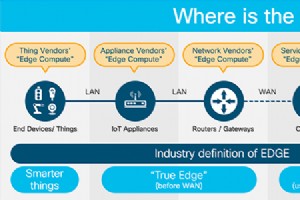
Edge computing is the IT industry’s buzzword, especially for IoT. While vendors and analysts rave about its benefits, the exact location of the “edge” remains a topic of debate. Here’s Cisco’s clear, industry‑backed definition and why it matters for latency, bandwidth costs, and real‑world use cases
Industrial IoT (IIoT) has woven itself into the fabric of critical infrastructure—from water and gas distribution to power plants and transportation networks. Yet, the security landscape for IIoT differs fundamentally from conventional IT. In the traditional IT world, security risks revolve around t
Introduction In industrial environments, the challenge of securing IoT is akin to coordinating a multi‑chef kitchen. Each stakeholder brings a distinct focus—efficiency, security, or threat intelligence—and only through collaboration can the operation achieve resilience. Key Stakeholders Operational
When industrial enterprises connect their operational networks to the broader Internet as part of their IoT strategy, the technology stack expands—but often a critical element is missing, obscuring the full security picture. Security Operations Centers (SOCs) and IT teams rely on sophisticated platf
Cybersecurity researchers from JSOF have released a comprehensive list of 19 critical vulnerabilities, collectively known as Ripple20, that target the Treck TCP/IP stack. This stack is embedded in millions of devices across healthcare, transportation, manufacturing, telecoms, and energy sectors, mea
Manufacturing security threats are not new, but the nature of the attacks has evolved dramatically. In 2017 alone, breaches cost the industry over $10 billion in reported losses, making cyber‑security a top‑level priority for most boards. Unlike the accidental breaches of the past—unpatched software
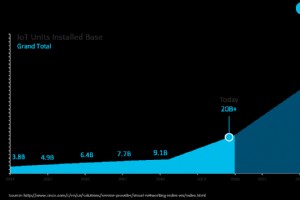
The Internet of Things (IoT) presents a range of challenges for network engineers. In my previous post, I explored how Cisco addresses the paramount issue of security. Today, we tackle the next hurdle: scalability. As illustrated below, tens of billions of devices are slated to go online over the ne
Physical assaults on oil and gas facilities can cause catastrophic damage, yet cyberattacks can be equally devastating. Malware that hijacks control systems or ransomware that locks critical data can endanger lives and the environment just as much as a sabotage event. In this sector, the stakes are
Industrial IoT (IIoT) security is evolving rapidly. Since joining Cisco’s IoT security team as product manager for Cyber Vision, I’ve seen how the industry has matured in just a few years, creating a landscape ripe for secure, large‑scale IIoT deployments. Market consolidation Acquisitions of niche
Each day brings a new development in IoT. Our customers are trying to understand how emerging products and technologies can help them simplify IoT complexity and drive business value. They often say the sheer volume of information makes it hard to know which topics or voices matter most. That’s why
Industrial IoT can revolutionize manufacturing, oil & gas, utilities, and beyond, but success hinges on closing the gap between IT and operational technology (OT). Bringing the right stakeholders together ensures a secure, efficient, end‑to‑end design. Customers often articulate a clear vision—dashb
The Internet of Things is expanding faster than ever, with over 70,000 customers already leveraging Cisco’s solutions to elevate their deployments. Whether you’re attending Cisco Live in Barcelona (Jan 27–30) or watching the live stream, you’ll hear about the three most impactful IoT trends shaping
The threat landscape for the industrial Internet of Things (IIoT) and critical infrastructure is evolving faster than ever. Our Talos threat research team now uncovers more IoT‑centric vulnerabilities on a regular basis than traditional IT flaws, underscoring the urgency for robust defense. While pr
The Cisco IoT portfolio is advancing industrial connectivity to the edge with intent‑based networking that is flexible, secure, scalable, and award‑winning. We are proud to have been named “Industrial IoT Innovation of the Year” in the 2020 IoT Breakthrough Awards for our Cisco Catalyst IW6300 Heavy
Internet of Things Technology