



Fourth‑Generation Global‑Shutter CMOS Sensors: Enhanced Performance for High‑Speed Industrial Imaging
Image sensors are advancing along three interrelated trajectories: expanding system‑level functionality driven by the Internet of Things, integrating cutting‑edge features such as on‑chip polarization and hyperspectral capabilities, and—most critically for machine vision—capturing ever higher resolutions at faster speeds.
This article examines the evolution of GS‑CMOS image sensors, outlines the breakthroughs of the forthcoming fourth‑generation global‑shutter technology, and explains why embedded sensors now demand superior performance metrics.
Global‑shutter CMOS sensors first appeared roughly a decade ago, revolutionizing high‑speed manufacturing by delivering a full‑frame digital output that eliminates the spatial distortion inherent to rolling‑shutter devices.
Early models offered modest image quality: the first‑generation sensor produced 2.4 MP in a 1/1.2” format with a 5.86 µm pixel. As resolution needs grew, Sony engineered a second‑generation pixel of 3.45 µm, enabling a resolution range from 0.4 MP to 31 MP. However, shrinking pixels reduces the photon flux per pixel, lowering saturation capacity.
With the third generation, Sony balanced these trade‑offs by increasing the pixel size to 4.5 µm, thereby restoring saturation capacity close to first‑generation levels while enhancing dynamic range and readout speed. Completing the transition from first to third generation allowed Sony to offer a comprehensive resolution and optical‑size portfolio that phased out legacy CCDs.
Holistic Image Capture for Machine Vision
Industrial vision systems must capture not only detailed images but also the right information, deliver it to a computer, and do so at exceptional speeds. The sensor’s readout frame rate—and the bandwidth of the transmission interface—are therefore critical. Each new GS‑CMOS generation also embeds additional on‑chip features that extend functionality.
- Generation 1: Introduced the global shutter to eliminate motion artifacts and a multi‑frame ROI to forward only selected data for analysis.
- Generation 2: Added multi‑exposure triggers, enabling multiple exposures per frame for richer depth of information, and reduced minimum exposure time to 2 µs.
- Generation 3: Featured dual ADCs and dual triggers for independent low‑ and high‑gain imaging, on‑sensor conversion gain for balanced sensitivity, saturation, and dynamic range, and a self‑trigger mechanism linking ROIs.
Inverting the Sensor Architecture
While larger sensor sizes can increase pixel count, most machine‑vision applications use C‑mount cameras with a 1‑inch (16 mm diagonal) sensor. The first three GS‑CMOS generations employed a front‑illuminated pixel structure, where incoming light traverses a metal‑wiring layer before reaching the photodiode, diminishing photon collection.
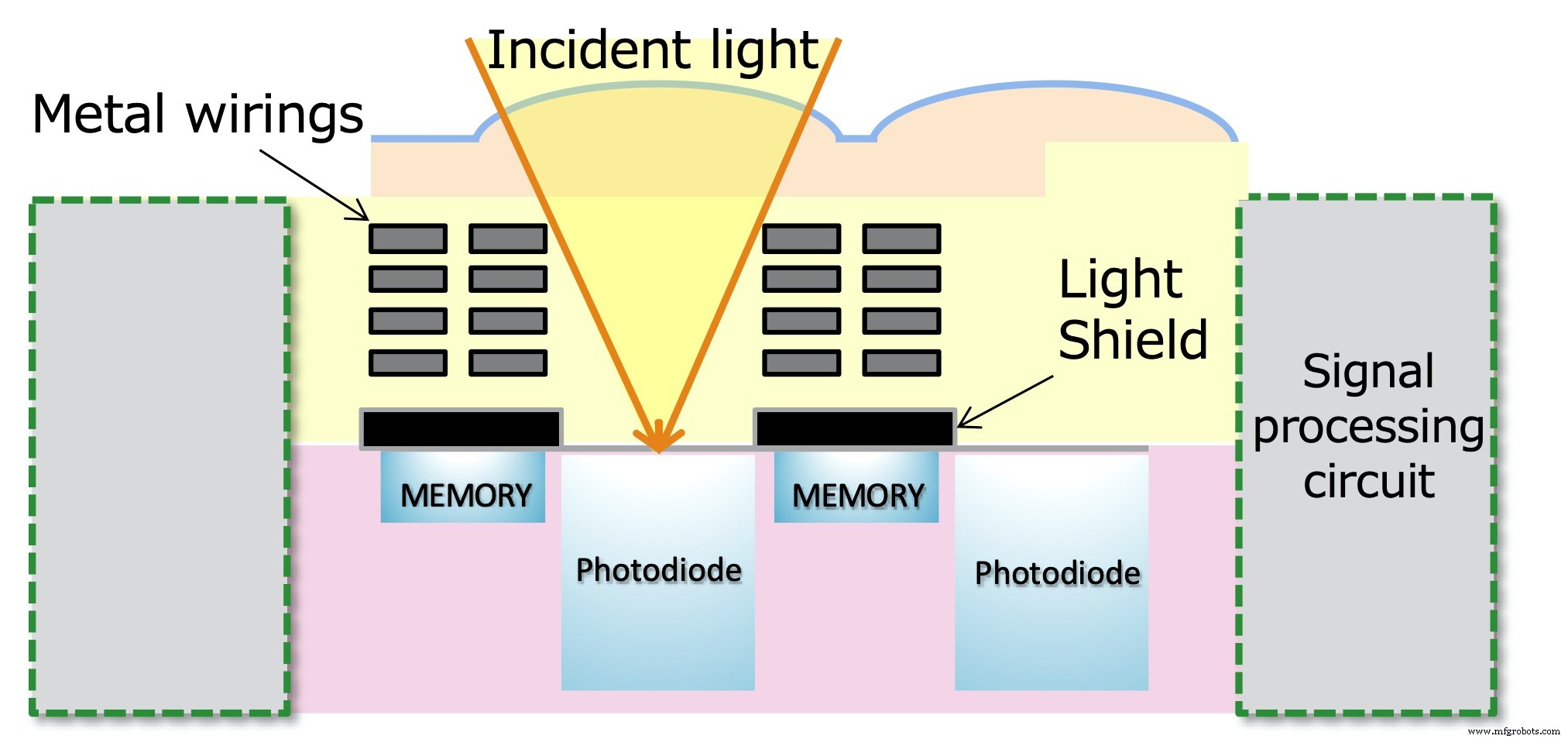
The fourth‑generation GS‑CMOS inverts this arrangement, placing the metal wiring behind the light‑sensitive photodiodes to form a back‑illuminated pixel. This architecture reduces pixel size to roughly 63 % of the conventional front‑illuminated sensor (2.74 µm) without compromising saturation.
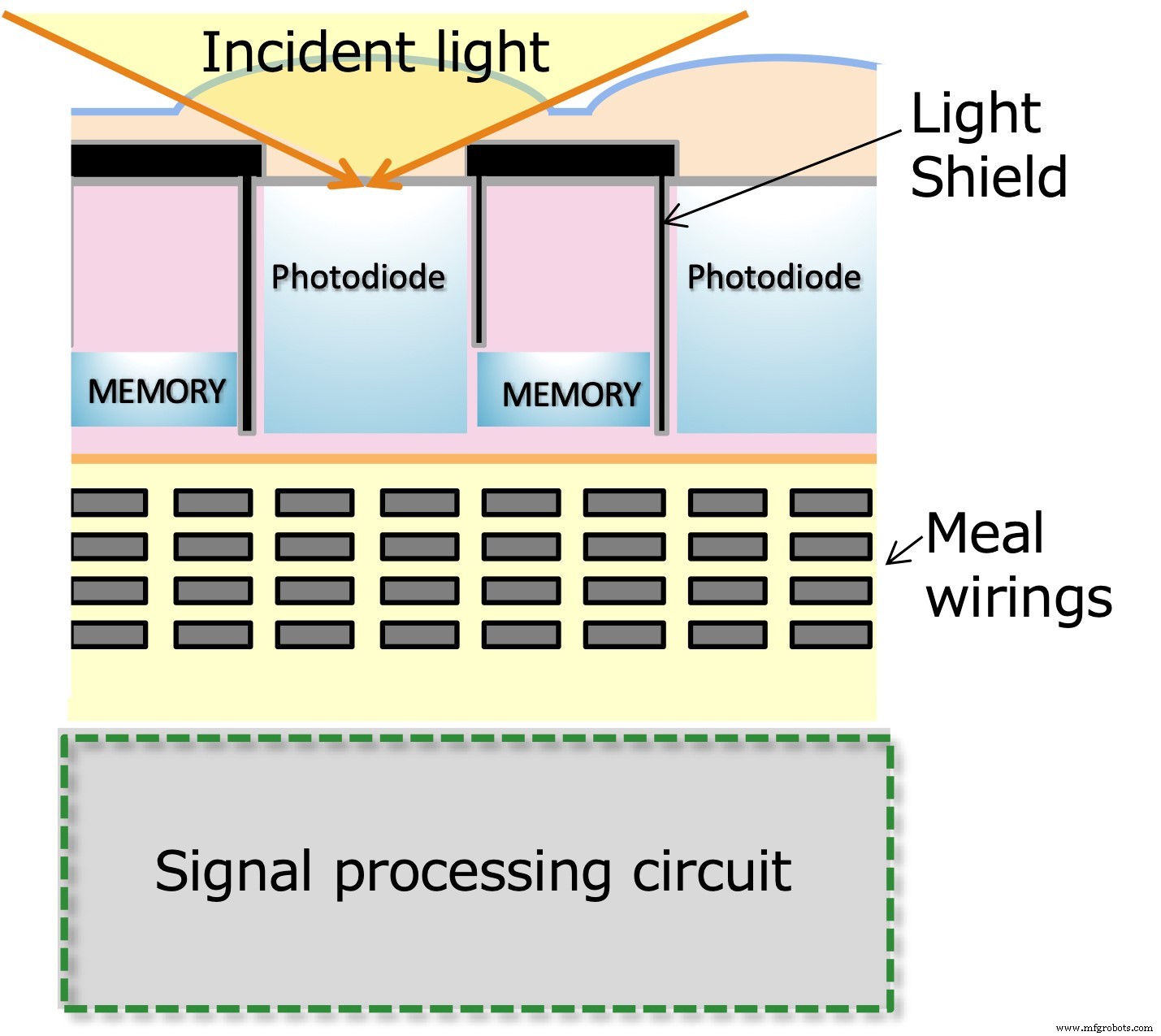
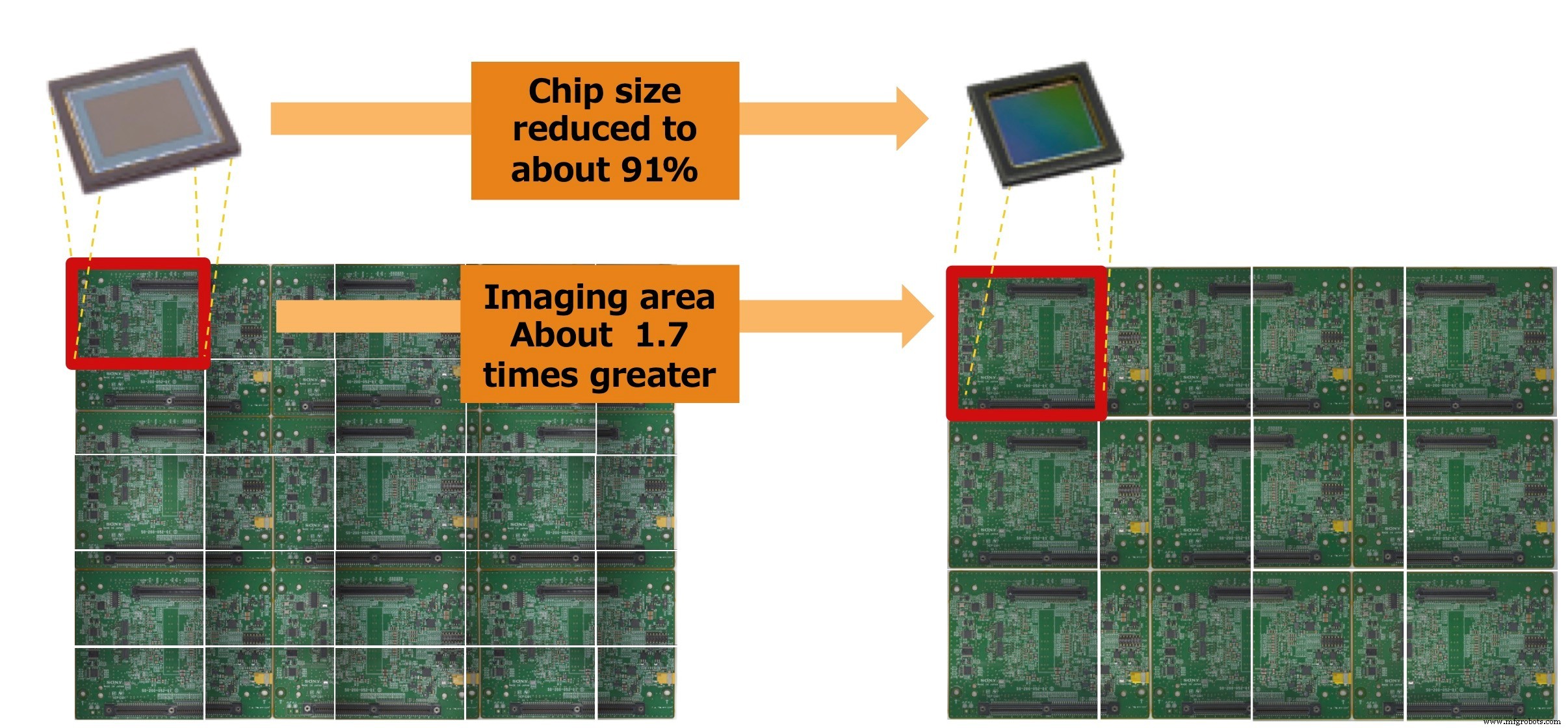
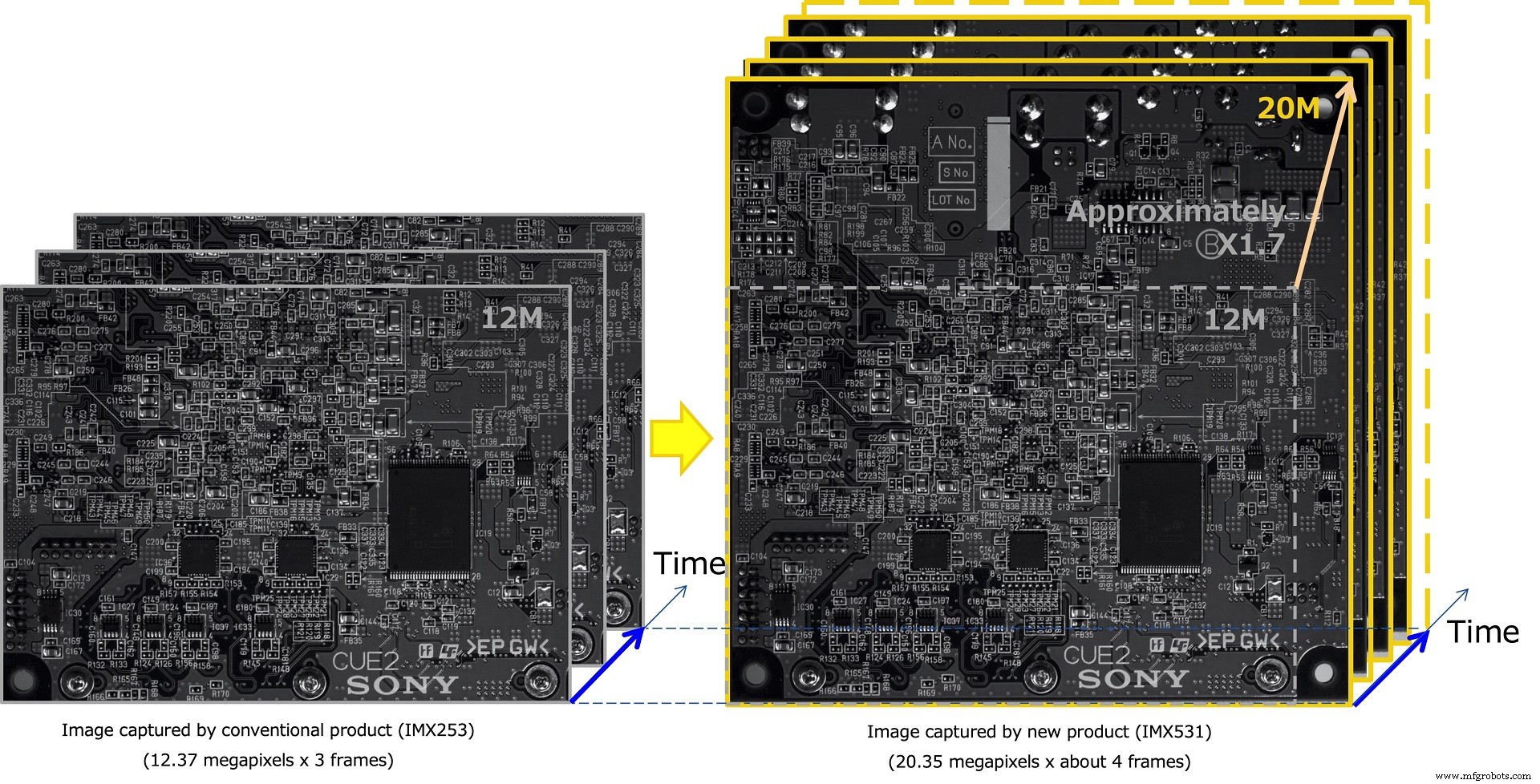
This inversion also relocates peripheral circuits to the back of the sensor, enabling a resolution jump from 12 MP to 20 MP while shrinking the package to about 91 % of the previous size—even when paired with the same optical system.
Fourth‑Generation Features and Accelerated Readout
The back‑illuminated design allows a highly flexible wiring layout, and when combined with a scalable low‑voltage signaling with embedded clock (SLVS‑EC) high‑speed interface, it achieves readout frame rates nearly 2.4× faster than conventional sensors, even with higher‑resolution images.
Additional on‑chip innovations include dual ADC data fusion to create HDR images from low‑ and high‑gain captures, and an accelerated shutter speed that reduces the interval between exposures to just 2 µs.
Conclusion
High‑degree automation—such as replacing visual inspection in factories and warehouses—requires inspection and recognition that are both precise and rapid. The fourth‑generation GS‑CMOS sensor represents a significant leap forward, delivering superior image quality, a richer set of on‑chip features, and faster throughput that collectively enhance quality control and manufacturing efficiency.
Yet the relentless push for speed and accuracy will continue to challenge sensor designers. As pixel sizes shrink further, the industry must adopt metrics that reflect the true complexity of industrial imaging, beyond simple pixel count. A holistic, easily understandable metric that captures both image quality and performance will be essential for guiding future innovations.
Sensor
- Benchmarking Public Cloud Performance: Why It Matters and How to Do It
- 5G and GaN: Essential Insights for Embedded Designers
- Remote Commissioning: Unlocking Efficiency and Flexibility in Industrial Operations
- Why Top Manufacturers Rely on World‑Class Motor Management & Maintenance
- Outsourcing Digital Transformation Is Not Enough – Why Ultra‑Transformation Matters
- Business Intelligence Explained: Why It Matters for Your Organization
- Downtime Tracking Software: Boost Manufacturing Efficiency & Cut Costs
- Torque Limiters Explained: Protecting Machinery and Ensuring Safe Operations
- Understanding PCBs: Their Role and Importance in Modern Electronics
- Compute Modules Explained: Benefits & Applications for Compact Product Development