



How Big Data, AI, and Advanced Sensors are Turning the Tide Against COVID‑19
Governments, health‑care professionals, and industries facing the COVID‑19 crisis are now turning to three powerful allies: large‑scale data analytics, artificial intelligence, and a network of thermal sensors. These technologies are helping to reduce the public‑health toll and stabilize the global economy.
COVID‑19 belongs to the same viral family that caused SARS and the common cold. As a novel pathogen, it caught the world unprepared, and early testing was patchy, leaving populations unaware of local case counts and unsure how to respond. Within weeks, experts in AI and data science identified a clear opportunity: harnessing computational tools to support epidemiologists and crisis‑management teams.
Data science has long underpinned public‑health interventions. The first recorded data‑driven outbreak response dates back to 1852, when John Snow mapped cholera deaths in London and pinpointed the contaminated water source. Modern algorithms now extend that legacy, offering real‑time insights into virus spread and control measures.
Let’s Evaluate the Data
Mathematical models, such as the classic SIR framework, estimate how many people will be susceptible (S), infected (I), or recovered (R) over time. The Kermack–McKendrick model, a foundational variant, was recently applied by Ettore Mariotti in a March 2020 study on Italy’s outbreak1. The COVID‑19 context calls for an expanded SEIR model that adds an “Exposed” compartment (E) to account for pre‑symptomatic but infectious individuals. The diagram below illustrates this structure.
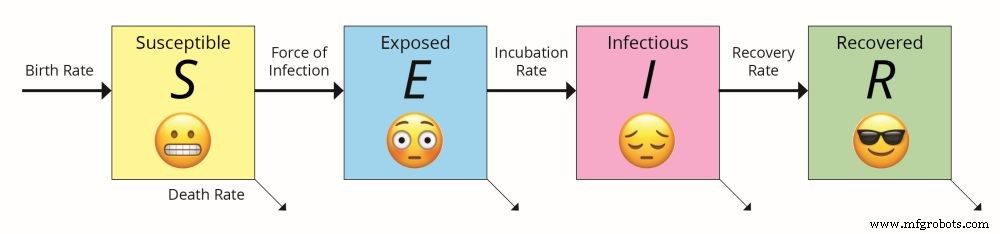
Figure 1: SEIR model (Image: triplebyte.com)
These models capture two critical dynamics: the virus’s biological characteristics and human interaction patterns. From them emerges the reproduction number, R0, which estimates how many secondary infections a single case will generate in a fully susceptible population.
For example, with R0 = 2, one infected person would spread the virus to two others, who would each infect two more, and so on—illustrating the multiplicative nature of transmission. R0 can be visualized in three scenarios: (1) <1 → disease dies out; (2) = 1 → steady state; (3) >1 → epidemic growth (see Figure 2).
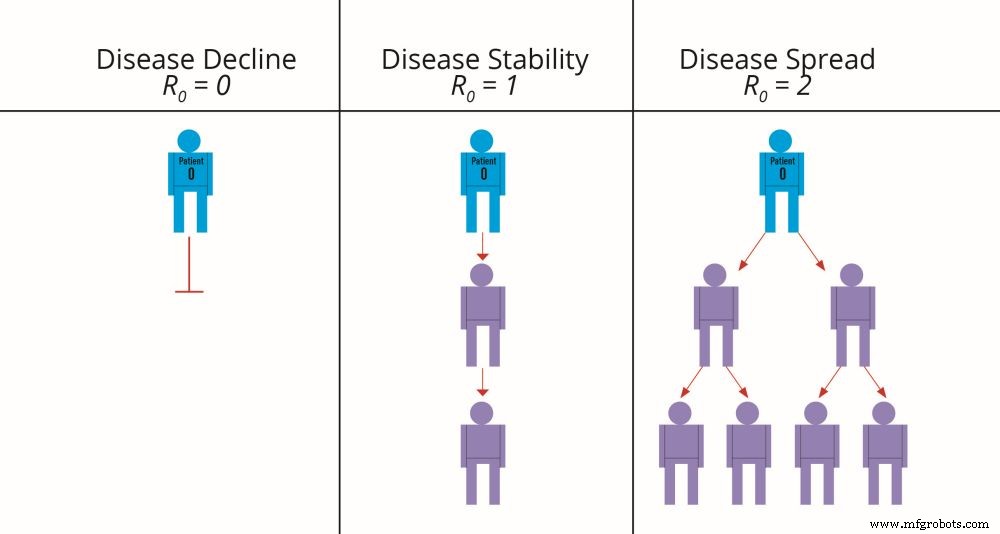
Figure 2: R0 basic scenarios (Image: triplebyte.com)
Lockdowns, school closures, and restrictions on public venues reduce social contact and thus lower R0. Achieving R0 < 1 is essential; otherwise, the disease continues to spread. While R0 is an average metric—influenza’s R0 hovers around 1.3—it can be skewed by super‑spreaders, who infect an unusually large number of contacts. Identifying and isolating these individuals is a key strategy for curbing outbreaks.
Because R0 is dynamic, authorities rely on AI‑driven models that incorporate GPS data from mobile devices to forecast hotspots and prioritize interventions.
Big Data, AI, and Sensors
Clinical data during an epidemic can be noisy, with false positives and inconsistent reporting. Big‑data analytics and machine‑learning algorithms can cleanse datasets, enforce quarantine compliance, and accelerate drug discovery.
Asia’s response showcases a range of digital tools. Drones equipped with high‑resolution scanners monitor quarantine adherence and scan body temperatures. China and Taiwan employ intelligent cameras that detect fevers even when individuals wear masks.
Hong Kong’s SenseTime has deployed a contactless temperature‑detection platform across Beijing, Shanghai, and Shenzhen’s transit hubs and public buildings. The system can read facial heat signatures through mask layers.
Alibaba’s AI diagnostic system analyzes chest CT scans with up to 96% accuracy, enabling rapid identification of COVID‑19 cases. Meanwhile, Graphen, in partnership with Columbia University, uses its Ardi AI platform to map viral genome variations, providing researchers with a visual tool to track mutation patterns and epidemiological data.
Big data also underpins enhanced surveillance. Four analytical methodologies—descriptive, predictive, prescriptive, and automated—guide decision‑making from understanding past trends to executing autonomous responses.
- Descriptive analysis: summarizes current and historical performance through visual dashboards.
- Predictive analysis: employs regression and forecasting models to anticipate future outcomes.
- Prescriptive analysis: identifies optimal strategies based on predictive insights.
- Automated analysis: triggers autonomous actions in real time, following analytical results.
Alibaba’s Alipay Health Code leverages China’s healthcare data to gate access to public spaces, assigning color‑coded permissions based on risk profiles.
Toronto‑based BlueDot, an AI startup, developed an early warning system that flagged the 2019 coronavirus threat before official recognition. Its platform, built on natural‑language processing, continuously scans global news feeds to predict disease spread.
Insilico Medicine in Maryland is applying deep learning to accelerate drug discovery. Their AI has screened millions of molecules for antiviral potential and is curating a vaccine‑development database.
Studying the Economic Impact
Beyond health effects, COVID‑19 has severely disrupted global economies. Satellite imagery and AI enable rapid assessment of industrial activity. WeBank researchers, for example, tracked China’s steel mills: output fell to 29% of capacity on Jan. 29, 2020, but rebounded to 76% by Feb. 9 (Figure 3).
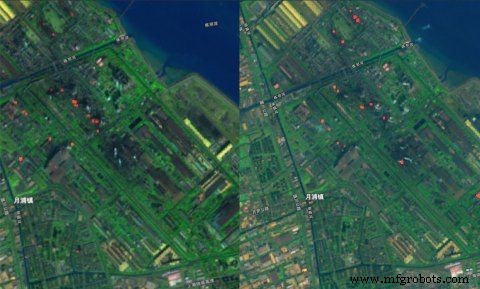
Figure 3: Satellite images show a sharp decline in steel‑industry activity during the early epidemic (Image: spectrum.ieee.org)
Other sectors were monitored by counting vehicles in large parking lots, revealing that Shanghai’s Tesla production had fully recovered by Feb. 10, whereas tourist attractions like Shanghai Disneyland remained closed.
GPS satellite data also quantified commuting patterns, comparing 2019 and 2020 Chinese New Year traffic. While 2019 saw a return to pre‑holiday volumes, 2020 traffic did not rebound, indicating lingering disruptions.
By March 10, 2020, 75% of the workforce had resumed work, and projections suggested most Chinese employees—excluding Wuhan—would return by the end of March.
These case studies illustrate the decisive role of AI and big data during a public‑health crisis and hint at their potential as standard tools for future resilience.
Reference
1 Mariotti, E. (2020, March 6). Modelling the Covid‑19 Outbreak in Italy.
>> This article was originally published on our sister site, EE Times Europe.
Sensor
- Virtual Sensors: How They Work and Key Applications
- Occupancy Sensors Explained: How They Work and Why They’re Essential for Energy Savings
- Door Sensors: How They Work and Their Role in Home Security
- Inductive Sensors: How They Work and Key Industrial Applications
- How NFC Sensors Work: Principles, Modes, and Everyday Applications
- IoT Sensors: Functionality, Types, and Real‑World Applications
- COVID-19 Accelerates Evolution of Data Acquisition & Analytics
- NASA Goddard’s Lab‑On‑Chip Sensor Delivers Real‑Time Flow & Temperature Monitoring
- How Automation Tackles Covid-19 Challenges – Insights & Infographic
- How Metal Fabricators Can Support COVID-19 Efforts: Automation & Safety Solutions