Industrial manufacturing
Sensor

Developed by Professor Francesca Iacopi and her team in the UTS Faculty of Engineering and IT, the biosensor adheres to the skin of the face and head to detect electrical signals being sent by the brain. These signals can then be translated into commands to control autonomous robotic systems. A stud
Sensors are the backbone of a digitized society, measuring a broad range of physical characteristics in every type of application from everyday consumer products to mission critical systems in aerospace, automotive, industrial, medical, optical and every other application that relies on smart, senso
A Penn State-led team of interdisciplinary researchers have developed a polymer with robust piezoelectric effectiveness, resulting in 60% more efficient electricity generation than previous iterations. Piezoelectric materials convert mechanical stress into electricity, or vice versa, and can be usef
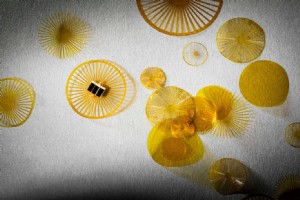
WHO A University of Washington engineering team has drawn inspiration from how dandelions use the wind for seed distribution to develop tiny battery-free devices that could help distribute wireless sensors across large areas. WHAT The system is about 30 times as heavy as a 1 milligram dandelion se
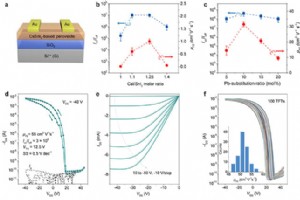
A Pohang University of Science and Technology (POSTECH) research team has improved the performance of a p-type semiconductor transistor using inorganic metal halide perovskite. One of the biggest advantages of the new technology is that it enables solution-processed perovskite transistors to be simp
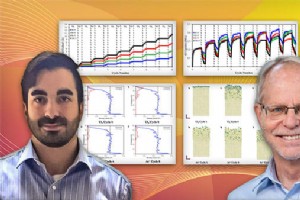
The information age created over nearly 60 years has given the world the internet, smart phones, and lightning-fast computers. Making this possible has been the doubling of the number of transistors that can be packed onto a computer chip roughly every two years, giving rise to billions of atomic-sc
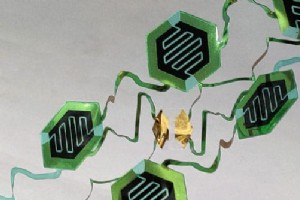
Engineers at UC Berkeley have developed a new technique for making sensors for wearable technology that enables medical researchers to prototype-test new designs much faster and at a far lower cost than existing methods. The technique replaces photolithography, which is a multistep process used to m

As a former high-power electronics engineer, I designed and tested high-voltage power supplies for a wide variety of applications from early prototype CAT scan systems to particle accelerators. I did the same with high-power microwave systems for everything from simulators to test the effects of rad
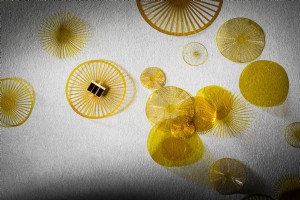
Dandelions have evolved to disperse their seeds more than a kilometer in the air. Researchers from the University of Washington want to give sensors that kind of distance, in a way that supports agricultural and environmental-monitoring applications. Usually its not the best idea to drop valuable wi
Soft machines — a subcategory of robotics that uses deformable materials instead of rigid links — are an emerging technology commonly used in wearable robotics and biomimetics (e.g., prosthetic limbs). Soft robots offer remarkable flexibility, outstanding adaptability, and evenly distributed force,
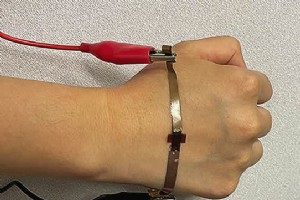
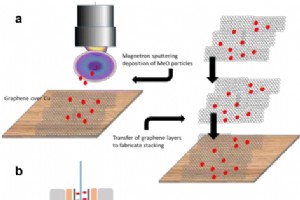
Graphene — hexagonally arranged carbon atoms in a single layer with superior pliability and high conductivity — could impact the development of future motion detection, tactile sensing, and health monitoring devices. Several substances can be converted into carbon to create graphene through laser
Any space, enclosed or open, can be vulnerable to the dispersal of harmful airborne biological agents. Silent and near-invisible, these bioagents can sicken or kill living things before steps can be taken to mitigate their effects. Venues where crowds congregate are prime targets for biowarfare stri
Researchers have developed electronic skin (e-skin) that is applied directly on top of real skin. Made from soft, flexible rubber, it can be embedded with sensors that monitor information like heart rate, body temperature, levels of blood sugar, and metabolic byproducts that are indicators of health
Methanol is sometimes referred to as ethanols deadly twin. While the latter is the intoxicating ingredient in wine, beer, and liquor, the former is a chemical that becomes highly toxic when metabolized by the human body. Even a relatively small amount of methanol can cause blindness or prove fatal i
Engineers have remotely determined the temperature beneath the surface of certain materials using a new technique called depth thermography. The method may be useful in applications where traditional temperature probes wont work, like monitoring semiconductor performance or next-generation nuclear r
Soft pressure sensors have received significant research attention in a variety of fields including soft robotics, electronic skin, and wearable electronics. Researchers have developed a highly sensitive wearable pressure sensor capable of sensitive, precise, and continuous measurement of physiologi
Foodborne illness hits about one in six people in the United States every year from more than 31 recognized pathogens including E. coli O157:H7, a particularly harsh strain of E. coli. Researchers have developed a bioluminescence-based assay coupled with a portable device that works with smartphon
Engineers have created a flexible electronic sensing patch that can be sewn into clothing to analyze sweat for multiple markers. The patch could be used to diagnose and monitor acute and chronic health conditions or to monitor health during athletic or workplace performance. The device consists of s
Through the use of magnetic fields, scientists have developed an electronic sensor that can simultaneously process both touchless and tactile stimuli. Prior attempts have so far failed to combine these functions on a single device due to overlapping signals of the various stimuli. The largest human
Scientists have developed color-changing, flexible photonic crystals that could be used to develop sensors that warn when an earthquake might strike next. The wearable, robust, and low-cost sensors can respond sensitively to light, temperature, strain, or other physical and chemical stimuli, making
Sensor