Industrial manufacturing
Sensor

A team of researchers developed a thin, ultra-sensitive flow sensor that could have significant implications for medical research. Flow sensors, also known as flowmeters, are used to measure the speed of liquid or gas flows. The speed of biofluidic flow is a key physiological parameter but existing
As the COVID-19 pandemic continues to spread across the world, testing remains a key strategy for tracking and containing the virus. Researchers have developed a rapid, ultrasensitive test using a paper-based electrochemical sensor that can detect the presence of the virus in less than five minutes.
It is well known from astronomical imaging that various atmospheric conditions and weather effects have an impact on image quality. This is due to local changes of the refractive index of the air in the optical path. These changes are wavelength-dependent and vary with changes in the atmospheric pre
Who The COVID-19 pandemic demonstrates the need to minimize human-to-human interaction between healthcare workers and patients, highlighting the benefits of using robots. What 3D structural-sensing robots were developed that can passively gather patient information. A research team programmed two r
In today’s digital age, the use of “Internet-of-Things” devices (embedded with software and sensors) has become widespread. These devices include wireless equipment, autonomous machinery, wearable sensors, and security systems. Because of their intricate structures and properties there is a need to
Scientists have developed a highly sensitive and accurate nitrogen dioxide (NO2) sensor that has lifesaving potential applications in domestic, public, and industrial settings. Long-term exposure to NO2 — a major air pollutant that originates from combustion engines and industrial processes — can ca
A biometric security system was developed that is based on the human heartbeat. The wearable prototype can stream in real time an identifying signature based on the electrical activity of a persons heart. The wearable device could be made in the form of a wristband or chest strap to serve as an alte
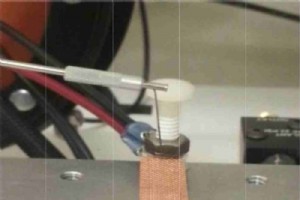
NASA Marshall Space Flight Center developed designs for two micro-electromechanical systems (MEMS) motion and position sensors: a single-axis accelerometer and a gyroscope. The designs leverage a highly aligned multi-wall carbon nanotube (MWCNT) tape with a P(VDF-TrFE) matrix that is mechanically ro
Innovators have developed an RFID-based system for sensing the angular position of rotating systems. The RFID-Based Rotary Position Sensor can be used as a position/orientation sensor or implemented in a controller to interpolate and refine the rotation angle of a rotating system. The sensor is part
The difference between smart and dumb headphones is that the smart ones go beyond playing music — they can be physiological monitors and virtual touchscreens. Xiaoran Fan, while a doctoral candidate at Rutgers University, led a team of researchers that developed a method called HeadFi that uses ordi
Optical communications systems have been a key enabler to the buildout of our information infrastructure. Many data centers used to store and transmit information have miles of fiber and thousands of laser/photodetector receivers to send and receive information across the fiber. There is relentless
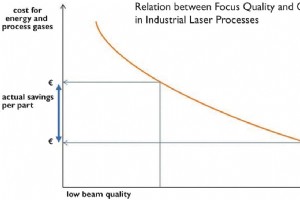
Lasers are used in diverse manufacturing processes, and in recent years the spectrum has become increasingly wider. Whether VCSELs in sensor technology, blue and green lasers for welding battery cells, powerful fiber lasers in additive manufacturing, or quantum cascade lasers in medical technology,
The optics industry is experiencing trends of both increasing laser power and the advancement of coating technology to accommodate this demand. However, an optic does not always need to utilize leading-edge coating technology to implement high-power lasers into a system. A second solution is to incr
Visible light is only a tiny part of the electromagnetic spectrum. Gamma rays, X-rays, ultraviolet, infrared, microwave and radio waves each have their own unique properties and their own place in the spectrum. In this article, we’ll focus on SWIR, or short-wave infrared, which is one component of i
Researchers at North Carolina State University have made what is believed to be the smallest state-of-the-art RFID chip: a device measuring 125 micrometers (μm) by 245 μm. The tiny chip potentially reduces the cost of RFID tags and enables their use in supply-chain security for high-end technologies
Sensors aboard the International Space Station (ISS), including personal CO2 monitors, require location tracking in order to correlate their time-stamped data with positional information. Labeling of data based on visual inspection is expensive and impractical for tracking many sensors. A cheap and
Engineers have created a tiny wireless implant that can provide real-time measurements of tissue oxygen levels deep underneath the skin. The device, which is smaller than the average ladybug and powered by ultrasound waves, paves the way for the creation of a variety of miniaturized sensors that cou
There is an ever-growing pile of discarded electronic devices that either don’t work anymore or have been cast away in favor of a newer model. Part of the problem is that electronic devices are difficult to recycle. While scraps of copper, aluminum, and steel can be recycled, the silicon chips at th
The promise of personalized medicine involves a simple device that keeps each person apprised of their level of health, identifies even trace amounts of undesirable biomarkers in blood or saliva, and serves as an early warning system for diseases. A device was developed that consists of an ultra-thi
Scientists have demonstrated the use of artificial intelligence (AI) to speed up the process of reconstructing images from coherent X-ray scattering data. Traditional X-ray imaging techniques (like medical X-ray images) are limited in the amount of detail they can provide. This has led to the develo
Sensor