Industrial manufacturing
Sensor

Laser beams can be used to precisely measure an object’s position or velocity. Normally, however, a clear, unobstructed view of this object is required — and this prerequisite is not always satisfied. In biomedicine, for example, structures are examined that are embedded in an irregular, complicated
University at Buffalo researchers are reporting an advancement of a chemical sensing chip that could lead to handheld devices that detect trace chemicals — everything from illicit drugs to pollution — as quickly as a breathalyzer identifies alcohol. The chip may also have uses in food safety monitor
As LEDs replace traditional lighting systems, they bring more smart capabilities to everyday lighting. While you might use your smartphone to dim LED lighting at home, researchers have taken this further by tapping into dynamically controlled LEDs to create a simple illumination system for 3D imagin
Researchers at Purdue University developed a sensor to monitor the oil circulation ratio (OCR) in real time for heating, ventilation, air conditioning and refrigeration systems. The oil circulation ratio provides data on the health and functionality of the overall system. “Our technology is needed
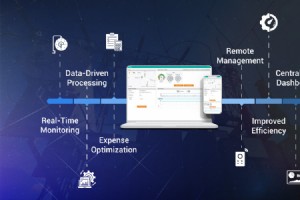
Industrial Internet of Things (IIoT) technologies can lead to a dramatic increase in production quality and throughput but theyre often not the plug-and-play solutions that many companies in the manufacturing sector may expect. To get the most value from an IIoT solution, manufacturers need to thoro
The facility now known as Langley Research Center was founded under NASA’s predecessor — the National Advisory Committee for Aeronautics (NACA) — in 1917, making it the first civilian aeronautical laboratory in the United States. Construction began near Hampton, VA at Langley Field later that year.
Professor Ying Shirley Meng and her team at UC San Diego have developed a working prototype of a flexible silver oxide-zinc battery that has at least ten times the areal energy density of a typical lithium-ion battery. It can be manufactured with standard screenprinting technology in a normal room e
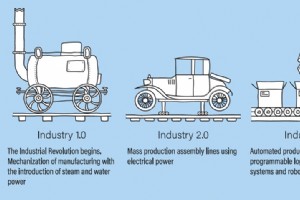
In a world with increasing reliance on wireless communications, the wired world seems rather passé. However, in the industrial IoT (IIoT), wires are still the norm. There are several reasons for maintaining wired connectivity in the industrial setting including RF interference, crowded radio bands,

When I think about integrated building systems, I jump to commercial buildings. But it occurred to me that healthcare facilities could be a very important application. To look into that, I interviewed Dwight Stewart, Founder and CTO, Igor, Inc. (West Des Moines, IA). Igor’s flagship product, Nexos,
The automotive industry is moving beyond the small electric commuter car and is now offering a variety of models to meet an increasing range of needs, from family transport to sports and recreation. These vehicles are typically larger and, as a result, heavier than earlier EV models. These require l
Quality control is fundamental in every industry, but in manufacturing it’s hyper-critical. Volatile market demand, high material and production costs, alongside the mission-critical nature of end products, impel manufacturers to pursue nothing but first-rate quality and a minimal rejection rate. Wi
To find out the latest information about sensors for automated driving systems, I interviewed Alberto Marinoni, Director of Product Marketing, TDK/Invensense (San Jose, CA). The commonly used term, Advanced Driver Assistance Systems (ADAS) essentially refers to SAE Level 2 (L2), Partial Driving Auto
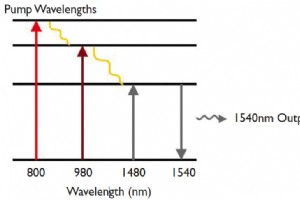
Erbium (Er) doped phosphate glass exhibits many beneficial properties, which has led to an increased demand in recent years for Er:glass lasers for applications as wide-ranging as laser rangefinding, long-distance communications, dermatology, and laser-induced breakdown spectroscopy (LIBS). Erbium f
Most new vehicles sold in the United States today include Advanced Driver Assistance Systems (ADAS) equipped with Pedestrian Automatic Emergency Braking (PAEB) as either a standard or optional feature. While state-of-the-art ADAS has improved freeway and high-speed driving, the basic need for collis
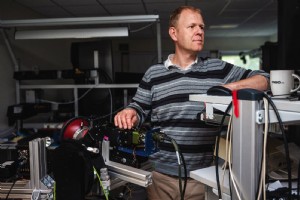
Hyperspectral imaging combines both imaging and spectroscopy. There are many different optical architectures that are used to make hyperspectral systems, but the end goal is the same – to make an image where each pixel in the image contains information from many spectral bands (many different colors
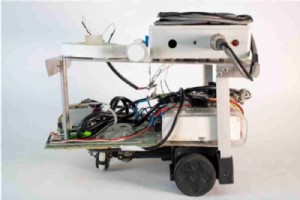
A robot being developed at Tel Aviv University hears electrical signals, thanks to a natural sensor: the ear of a dead locust. So far, the call and response made possible by a locust-eared robot is a basic one. When a researcher claps, the locusts ear registers the sound and the robot moves forward.
Todays vehicles are increasingly complex. Some cars, in fact, have over 100 electronic control units (ECUs) to support advanced driver assistance system (ADAS) functions and other features that rely on sensor input, like parking assistance and power steering. Adding to the complexity, present-day ve

Sophisticated sensors do exist – the kind that can tell you that you’re getting a sunburn, that your heartrate is a bit too high, or even that you have the symptoms associated with COVID-19. But are you willing to put them on your body? To walk around the house with a sensor glued on your arm? Would

Robotics researchers are developing exoskeleton legs that make their steps on their own, using sophisticated artificial intelligence (A.I.) technology. The self-controlled legs may someday support the movements of the elderly and those with physical disabilities. The system, built and tested by rese
This month’s Here’s an Idea episode highlighted a number of on-body sensors. Penn State professor Larry Cheng, for example, found a way to 3D-print a sensor directly on the skin (shown in the above image), so measurements requiring close contact, like heart-signal readings, can be made more accurate
Sensor