Industrial manufacturing
Sensor

Communications in space demand the most sensitive receivers possible for maximum reach, while also requiring high-bit-rate operations. A concept for laser beam-based communications using an almost noiseless optical preamplifier in the receiver has been developed. The free-space optical transmission
Innovators at NASA Johnson Space Center, in collaboration with Oceaneering and The Florida Institute for Human and Machine Cognition, have developed the Split-Ring Torque Sensor (SRTS), a device that uses optical sensors to measure the position, velocity, and torque of a rotating system. The SRTS wa

Spinoff is NASA’s annual publication featuring successfully commercialized NASA technology. This commercialization has contributed to the development of products and services in the fields of health and medicine, consumer goods, transportation, public safety, computer technology, and environmental r
A team has developed and tested a stretchable, wearable gas sensor for environmental sensing. It combines a newly developed laser-induced graphene foam material with a unique form of molybdenum disulfide and reduced-graphene oxide nanocomposites. The researchers were interested in seeing how differe
Impedance matched coatings are used for absorber applications to couple mid-to far-infrared (IR) radiation to an ultrasensitive bolometric detector suspended on an ultrathin dielectric membrane. In order to provide adequate responsivity, the bolometric detector must have a low heat capacity. Further
Light is the primary stimulus for regulating circadian rhythms, seasonal cycles, and neuroendocrine responses in many species including humans. During the past 20 years, studies have tested the use of light for treating fall and winter depression (Seasonal Affective Disorder or SAD), non-seasonal de
Fabricated using flexible, stretchable, and electrically conductive nanomaterials called MXenes, novel strain sensors were developed that are ultra-thin, battery-free, and can transmit data wirelessly. By controlling the surface textures of MXenes, researchers were able to control the sensing perfor
High-orbit satellite servicing and planetary science missions are presented with unique challenges including a harsh environment and long mission life, coupled with the need for long-range, high-speed, accurate measurements. Conventional systems suffer from high costs of bringing other solutions to
NASA Goddard Space Flight Center has developed a printable nanosensor and leads using 3D printing techniques on a silicon daughter board that can be connected to a self-contained pre-amp printed circuit board (PCB). The sensor contains a graphene sensor array (a printed CNT or MoS2 could also work)
A low-cost sensor technology, called Chemical Identification by Magneto-Elastic Sensing (ChIMES), uses target response materials (TRMs) as actuators in magneto-elastic (M-E) sensors (Figure 1). TRMs can come from many classes of chemical and biochemical compounds, with many degrees of selectivity. T
Mobile phones can do almost anything. With these devices, it might even be possible to ascertain a beer’s alcohol content or how ripe a piece of fruit is. The infrared spectrometers used today for chemical analyses generally weigh several kilograms and are difficult to integrate into a handheld devi
The future of mobility is electric cars, trucks, and airplanes. But there is no way a single battery design can power that future. Even cellphone and laptop batteries have different requirements and different designs. The batteries required over the next few decades will have to be tailored to their
Exposure to water vapor is a death sentence for the lithium-ion (Li-ion) batteries used in hybridelectric and electric vehicles (EVs). If moisture enters the battery cell and reacts with the electrolyte, it creates acid. And that acid can create an exothermal reaction, leading to a thermal runaway —
Current versions of batteries and supercapacitors powering wearable and stretchable health-monitoring and diagnostic devices have many shortcomings including low energy density and limited stretchability. An alternative to batteries, micro-supercapacitors are energy storage devices that can compleme
Professor Iraj Ershaghi and a team of researchers at the University of Southern California (USC) found a way to use idle oil and gas wells for energy storage — one of the major concerns for solar and wind energy generation. Tech Briefs: Where did this idea come from? Professor Iraj Ershaghi: A maj
One of the most important aspects of any manufacturing facility is security — whether protecting machinery or data. Tech Briefs posed questions to executives at companies providing network and facility security solutions to get their views on issues such as cybersecurity, the cloud, wireless devices
The Internet of Things (IoT) — and in a broader sense, the Fourth Industrial Revolution (Industry 4.0) — is the omnipresent new paradigm in manufacturing today, profoundly affecting the way manufacturers are operating or are planning to operate. Improving Overall Equipment Effectiveness (OEE) is a k
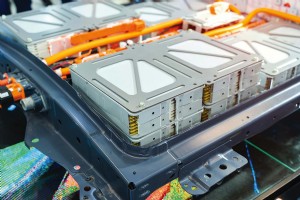
Modern life is heavily reliable on mobile battery-powered devices affecting daily aspects of our lives, ranging from telecommunication devices to transport vehicles. There is an increasing demand for efficient and cost-effective batteries. Conventional batteries have been riddled with numerous conce
A research team from National University of Singapore (NUS) has taken a first step towards improving the safety and precision of industrial robotic arms by developing a new range of nanomaterial strain sensors that are 10 times more sensitive when measuring minute movements, compared to existing tec
A hacker can reproduce a circuit on a chip by discovering what key transistors are doing in a circuit — but not if the transistor “type” is undetectable. Purdue University engineers have demonstrated a way to disguise which transistor is which by building them out of a sheet-like material called bla
Sensor