



Masterbatch Basics: Black vs. White – Key Insights for Plastic Manufacturers
Plastic’s versatility allows manufacturers to produce a wide range of consumer products in countless shapes and colors. Masterbatch plays a pivotal role in delivering the desired attributes—color, performance, and cost efficiency—to the final plastic item.
I. Masterbatch in Consumer Products
Masterbatch is a concentrated blend of color pigments or additives that is mixed into the base polymer during processing. By doing so, it imparts specific properties while keeping the production cycle fast and cost‑effective.
- Color Masterbatch – Enables manufacturers to produce consistent hues from a rich palette (red, blue, chestnut, yellow, black, white, silver, etc.).
- Plastic Additives Masterbatch – Enhances mechanical, optical, or chemical properties (UV stabilizers, flame retardants, antistatic agents, slip agents, etc.).
Masterbatch solutions are solid or liquid; they allow precise control over dispersion, brightness, gloss, and durability. The result is a resin that meets consumer expectations for toughness, smoothness, and visual appeal.
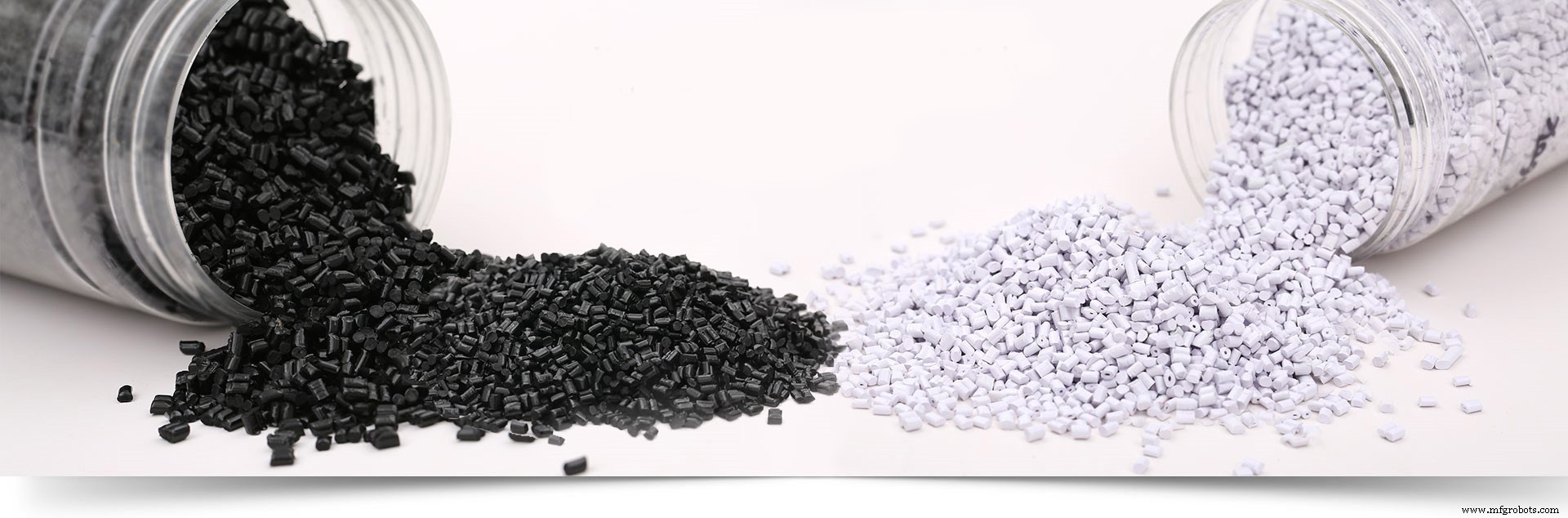
II. Black Masterbatch
Black masterbatch, typically derived from carbon black, is the industry’s most widely used colorant. Its quality depends on the particle size, surface chemistry, and manufacturing process, ensuring uniform dispersion and the desired depth of shade.
- Applications: Packaging films, HDPE pipes, automotive parts, control panels, sprayers, cables, and other industrial components.
- Special formulations can achieve deeper blacks or brighter tones, depending on product requirements.
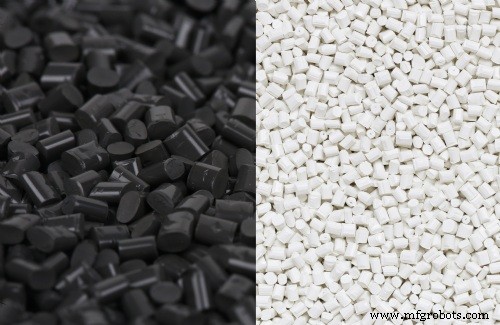
Industries that rely on black masterbatch include:
- Woven bag / Raffia production
- Nonwoven textiles
- Film blowing and blow molding
- Injection molding
- HDPE pipe manufacturing
III. White Masterbatch
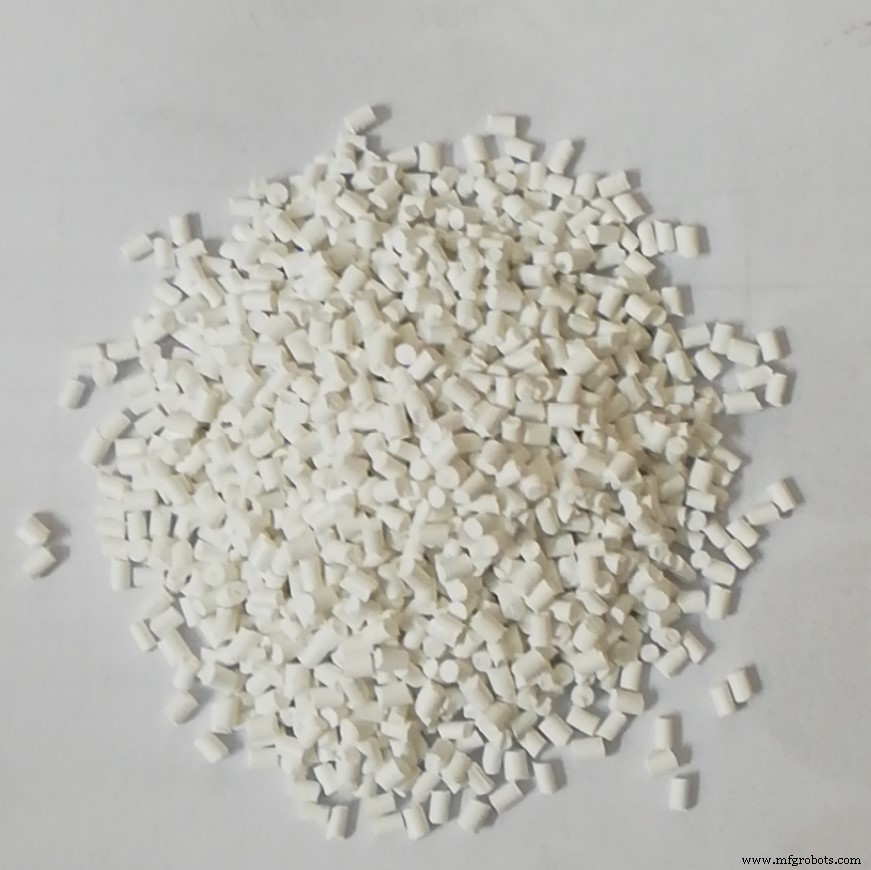
White masterbatch is based on finely milled titanium dioxide (TiO2) with load ranges from 20 % to 75 %, tailored to the customer’s opacity and brightness needs. High‑purity TiO2 ensures excellent dispersion and optical performance.
- Key Advantages:
- Superior dispersion and even whiteness
- Enhanced UV resistance
- High thermal stability and reduced TiO2 aggregation
- Improved heat resistance and weatherability
- Ideal for woven bag anti‑vibration and film applications
- Typical Uses:
- Thin‑wall and thick‑wall extrusion, blow molding, and heat forming
- Single and multi‑layered films, especially for food packaging
- Weather‑resistant components and high‑speed production lines
- Disposable cups, water tanks, bottles, caps, and nonwoven products
Choosing the right masterbatch source is critical to achieving product quality and performance. Sunrise Colours Vietnam is a leading supplier of color masterbatch in Vietnam, backed by premium raw materials, state‑of‑the‑art production equipment, and a team of seasoned engineers.
Contact us today for expert consultation and a custom quotation.
SEE MORE
Additives
The white masterbatch is super fine and super white Titanium Dioxide, which has many different ingredients. Titanium Dioxide Ti02 load ranges from 20% to 75% depending on consumer requirements
Dye
- Plastic Demystified: An Expert FAQ on Definition, Materials, and Applications
- How to Identify the Type of Plastic in Your Everyday Items
- Premium Titanium Dioxide White Masterbatch Production – Sunrise Colours
- High‑Performance PP Filler Masterbatch for Industrial Plastic Production
- Color Masterbatch: The Premier Solution for Industrial Plastic Coloration
- Enhancing Plastic Production with CaCO3 Filler Masterbatch – Benefits, Applications & Sunrise Colours Expertise
- Understanding Plastic Resin: Composition, Production, and Applications
- Understanding Black Chrome Plating: Benefits, Process, and Applications
- CNC Machining vs. 3D Printing: Essential Insights for Product Designers
- Understanding Diamond-Like Carbon Coatings: A Guide for Product Designers