



Industrial Pigments Explained: Types, Applications, and the Most Popular Choices Today
In today’s high‑performance manufacturing landscape, pigments play a pivotal role across paints, plastics, textiles, and more. Selecting the right pigment is essential for product quality, cost efficiency, and regulatory compliance. Below we explore what industrial pigments are, their classifications, the most widely used types, and practical guidance for choosing the right one.
What Are Industrial Pigments?
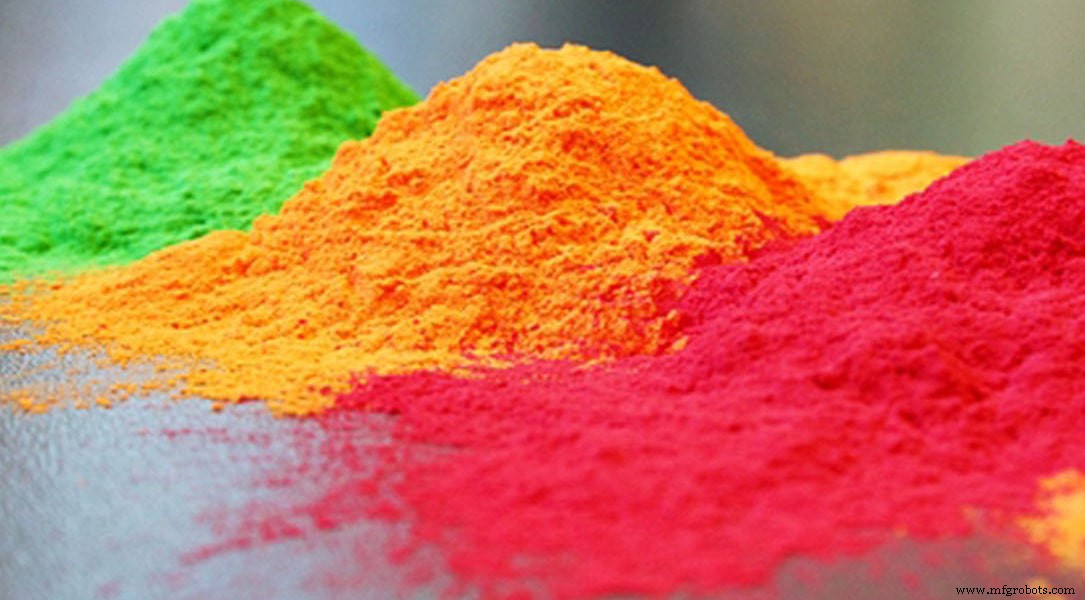
Industrial pigments are finely ground chemical compounds that provide color. They are formulated as powders that disperse readily in media such as paints, resins, and plastics. Key characteristics include high dispersibility, insolubility in the carrier, and stability under processing conditions.
While pigments are available in various forms—wax, liquid, and powder—powders remain the industry standard because they offer:
- Ease of Use: Direct addition to formulations without complex preparation.
- Storage & Transport: Dry, light‑protected containers reduce contamination risks.
- Cost‑Effectiveness: Powders are typically the most economical option.
Classification of Industrial Pigments
Industrial pigments are broadly divided into two categories:
- Organic Pigments – Cationic or neutral compounds that dissolve or disperse in organic matrices. Common families include:
- Azo Pigments – Excellent solubility in plastics; often combined with metal ions or amide groups to curb migration. Typical colors: yellow, orange, red.
- Phthalocyanine Pigments – Known for weather resistance, heat tolerance, and pH stability. Widely used for blue and dark green hues.
- Anthraquinone Pigments – Famous for alizarin derivatives; prized in textile dyeing for bright, luminous colors.
- Dye‑Based Pigments – Mobile colorants suited for high glass‑transition polymers like PS, PMMA, and uPVC.
- Inorganic Pigments – Metal oxides, sulfides, or salts that remain insoluble. Major groups include:
- White Titanium Dioxide (TiO₂) – The industry’s go‑to hiding pigment, offering superior opacity, UV absorption, and aging resistance. Non‑hiding fillers such as calcium carbonate or talc provide lower refractive indices for cost‑saving applications.
- Carbon Black – The primary black pigment, valued for its high color fastness, UV protection, and electrical conductivity in plastics.
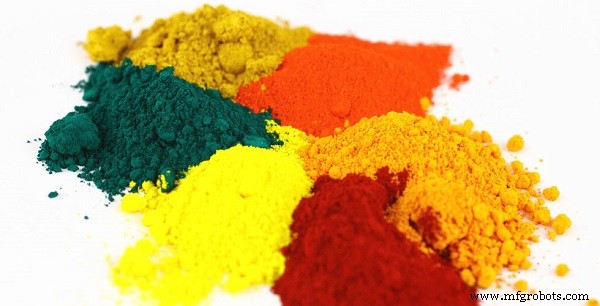
- Colored Inorganics – Iron oxides (yellow, red, brown, black), chromium oxide (dark green), mixed‑phase oxides (e.g., cobalt aluminate blue), and lead chromate (yellow‑to‑red). These pigments excel in durability but generally lack the vividness of organics.
Inorganic pigments typically offer superior light, heat, and solvent resistance at a lower cost, while organic pigments deliver brighter, more saturated colors with excellent fastness when properly formulated.
Specialized Pigments
Beyond the core organic and inorganic families, several specialty pigments are used for unique visual effects:
- Metallic Pigments – Fine aluminum flakes or alloy powders that create a reflective sheen. Often blended with organics for a metallic‑matte hybrid.
- Iridescent Pigments – Pre‑dispersed aluminum or mica flakes that generate shimmering colors when shear forces are minimized during mixing.
- Fluorescent Pigments – Ultra‑bright dyes that absorb UV and re‑emit visible light, ideal for safety signage and high‑visibility applications.
- Nacre (Mother‑of‑Pearl) Pigments – Mica flakes coated with TiO₂, producing iridescence through light interference. Requires careful handling to preserve the flake structure.
Choosing the Right Pigment: Key Considerations
- Match Functionality to Application – Evaluate the host material, processing conditions, and end‑use performance (e.g., UV stability, temperature tolerance).
- Quantity Planning – Bulk purchases lower unit cost but increase inventory risk. Optimize batch size based on production volume.
- Supplier Reliability – Partner with a reputable source that provides consistent quality, traceability, and technical support.
With nearly 20 years of experience, Sunrise Colors Vietnam has built a reputation as a trusted manufacturer and distributor. Our technical team stays ahead of industry trends, ensuring you receive pigments that meet your exact specifications and regulatory standards.
Dye
- Kevlar Demystified: Composition, Applications, and Benefits
- The Complete Guide to Pipe Fittings: Types, Functions, and Applications
- Plastic Additives: Types, Functions, and Industry‑Leading Solutions
- Key Components of a CNC Machine Explained
- Unlocking Efficiency: The Key Advantages of Deploying Industrial Robots in Manufacturing
- Top Industrial Machining Processes Every Manufacturer Should Know
- Industrial Braking Systems in Mining: Types, Applications, and Best Practices
- Top Innovations Transforming Industrial Maintenance
- Industrial Maintenance: 5 Essential Levels Explained
- Top 3 Pump Designs: Rotary, Piston, and Screw Explained