



Revolutionizing Motorsports: UVic Formula Team Uses 3D Printing & Composite Materials for Design Flexibility
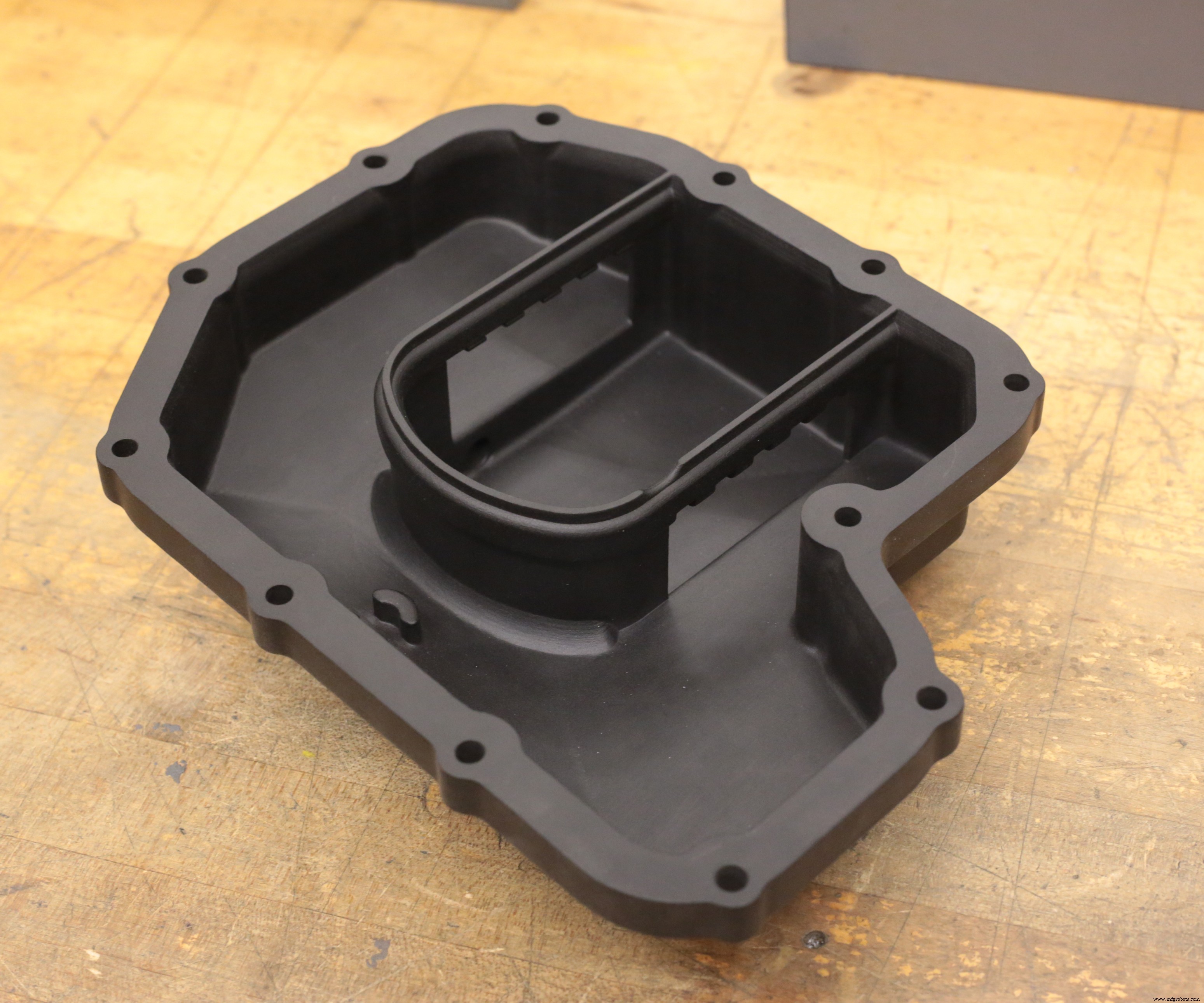
A combination of 3D printing technology and composite materials has enabled one university motorsports team the opportunity to design — and redesign — parts for its Formula SAE collegiate racecars for the past four years.
Since 2016, the University of Victoria Formula Motorsport team (UVic; Victoria, British Columbia, Canada) has been designing its Formula SAE racing vehicles with 3D-printed oil pans engineered with CRP USA’s (part of CRP Group, Modena, Italy) laser sintering 3D printing process and Windform TOP-LINE composite materials.
From 2016-2018, the oil pans were produced using CRP’s polyamide-based Windform XT 2.0 carbon fiber-filled composite material. According to CRP, the light weight of these pans allowed the team to significantly lower the vehicle’s engine, decreasing the vehicle’s overall center of gravity and improving the performance of the car.
Learn More:
Other recent applications of Windform XT 2.0 include a student-constructed nano-satellite demonstrator and a wind tunnel model for use with aircraft flight testing.
In addition, the use of laser sintering technology has given the team freedom to design complex geometries, such as oil pan baffles to more consistently direct oil flow within the pan and eliminate the possibility of oil starvation when the vehicle tilts around corners.
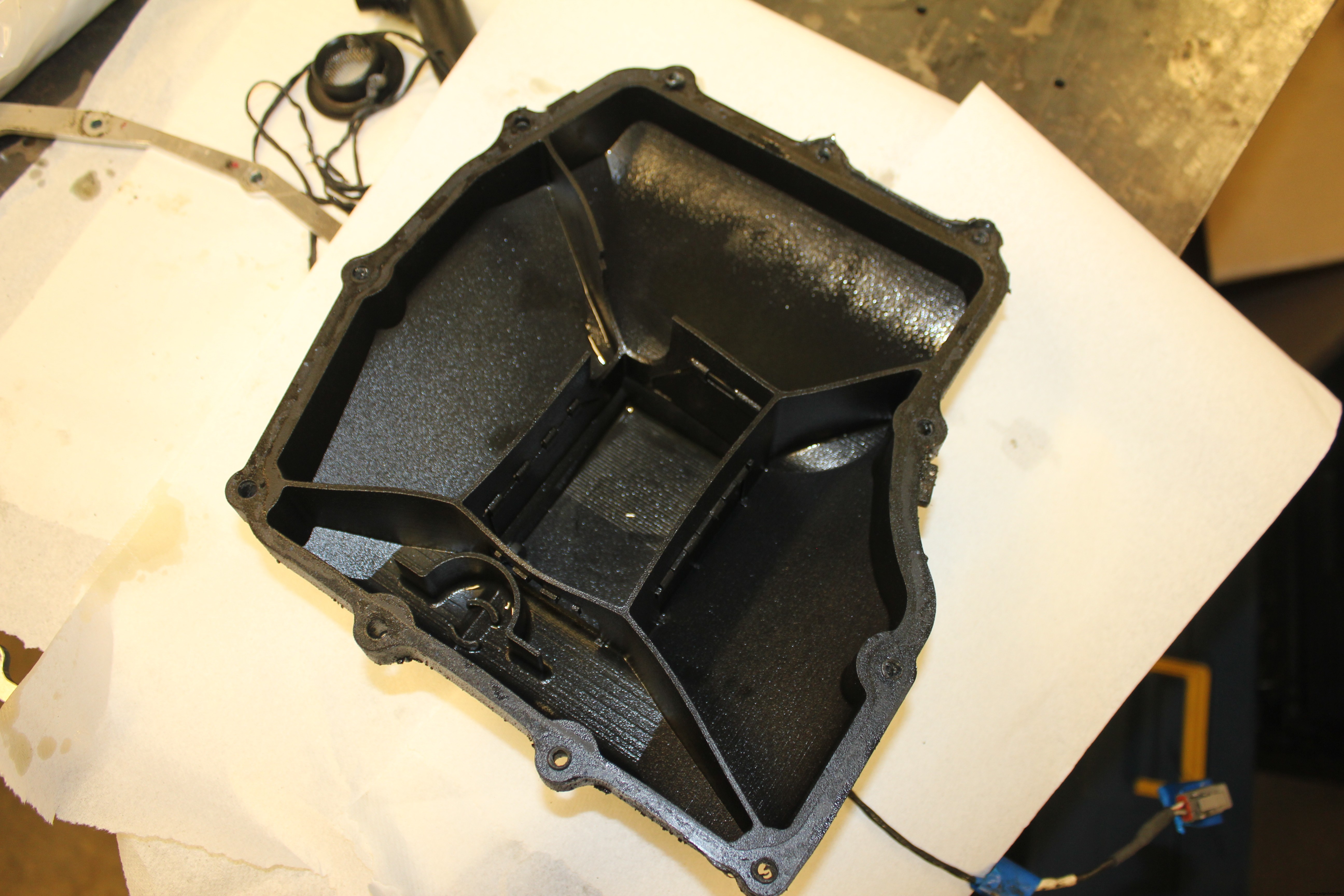
In 2018, though, the team’s vehicle engine overheated during a test drive, causing the oil temperature to increase beyond the limits of the designed pan, warping the thin walls of the oil pan baffle and pulling a section of the mating flange into the pan, causing a significant oil leak.
For the 2019 competition, the team re-evaluated the design, choosing to make some changes to the pan’s geometry and evaluating alternative Windform TOP-LINE materials. The redesigned oil pan comprises Windform SP, a carbon fiber-filled polyamide composite material with a higher melting point compared to Windform XT 2.0. To decrease chances of failure, the team also increased the thickness of the mating flange and changed the design for the baffle, simplifying the baffle walls to one central area around the oil pickup and adding a support ridge to the top of the wall.
The changes, CRP Technology says, resulted in a more robust oil pan.
According to the UVic Motorsport team, “With laser sintering technology and Windform TOP-LINE composite materials from CRP USA at the finger tips of our engineering team, we are able to design complex parts that previously would not have been possible.”
fiber
- Eco-Friendly Composite Materials: Sustainable Solutions for a Greener Future
- 10 Unexpected Examples of Composite Materials You Didn't Know Existed
- Composite Manufacturing: Advancing Materials for Aerospace, Energy, and Healthcare
- Composite Materials: The Modern Solution for Lightweight, Durable, and Cost‑Effective Engineering
- Exploring 3D Printing Composite Materials: A Practical Guide for Engineers
- Ensuring Food Safety in 3D Printing: Expert Design Tips, Materials, and Finishes
- 10 Strongest 3D Printing Materials for Ultimate Durability
- Eco-Friendly Biodegradable Materials for 3D Printing: Sustainable Solutions
- Expert Guide to Choosing 3D Printing Materials for SLS, MJF, FDM, SLA & DLS™
- Optimize Your Polyjet 3D Prints: Design Guidelines for Precision & Multi-Material Success