



Glass Fiber Roving: Types, Specifications, and Key Applications
Glass fiber roving is a bundle of parallel strands produced without twisting. It is a foundational material in the glass fiber industry, prized for its superior antistatic properties, moisture resistance, and excellent bundling and banding characteristics. All commercial rovings are treated with enhanced sizing to improve resin uptake and processing performance. The industry standard for roving weight ranges from 150 to 9,600 tex, and the fiber diameter varies between 12 µm and 23 µm. Roving is typically categorized by its end use: In this process, the roving is referred to as jet yarn. It is tailored for Fiber‑Reinforced Plastic (FRP) injection molding. The yarn is drawn from a 200‑filament glass fiber core, then treated with a specialized sizing agent. During production, a spray gun atomizes the roving and simultaneously sprays resin onto it. A roller then flattens the mixture and eliminates entrapped air, producing a uniform composite. This method is widely used for manufacturing pipes, sanitary ware, automotive components, and other FRP products. Pre‑forming involves chopping roving into discrete lengths and spraying it onto a web shaped to the final product geometry. A minimal resin dose is applied to bind the fiber matrix. The pre‑formed web is then placed into a metal mold, where hot‑press injection of resin completes the fabrication. This technique is common for complex shapes requiring high fiber alignment. SMC is a sheet molding compound primarily used in automotive parts, bathtubs, water tank panels, and seating. During SMC manufacturing, roving is cut into 25 mm lengths and dispersed in a resin paste. The standard roving used in SMC is 2,400 tex, providing a balanced trade‑off between strength and workability. These rovings are integral to the production of small‑diameter pipes, storage tanks, and bars. Applications span consumer goods, infrastructure, aerospace, military, and electronics. Roving weights for winding and pultrusion range from 1,100 to 9,600 tex, with direct roving reserved for large‑diameter pipe and tank manufacturing. Roving is essential for producing woven or unidirectional fabrics used in hand‑lay‑up FRP. Weaving rovings must exhibit high abrasion resistance and permeability. Prior to weaving, rovings are thoroughly dried to ensure consistent tension and fiber alignment.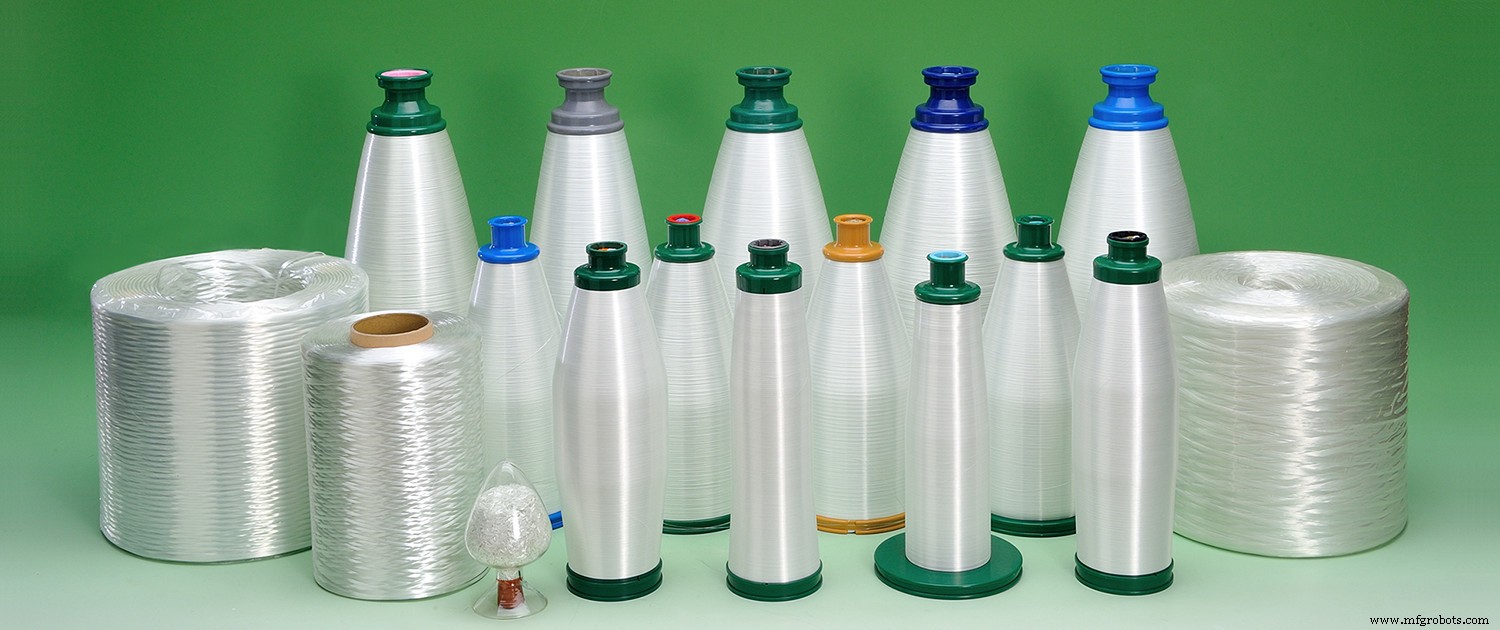
Glass Fiber Roving: Types, Specifications, and Key Applications
Types of Roving
Roving in FRP Injection Molding
Pre‑Formed Roving Process
SMC (Sheet Molding Compound) Roving
Winding & Pultrusion Roving
Roving for Weaving
fiber
- Integrating Qt with DDS: Building Scalable IoT Applications
- W Tungsten & Alloys: High‑Performance Applications in Steel, Heat‑Resistant Alloys, and Electronics
- Mastering Cloud Application Monitoring: Insights for IT Leaders
- Mastering Python Type Conversion & Casting: A Comprehensive Guide
- Classification and Application of Glass Fibers: Types, Properties, and Uses
- How to Select the Right Robotic Welding Process and Equipment for Your Production Needs
- Friction Welding Explained: Process, Benefits, and Applications
- Thermal Spraying Explained: Types, Applications, and Benefits
- Polishing Processes: Types, Benefits, Applications, and How They Differ from Grinding
- Friction Welding Explained: How It Works & Key Applications