



Does Stainless Steel Melt in Fire? A Technical Overview
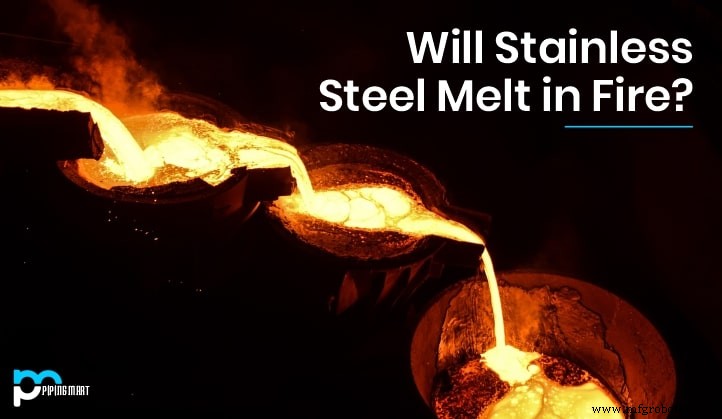
Stainless steel, often called Inox, is a nickel‑chromium alloy prized for its corrosion resistance and versatile applications. It is produced in sheets, plates, bars, wire, tubing, flanges, and more, making it a staple in industries ranging from surgical instruments and kitchenware to large‑scale construction.
Melting Points by Grade
Stainless steel is grouped into three primary families—Austenitic, Ferritic, and Martensitic—each with distinct temperature thresholds. The following table lists the typical melting ranges for common grades:
- Grade 304: 1,400–1,450 °C (2,552–2,642 °F)
- Grade 316: 1,375–1,400 °C (2,507–2,552 °F)
- Grade 430: 1,425–1,510 °C (2,597–2,750 °F)
- Grade 434: 1,426–1,510 °C (2,600–2,750 °F)
- Grade 420: 1,450–1,510 °C (2,642–2,750 °F)
- Grade 410: 1,480–1,530 °C (2,696–2,786 °F)
These ranges reflect inherent variations in alloy composition and processing, so exact values may differ slightly from batch to batch.
Key point: The melting point is not a direct indicator of heat tolerance.
Even well below its melting temperature, stainless steel can experience significant loss of strength. The alloy’s high chromium content enhances resistance to scaling and wet corrosion at elevated temperatures, but low‑carbon grades are prone to embrittlement above approximately 350 °C. For instance, an alloy that remains structurally sound at 850 °C may lose up to 50 % of its integrity when exposed to 1,000 °C.
When selecting stainless steel for high‑temperature applications, consider not only the melting point but also factors such as creep resistance, tensile strength, and susceptibility to embrittlement. This holistic approach ensures that the material maintains performance without premature deformation or failure.
In summary, while stainless steel can withstand extreme heat, its practical limits are governed by more than just the melting temperature. Proper alloy selection and design are essential to ensure safety and reliability in fire‑prone environments.
Metal
- Stainless Steel: Properties, Manufacturing, and Future Applications
- Carbon Steel vs Stainless Steel: Choosing the Right Material for Your Project
- How Stainless Steel Is Made: From Raw Materials to Finished Products
- Does Stainless Steel Melt in Fire? A Technical Overview
- Understanding Stainless Steel: Properties, Benefits, and Applications
- Effective Stainless Steel Cleaning & Passivation: Protect Against Rust & Corrosion
- Carbon Steel vs Stainless Steel: Choosing the Right Alloy for Your Project
- Steel vs. Stainless Steel: Choosing the Right Metal for Your Project
- Mild Steel vs Stainless Steel: Key Differences Explained
- Copper-Infused Antibacterial Stainless Steel: Enhanced Safety & Corrosion Resistance