



Pultrusion: A Continuous Molding Method for High‑Performance Fiber‑Reinforced Polymers
The Pultrusion Process*
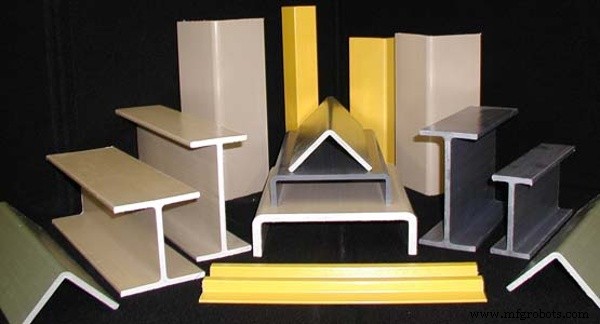
Pultrusion is a continuous, high‑speed molding technique that uses fiber reinforcement—such as fiberglass roving, mat, or cloth—combined with polyester or other thermosetting resin matrices. The selected reinforcement is pulled through a resin bath, ensuring thorough impregnation. The wet‑out fibers are then formed into the desired geometry and drawn into a heated steel die. Inside the die, temperature is precisely controlled to cure the resin, allowing the laminate to solidify in the exact shape of the die while the machine continuously pulls the profile forward.
Process Advantages
• Unmatched design flexibility: pultruded profiles can be simple or highly complex, eliminating post‑assembly steps.
• Consistent quality: the continuous process limits length variations to shipping constraints and provides uniform color throughout the cross‑section, reducing painting needs.
• Optimized performance: by strategically placing high‑performance reinforcements, manufacturers can tailor specific strength characteristics to the application.
Raw Materials Used
1) Resin – High‑performance polyester resins are blended with fillers, catalysts, UV inhibitors, and pigments to create a matrix that binds the fibers and imparts corrosion resistance and other required properties. Each mix is formulated to meet the specific application needs. Roving and mat largely determine the final physical properties.
2) Roving – Fiberglass roving provides the dominant longitudinal strength. Its quantity and placement are defined during design, directly influencing the finished product’s performance. Roving also supplies the tensile strength needed to pull the other reinforcements through the die, making it essential to profile design.
3) Mat – Continuous strand mat offers an economical way to achieve high transverse properties. Mat and roving are layered together to form the core composition of most pultruded composites. The mat‑to‑roving ratio controls the balance between transverse and longitudinal properties.
4) Veil – Because pultrusion operates at low pressure, fiberglass reinforcements often sit near the surface, affecting appearance, corrosion resistance, and handling. Surface veils—typically A‑glass or polyester—can be added to shift the reinforcement away from the surface, creating a resin‑rich finish.
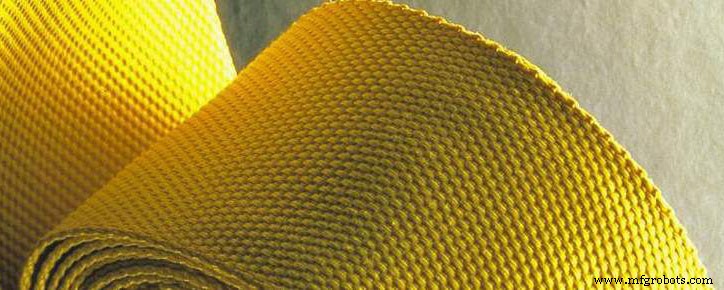
5) Woven and Stitched Fabric – When the desired property mix cannot be achieved with standard mat‑roving construction, selected fabrics—balanced, high longitudinal, high transverse, or ±45° multi‑ply—can be incorporated alone or with mat and roving. These fabrics increase cost but deliver the required performance.
6) Other Reinforcing Materials – Carbon and aramid fibers are also used, either as roving or woven fabrics, or combined with fiberglass. These high‑modulus fibers add substantial stiffness. Designs incorporating them must consider the higher cost and aim for optimal performance.
*This blog post is excerpted from this design manual.
Questions? Comments? Let us know in the comments section below.
Looking for more high‑strength materials? Download our free guide.
Resin
- Expert Shaft Manufacturing: Precision Processes & Custom Solutions
- Fiber‑Reinforced Plastic: Why It Outperforms Steel, Aluminum, and Timber in Modern Applications
- Carbon Fiber Reinforced Plastics: Evolution, Benefits, and Production
- Additive Manufacturing Explained: From Design to Finished Part
- The Modern Manufacturing Process: Key Techniques and Innovations
- Understanding the Soap Manufacturing Process: From Fats to Saponification
- Metal Additive Manufacturing: Transforming Production for Aerospace and Beyond
- How Selective Laser Sintering (SLS) Converts 3D CAD Designs into Solid Parts
- Exploring the Four Core Types of Manufacturing Processes
- From Prototypes to Production: Mastering the Manufacturing Process