



Turmeric: Culinary Mastery, Health Benefits, and DIY Dyeing Techniques
Turmeric (Curcuma longa) has been cultivated in South Asia for millennia and is renowned for its vibrant golden hue and warm, peppery flavor. Often called “Indian solid gold,” the spice is a staple in kitchens worldwide and a subject of growing scientific interest for its antioxidant and anti‑inflammatory properties.
In the culinary arena, turmeric shines in egg‑based dishes such as scrambled or poached eggs, enriching the color and depth of homemade salad dressings, soups, stews, and roasted vegetables. A simple technique is to toss vegetables in coconut oil, then sprinkle a pinch of turmeric before roasting for a nutrient‑dense side dish. Outside of cooking, turmeric powder is also employed as a natural dye for fabrics.
One of the most popular preparations is “golden milk,” a warming beverage made by blending warm milk—dairy or plant‑based—with a teaspoon of turmeric, black pepper, and optional honey or cinnamon. Studies suggest that curcumin, the active compound in turmeric, may enhance the antioxidant capacity of the drink, offering potential health benefits.
Using Turmeric Powder as a Natural Dye
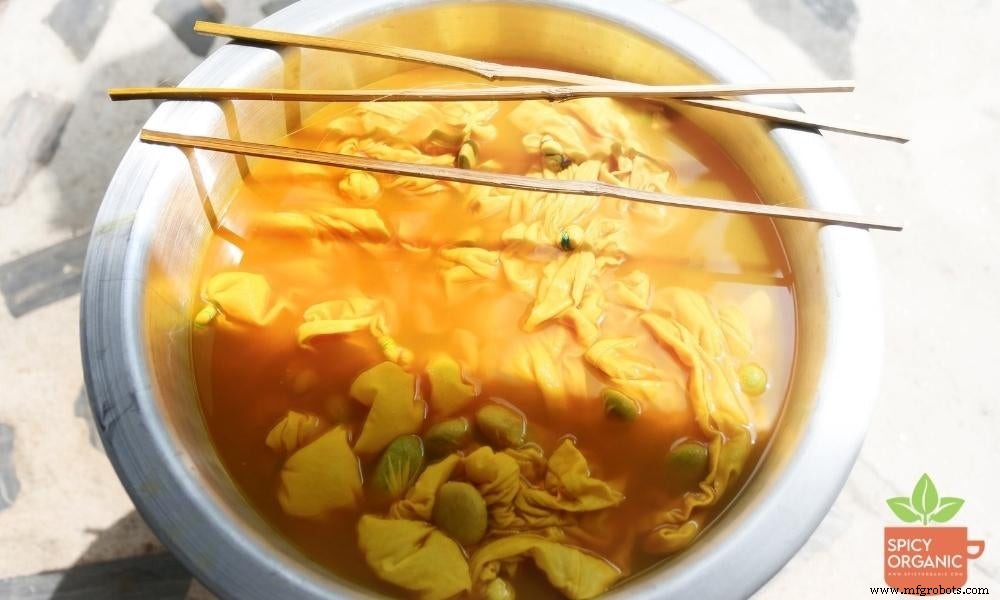
Turmeric’s deep yellow pigment has a long history in textile dyeing. While the color may fade over time, it offers a simple, eco‑friendly way to add a warm tone to cotton, wool, or silk garments. Follow these steps for a reliable DIY dye:
- Bring a large pot of water to a gentle simmer.
- For a subtle hue, add ¼ cup of turmeric; for a richer shade, mix ¾ cup.
- Submerge the clean, pre‑washed fabric and let it steep for at least 60 minutes.
- When the dyeing time is complete, drain the fabric in a colander. Be aware that the amber liquid may stain surfaces—cover your sink if necessary.
- Rinse the fabric under cold running water until the washwater is clear, then dry flat or on a hanger.
- Wear gloves and an apron during the process to prevent staining your skin and clothing.
After dyeing, wash the garment separately or with like colors to avoid color transfer. For a tie‑dyed effect, tie the shirt with rubber bands before dyeing; once dry, remove the bands to reveal the pattern.
Unused turmeric dye can be stored in a sealed glass jar for up to two weeks. When re‑using, bring the mixture to a boil before applying to ensure color consistency.
Conclusion
Turmeric is more than a kitchen staple; its vibrant color, versatile flavor profile, and potential health benefits make it a valuable ingredient for cooking, beverage preparation, and natural textile dyeing. A small pinch can transform a dish, while a larger batch can refresh an entire wardrobe—just remember to handle it carefully to avoid stains.
Spices
- Molybdenum Rods: Types, Applications, and Care
- Top Applications of Tungsten Wire in Modern Industry
- The Strategic Applications of Rhenium: From Catalysts to Aerospace
- How Titanium Shapes Modern Bicycle Design
- CNC Machines: Key Uses and Applications in Modern Manufacturing
- Key Properties of Graphite: Structure, Strength, and Applications
- Carbon Fiber Applications: Driving Innovation Across Industries
- Top Benefits of Asset Tracking for Business Success
- Polystyrene Applications: From Packaging to Construction
- Exploring the Key Types of Hydraulic Pumps for Industrial Efficiency