



2018 3D Printing Trends: Breakthroughs That Shaped the Industry

2018 marked a decisive shift for additive manufacturing. With breakthroughs across software, hardware and materials, the industry moved beyond early hype into reliable, production‑ready solutions. Valued at over $7 billion in 2018 (Wohlers Report), industrial 3D printing has solidified its role in rapid prototyping and is increasingly penetrating end‑part production.
1. Metal 3D Printing Continues Its Rapid Expansion
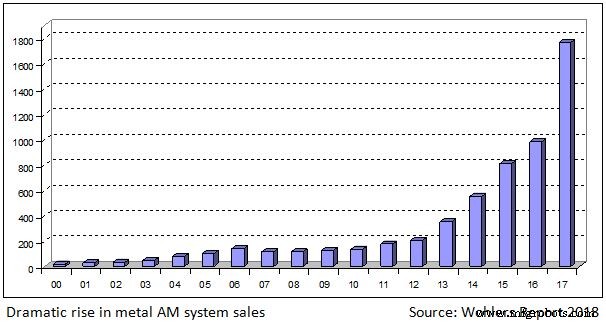
Metal additive manufacturing earned a spot on MIT Technology Review’s list of the top ten breakthrough technologies of 2018, a testament to its growing commercial viability. Sales of metal AM systems rose an impressive 80% last year (Wohlers Report), reflecting widespread adoption for both prototyping and production.
Key challenges—cost, speed and part quality—remain, yet 2018 introduced a new class of low‑end industrial metal printers. Markforged’s ADAM and Digital Alloys’ Joule printing, for instance, aim to deliver higher quality and faster build times at a lower cost, expanding the technology’s accessibility.
Metal binder jetting also surged, with HP launching the HP Metal Jet. Claimed to be 50× faster than traditional laser‑based systems, it targets production from day one. GE Additive’s binder‑jet solution is positioned to disrupt conventional casting across aerospace, automotive, power and healthcare sectors.
“Companies are buying a higher quantity of metal AM systems to meet their production needs. Over the past few years, a number of companies have bought one or two systems for testing and qualifying the process and materials. Now, companies are adding systems for production, which requires significantly more capacity.”
Terry Wohlers
2. A Wider Palette of High‑Performance Materials
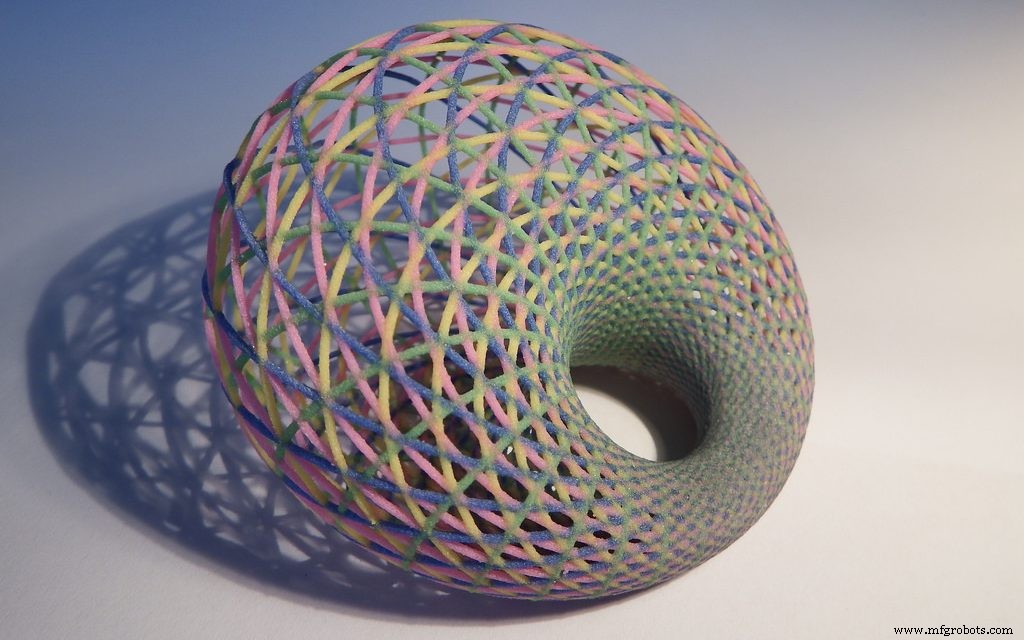
Material innovation has become the fastest‑growing segment of additive manufacturing. Start‑ups and major chemical players alike are expanding their portfolios to meet niche application demands. French chemical firm Arkema, for example, launched a commercial platform this month to broaden its 3D printing material range.
The range of selective laser sintering (SLS) powders now includes new nylon variants, PEBA‑based and PEKK powders. High‑performance thermoplastics are also gaining traction for engineering uses. Although plastics still dominate the market, metal usage rose from 28% in 2017 to 36% in 2018 (Sculpteo report), underscoring the increasing reliance on metal AM for production parts.
Despite material cost challenges, strategic partnerships are driving down prices and expanding availability, ensuring that high‑performance alloys and polymers keep pace with industry demand.
3. Automation Drives Production‑Ready Additive Manufacturing
2018 underscored the critical role of automation in moving additive manufacturing toward mass production. Automation reduces manual steps, streamlines workflows and boosts overall efficiency.
Software solutions such as AMFG’s workflow automation platform now orchestrate every phase of production—from order intake and file preparation to post‑processing control—ensuring seamless integration with existing manufacturing processes.
Advanced robotics and AI are further accelerating production. Lockheed Martin’s collaboration with the US Navy yielded AI‑driven, multi‑axis robotic systems that deposit metal using high‑powered lasers while machine‑learning algorithms continuously adjust parameters for optimal build quality. Meanwhile, PostProcess Technologies introduced the DECI Duo, a combined support removal and surface‑finishing unit that expedites turnaround for both plastic and metal parts.
“Right now, there are quite a lot of processes that intensively make use of human labour within AM. Automation can help in a lot of ways — it could be as simple as deciding where parts are going to be placed on the build platform using automation software, or calculating the build time automatically. We could even automate the simulation of the surface finish that will be created depending on the orientation that you use.”
Professor Ian Campbell, Loughborough University
4. Simulation and Design Software Evolve
Software remains the third pillar of successful additive manufacturing, complementing hardware and materials. Innovations in simulation and generative design have made metal AM more accessible and reliable.
Process simulation helps reduce failure rates and optimize build parameters, providing engineers with deeper insight into material behavior and part performance. Generative design tools, now often powered by AI, enable rapid exploration of design alternatives based on constraints such as weight, strength and material choice. Desktop Metal’s Live Parts, for example, exemplifies how generative design is being integrated with additive manufacturing to unlock new product concepts.
5. Strengthening Additive Manufacturing Security
Intellectual property protection and data security remain pressing concerns for the 3D printing community. 2018 saw a surge in solutions that safeguard design files and printed objects.
Danish startup Create it REAL introduced a 3D printing encryption platform for FDM printers. Using a dedicated processing chip, the platform allows users to print from a protected data stream, preventing unauthorized access to the original design file and mitigating copyright infringement.
6. Collaboration and Investment Accelerate Growth

The industry is increasingly co‑creating solutions across manufacturers, end‑users and academia. These partnerships accelerate technology adoption by delivering streamlined, production‑ready systems and by closing the AM skills gap through joint training programs.
Major corporations such as Siemens, BMW, Johnson & Johnson and Henkel have announced significant investments in AM research and production facilities. BMW’s €10 million Additive Manufacturing Campus, unveiled in April, will focus on prototyping, serial production and customized components, signalling strong confidence in additive technologies as a mainstream manufacturing method.
Trends Shaping the Future of Industrial 3D Printing
As 2018 closes, additive manufacturing continues to deliver tangible improvements in hardware, software and materials. More companies are adopting AM for tooling, spare parts and full‑end production. Metal AM remains a key driver, while advanced software and automation are enhancing reliability and efficiency. Continued collaboration across sectors promises to bridge skill gaps and foster innovation, paving the way for a fully integrated Industry 4.0 manufacturing ecosystem.
3D printing
- Desktop Metal’s BMD and Microwave Sintering: A New Era for Metal Additive Manufacturing
- Industrial 3D Printing in 2018: 6 Key Trends Shaping the Future
- Formnext 2018 Highlights: 10 Additive Manufacturing Technologies to Watch
- Direct Energy Deposition (DED) in Metal 3D Printing: Process, Materials, and Industrial Applications
- Seven Key Trends That Shaped 3D Printing in 2018
- Top 3 3D Printing Trends That Defined 2018
- 3D Printing Trends 2019: Metal Innovation, Binder Jetting Breakthroughs, and Advanced Plastics
- Metal 3D Printing: Revolutionizing Production with Speed, Cost Savings, and Design Freedom
- Revolutionizing Reality: 3D Printing Milestones and 2018 Innovations
- Demystifying 3D Printing: A Clear Guide for Innovators