



Expert Guide to 3D Printer Extruders & Hotends: Types, Brands, and Performance
In this article we are going to talk about the types of extruders and HotEnd most common in the world of 3D printing. Before starting it should be clarified that everything cited is the result of our experience always using products from leading brands, such as the products of E3D Online, a company of high-quality 3D printer components specialized in extruders, HotEnd and nozzles. This nuance is necessary because if extruders and low quality HotEnd are used it may be the case that the characteristics that we comment below aren't met.
The main function of the extruder is to move the filament from the reel to the HotEnd in the most precise way and at the speed suitable for 3D printing, but there're different classifications of the extruders. In this post we will analyze the main ones.
Types of extruders depending on the drive
Within extruders there are two types depending on the type of drive: Direct and Bowden. In the direct extruder, as its name suggests, the filament runs directly from the cog of the extruder to the HotEnd. There are even systems in which these two parts are together, as in the Titan Aero.
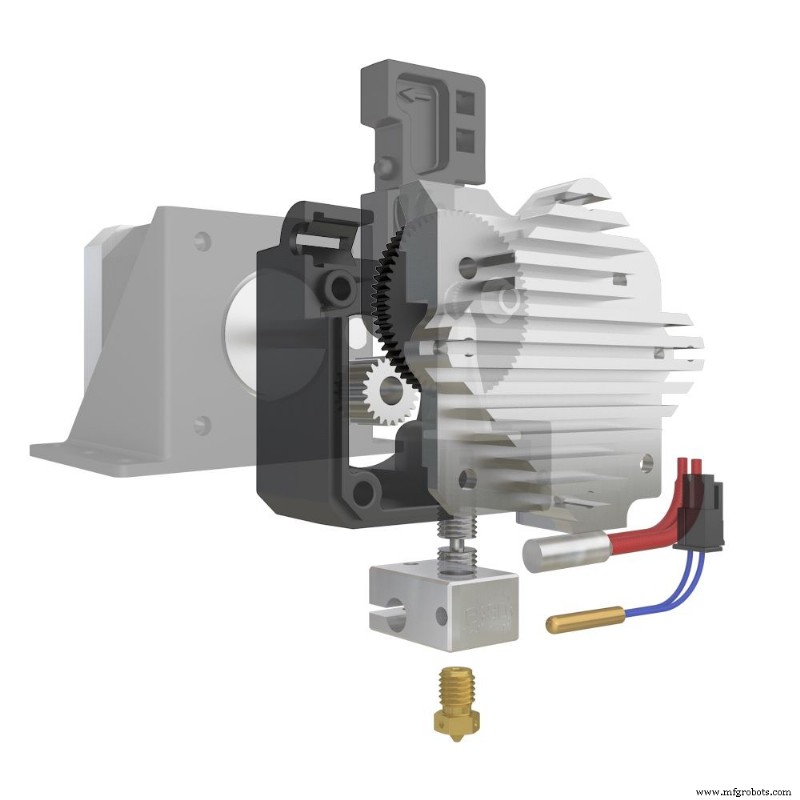
Image 1: Titan Aero extruder. Source: E3D
In the Bowden extruders, on the contrary, the connection with the HotEnd is through a PTFE tube through which the filament passes.
Direct Extruders
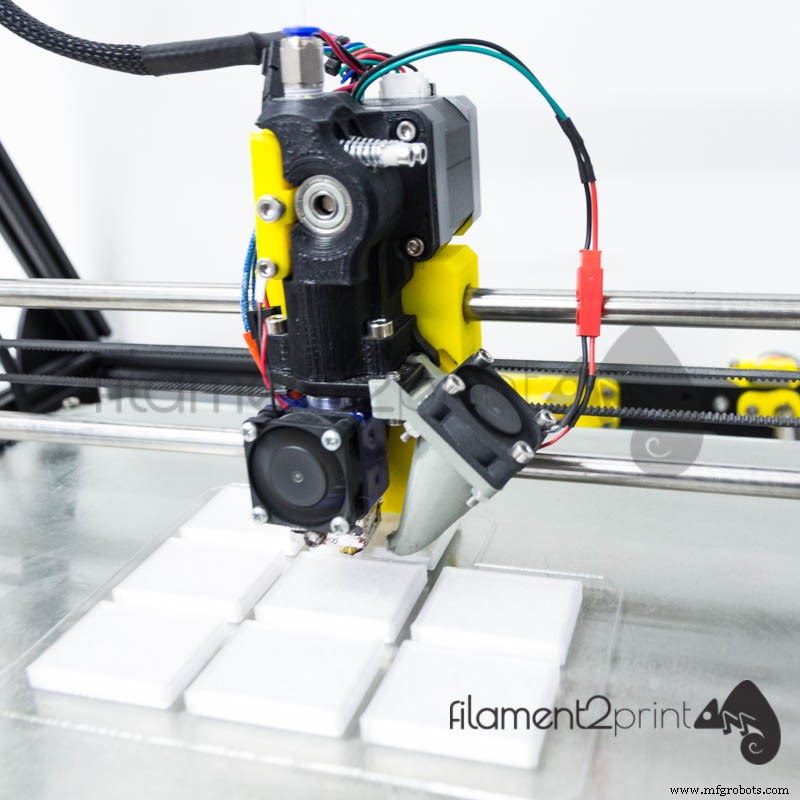
Image 2: Direct Extruders
Advantages:
- Print flexible materials, both PLA Soft or TPU, and TPE (FilaFlex) in 1.75 mm ans 2.85 mm.
- Print all kinds of materials without problems, regardless of the abrasion presented by certain filaments. To print 3D abrasive materials, for example graphene, we recommend using the Olsson Ruby Nozzle, a brass nozzle with the ruby tip that has an almost infinite life.
- This system needs short retraction lengths to obtain good 3D prints, which reduces the likelihood of a jam. To know more about the retraction consult the article of the following link.
Disadvantages:
- Considerable inertia in the axis through which the extruder and the HotEnd moves. This factor is increased when you want to make 3D prints at high speeds by having to move the weight of the whole set (extruder, extruder motor and HotEnd), especially if the 3D printer has several extruders.
- Temperature problems in the electric motor of the extruder. In closed 3D printers and with a tempered chamber, temperatures in the extruder motor can be reached that affect the performance of operation.
Bowden extruders
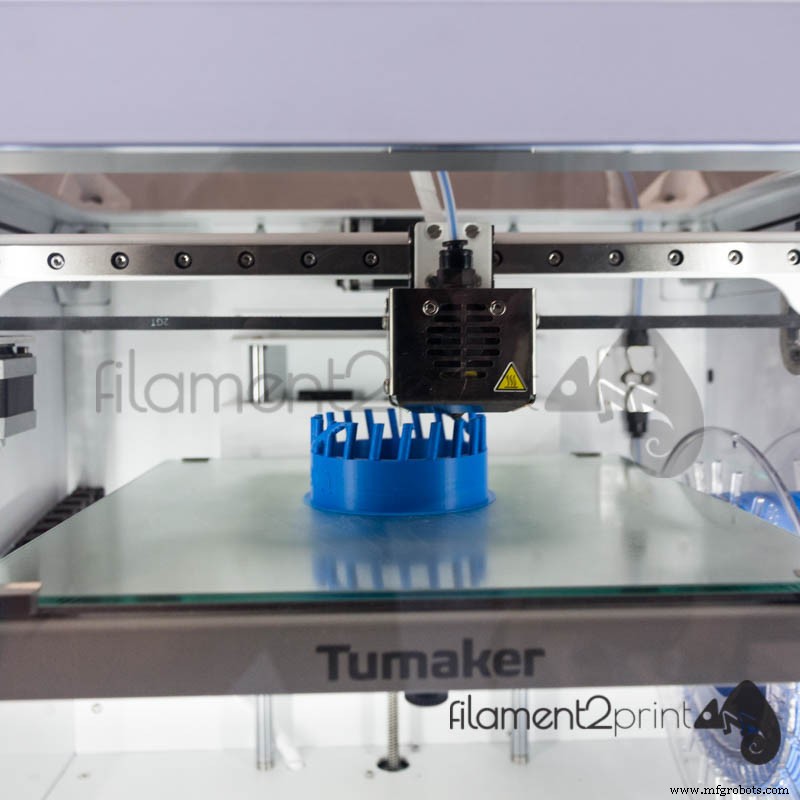
Image 3: Bowden Extruder
Advantages:
- Low inertias in the axis of displacement of the HotEnd. In the Bowden system, since the extruder and the extruder motor are anchored to the chassis of the 3D printer, the inertias in the movement to make the impression are greatly reduced. This allows for very fast and high quality printing.
- High drag power of the filament. The majority of 3D printers that use this extruder system (BCN Sigmax, 3NTR-A2) have a set of pinions (reducer group) that increases the drag torque of the filament, thus being able to move coils larger than normal.
Disadvantages:
- Problems printing with flexible filaments with a diameter of 1.75 mm. This is due to the fact that being a flexible filament it isn't possible to keep the pressure in the filament constant along the Bowden PTFE tube until the HotEnd as it channels the filament. In the 2.85 mm Bowden systems, however, it's possible to print the flexible filaments at low speed.
Types of HotEnd depending on the diameter of the material
The HotEnd is responsible for melting the filament to make the desired piece. It configures the type of HotEnd (V6 or Volcano) and the nozzle depending on the diameter of the material, depending on the type of piece, quality and finish you want to obtain. We classify the extruders in the V6 and Volcano types and then we mention the advantages and disadvantages between these two types of HotEnd.
Advantages and disadvantages of HotEnd V6
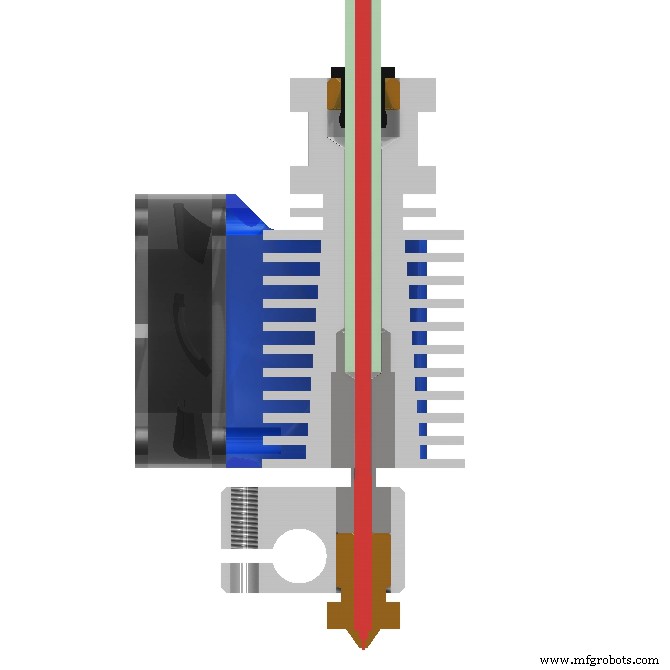
Image 4: HotEnd V6 universal 1.75mm. Source: E3D
Advantages:
- The V6 is the most versatile HotEnd on the market, valid for all types of impressions, even for flexible materials (especially with 2.85 / 3 mm filament). With the HotEnd V6 you can make all kinds of parts with an exceptional finishing quality.
Disadvantages:
- The maximum diameter of nozzle recommended for this type of extruder is 0.80 mm / 1 mm since for larger diameters, problems of continuity of flow usually occur.
Advantages and disadvantages of HotEnd Volcano:
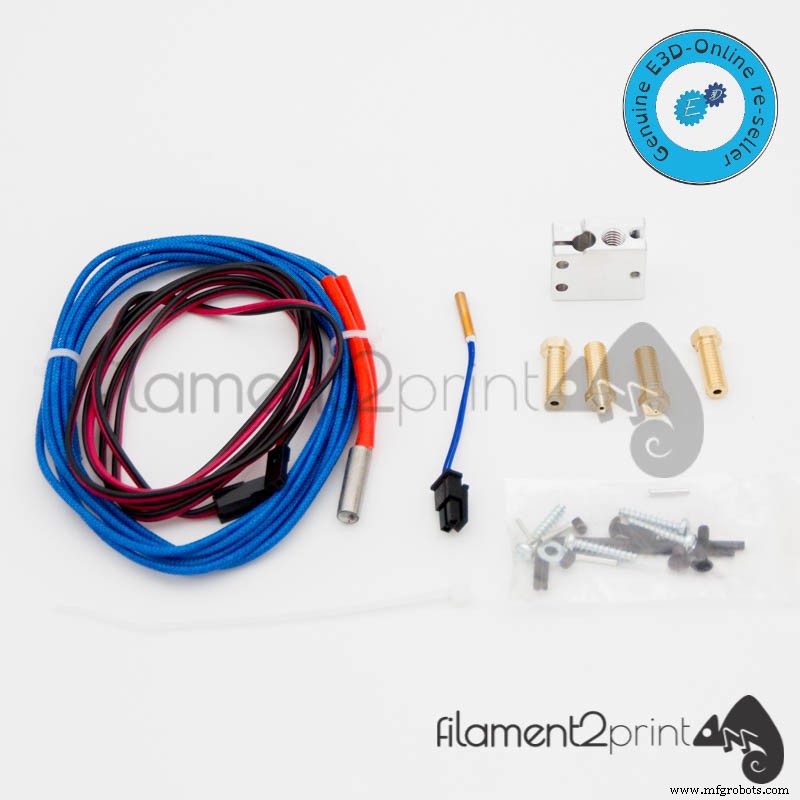
Image 5: E3D HotEnd Volcano
Advantages:
- Thanks to the parallel position of the Heater Cartridge with respect to the nozzle, a greater heated area is achieved, thus giving great control and stability over the melting of the filament. For all the above you can make 3D prints with larger diameter nozzle (1.2 mm), which leads to shorter manufacturing times and the possibility of printing with a higher layer height than in the V6.
- More resistant pieces. Thanks to making higher layers with a laminar flow (without bubbles) the joints between the chemical bonds of the material are stronger, giving more rigid and resistant parts.
Disadvantages:
- Surface finish of low detail. Due to the high layer heights, the pieces are made with steps in areas where there are curved surfaces at different heights.
Some manufacturers call the HotEnd depending on the extruder system and the filament diameter that you want to use. For example, E3D Online uses the designation "universal" for its 1.75 mm HotEnd (universal direct and universal bowden) in which the TPFE tube reaches the interior of the Heat Break, channeling the filament without interruptions to the heating block. For the 2.85 / 3 mm HotEnd simply use the designation "direct" or "bowden".
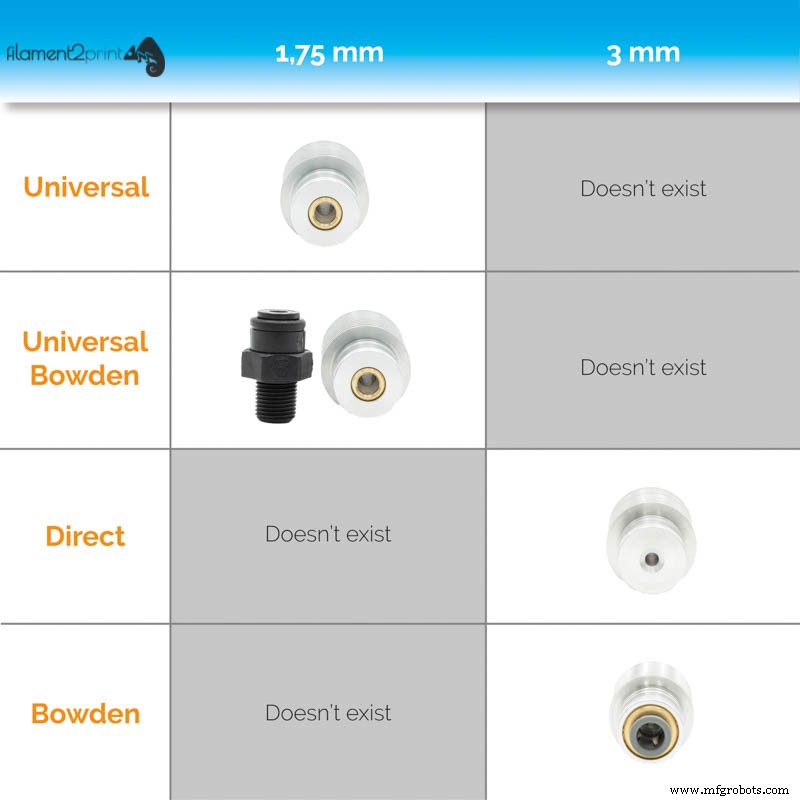
Image 6: Types of E3D HotEnd
For our part, we recommend that each user study their particular case based on the type of parts and the speed with which they want to 3D print but always using first-class components that ensure quality in all their products.
3D printing
- Molybdenum Wire: Types, Properties, and Industrial Applications
- Arduino Sensors: Types, Applications, and Real‑World Projects
- Understanding Pipe Couplings: Types, Functions, and Applications
- Understanding Chain Drives: Types, Functionality, and Applications
- Understanding Manufacturing Processes: Definitions, Types, and Key Components
- Stainless Steel Grades: Types, Properties & Common Uses
- Explore Stromag’s Brake & Clutch Solutions for Industrial Machinery
- Understanding Surface Grinding: Types, Features, and Applications
- Understanding Glass Types and Their Manufacturing Processes
- Choosing Between Direct Extrusion and Bowden Systems for FDM 3D Printing