



Stratasys Launches GrabCAD Voxel Print for J750 and Partners with e‑Xstream for Advanced Simulation

During FormNext in Frankfurt last month, Stratasys unveiled two significant milestones: the GrabCAD Voxel Print software for its J750 printer, and a strategic alliance with e‑Xstream. These initiatives enhance Stratasys’s 3D‑printing portfolio and unlock new possibilities for the industry.
Designers often lack confidence in a component’s performance until it is physically fabricated and evaluated. Trial‑and‑error can be costly and inefficient. Stratasys’s collaboration with e‑Xstream addresses this by integrating Digimat, a simulation platform that predicts the mechanical behavior of complex, non‑linear materials during the build process. The partnership will provide deeper insights into high‑performance materials, resulting in cleaner finishes and stronger parts. With advanced simulation, users can validate structural integrity in silico, slashing material waste and accelerating product development.
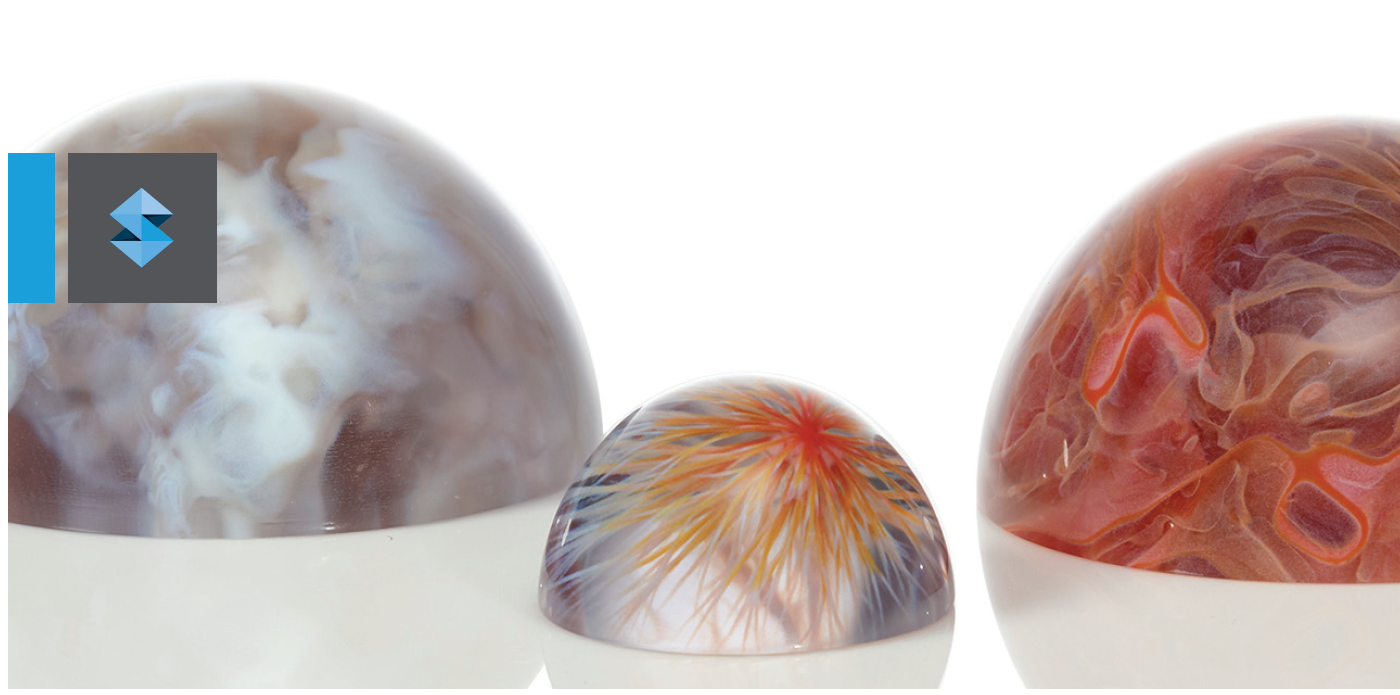
Stratasys’s PolyJet technology uniquely blends colors and diverse material properties in a single build—an advantage no competitor matches. Prior to GrabCAD Voxel Print, the J750’s color fidelity was confined to a single material shell, while the interior remained a uniform white rigid plastic. Though visually appealing, this limitation constrained functional performance. GrabCAD Voxel Print now enables sub‑millimeter integration of multiple rigid and flexible polymers across the entire part, leveraging the full spectrum of Shore hardness values available on PolyJet. This breakthrough unlocks new frontiers in materials research and high‑performance applications.
By precisely combining polymers, designers can craft parts with unprecedented functional gradients—imagine wood‑like composites, flexible textile‑mimicking fabrics, or thermally responsive structures that shift shape under temperature or humidity. In medicine, GrabCAD Voxel Print could revolutionize surgical training: the J750 already produces anatomical models, but the new material layering will allow models that match the tactile and mechanical properties of real tissues. Such fidelity can reduce operative time, improve outcomes, and eliminate dependence on expensive cadavers. The broader implications across engineering, consumer goods, and research are vast; the full spectrum of innovations will unfold as the technology matures.
Stratasys remains at the forefront of additive manufacturing, leveraging alliances and cutting‑edge tools to expand the utility of its hardware. The e‑Xstream partnership marks a pivotal leap toward making 3D printing a viable solution for mass‑produced mechanical components, while GrabCAD Voxel Print unleashes limitless potential for advanced material studies that could transform multiple sectors.
Tags: 3D Printers, e‑Xstream, GrabCAD, J750, PolyJet, Print Software, Stratasys
3D printing
- How 3D Printing Transforms Jigs & Fixtures: 6 Proven Ways to Boost Production Efficiency
- Sustainable Dyes & Pigments: Transforming Printing, Cosmetics, and Manufacturing for a Greener Future
- Agile Manufacturing & 3D Printing: A Guide to Rapid, Custom Production
- Stratasys Unveils the J750: A Breakthrough in Multi‑Material 3D Printing
- Accelerate Product Development: Faster Iteration & Prototyping with 3D Printing
- Connecting GrabCAD Print to Your Stratasys 3D Printer – A Step‑by‑Step Guide
- Optimal Heated Bed Temperatures for PLA and ABS 3D Printing
- Master 3D Printing with Wood Filament: Techniques & Benefits
- PP3D Filament: Unlocking Advanced Medical & Dental Applications
- Enhancing 3D Printing: Mastering Support Structures for Complex Builds