Industrial manufacturing
3D printing
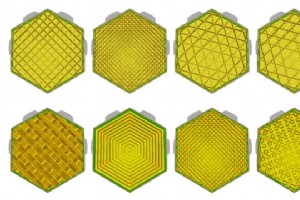
Infill patterns conform to the interior structure of a 3D printed part and they have a significant effect on your part’s print time, filament consumption, flexibility, strength, weight, and what it can be used for. Most people make the mistake of assuming that these factors are only depende
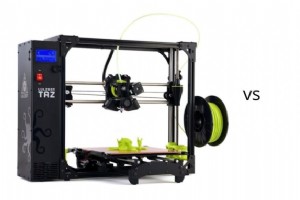
If you’re new to the world of 3D printing, then you have probably heard about these two printer types; The Cartesian and the Delta 3D printers. While both are FDM printers, meaning that they extrude plastic and create layer upon layer in order to create the 3D object, they are also qui
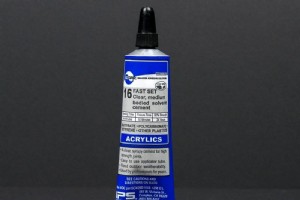
Knowing how to properly glue 3D printed parts is actually more important than you might think; Say one of your models breaks… well, glue can help you bring it back to life. Or let’s say you wanted to create a huge model out of different parts, then gluing those parts together can he
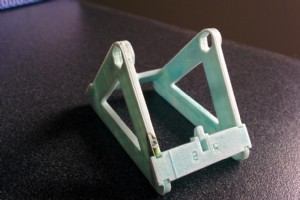
There’s a lot of information out there regarding this topic, and the truth of the matter is that it depends on a lot of conditions, since in some cases PLA will become brittle and break down fairly quickly, while in some others it will last for years underwater without getting damaged at
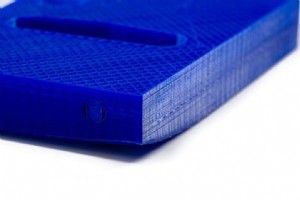
A heated bed is the base that you print your 3D models on, with the one characteristic of also being able to be heated, which can be advantageous when using certain kinds of plastic. Although not all 3D printers have a heated bed, it is required when printing with certain materials, like AB
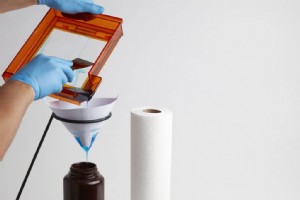
3D printing offers a variety of printers with FDM being the most popular one, followed by SLA, MSLA, DLP, SLS, DMLS, SLM, EBM, Material Jetting, DOD, and, of course, Binder Jetting. We will focus on the SLA technology today which is also known as Stereolythography. SLA 3D printing has s
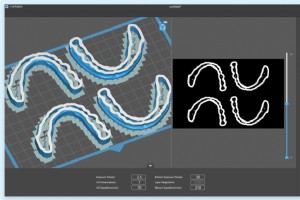
Slicers are, more often than not, associated with FDM 3D printers, but in order to be able to print 3D resin models you will also need a slicer that is capable of handling those types of prints. However, there is much less information out there regarding SLA, DLP and LCD printers and the sof
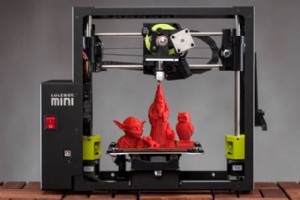
You’re thinking about purchasing your first 3D printer but you decide to do your due diligence and research the costs associated with each type of printer. Well, FDM printers print use filament and SLA printers use resin, and the reality is that one is much more expensive than the othe
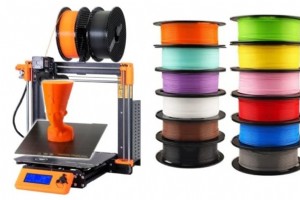
The demand for durable, protective gear during World War II ignited the production of polymer plastics. At that time, the goal was to develop bullet-proof copolymer plastic sheets. The Borg-Warner corporation originally patented the idea of ABS plastic in 1948 but it took 6 more years for i
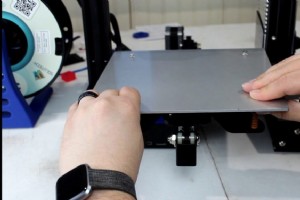
If you’re new to 3D printing then you probable might have heard that there are different types of build plates you can use to print, some of which are made of glass, aluminum, spring steel, etc. In this article, I will do my best to give you a definitive answer on which one you should
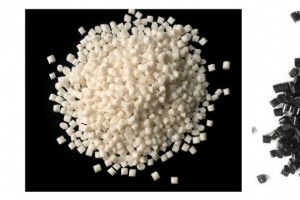
3D printing has been growing in popularity over the past years and one of the types of models that 3D printers are used for the most are miniatures. In this article, we are going to be comparing two of the most used filament types in fused deposition molding (FDM), which are PLA and ABS, and
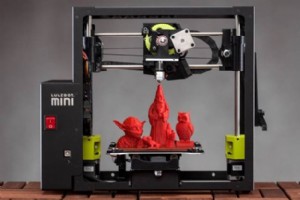
In this article, I will be going over the different types of printers there are as well as their price range. I will be covering both FDM and Resin printers. However, if you’re new to 3D printing you might not know the differences between an FDM printer and a Resin printer, so hereR
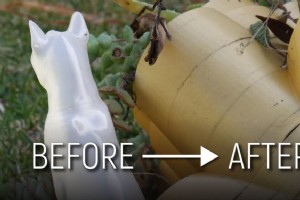
If you thought that any filament was suitable to be used outdoors and that all of them would be able to handle being exposed to the elements equally, you’d be wrong… but don’t worry, we’ve all been there, which is the reason why I decided to write this article, since I w
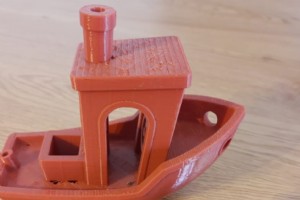
If you’re thinking about getting into 3D printing, then you generally want to evaluate the costs firsts, unless you’re loaded in which case, good for you! Go buy the most expensive printer you can find as well as every type of filament and get to printing. For the rest of us mere
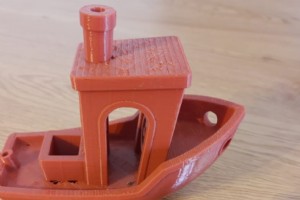
One of the first questions we ask ourselves when getting into the 3D printing world is “How fast can I print XYZ?” The answer can range from just a few minutes to more than 24 hours, which is obviously not the most useful statement you heard in your life. Nonetheless, I can add some useful info
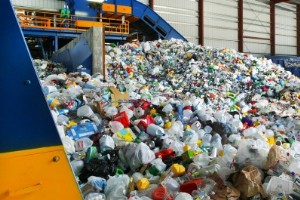
If there’s one problem that 3d printing has it’s that it creates a lot of waste, even though it can be hard to know exactly how much it is. In most cases, the leftover material as well as the prints that did not work out will be sent to a landfill where they will sit buried for thousands of
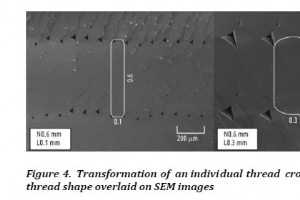
3D printers create objects in an additive way, making the part as strong as its weakest layer. They are usually weaker than most other technologies, such as milling techniques, injection molding or resin pouring techniques. There are many applications for which we have to take structural str

A car contains literally hundreds of little plastic parts that can be very difficult to find online. Some of those have such low demand and are so specific that manufacturers do not even bother to produce and offer them. This is where 3D printing shines since it is especially valuable when
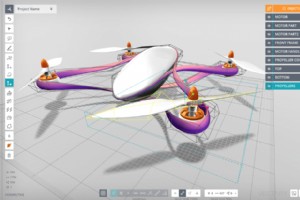
The world of 3D printing has come a long way since its inception in 1983. At that time, 3D printing was largely used to produce models and prototypes. Since then, advancements in technology and materials have facilitated the use of 3D printing pieces in many industries. These include manufa
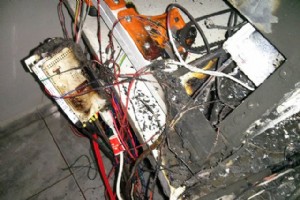
We have all been there; we start a new printing project that is going to take forever to finish but we have the patience of a five year old! We might be tempted to calculate the completion date assuming that our machine will work 24 hours a day. So, before we start our batch, we should ask
3D printing