


Industrial manufacturing
3D printing
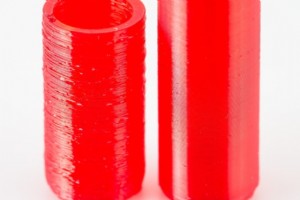
Not so long ago, I tried to print something using a filament color that I had not used in a while. Much to my surprise, the filament broke multiple times, and the overall quality of the resulting print was underwhelming. It goes without saying that I had not put much thought into properly prese
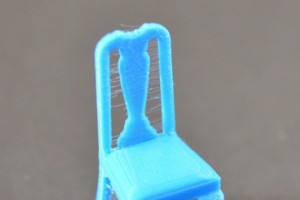
If we think about 3d printing, the first thing that comes to mind is a machine that melts plastic while an extruder moves along 3 orthogonal axes while forming a solid object. It seems very simple, but as start to dig deeper into this technology, we quickly find out that there are countless pa
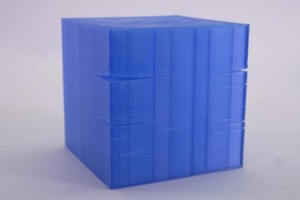
When printing, are your models cracking and are the layers separating? This is commonly referred to as layer separation or delamination and it’s essentially caused because of poor layer adhesion. In this article, I will be going over what layer delamination is, why it happens, and how
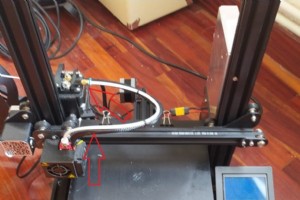
The reason I got into 3D printing was to be able to build my own RC car and to print as much of it as I possibly could, which is why I started looking into ways of printing TPU with it since the tires, in order to work properly, need to be made out of some sort of rubbery or flexible material.
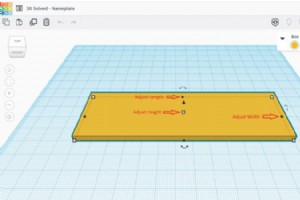
3D printing allows us to create all kinds of cool stuff. Amongst them is the ability to create 3D letters for a name or logo. In this article, I will demonstrate how to design and 3D print your desired text using 3D modeling software. I’ll give you the recommended slicer settings and even a

We all want to get the best out of our 3D printed models, both in terms of quality and speed. The problem is most of the time quality and speed don’t go hand in hand and finding the sweet spot between quality and speed will take some trial and error for every printer and filament type. In th
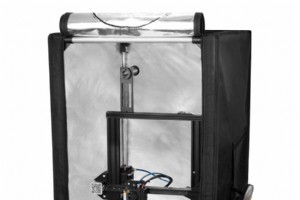
ABS is one of the hardest materials to learn how to print properly on an Ender 3, Pro, or V2, and this is mainly due to the fact that it’s not an enclosed printer. However, you can still print ABS on an Ender 3 by adjusting some settings and using some tricks to improve bed adhesion. Here
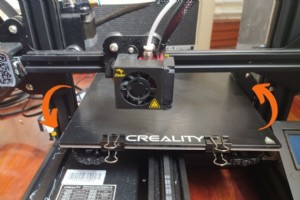
If there’s one thing that takes a lot of time to learn when getting into 3D printing, aside from leveling the bed which is also very closely related to the topic at hand, it’s getting the prints to stick to the bed and to keep them from detaching halfway. In this article, I will provide you
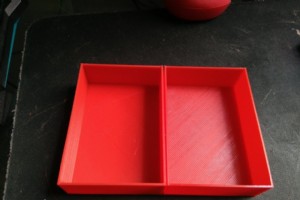
As a 3D printing enthusiast, I am always trying to improve the quality of my prints in any way I can find. In this article, I will introduce you to a very cool slicing feature called “Ironing” which allows us to smooth out the top surfaces of our 3D printed objects. If you are looking to imp
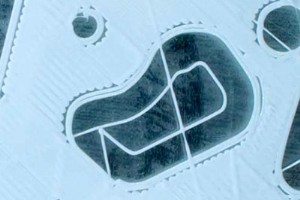
As every 3D printing enthusiast that is worth its salt knows, infill is a very important and essential aspect of the quality, strength, and printing time of an object. Sometimes, we waste a lot of hours, electricity, and filament printing an object only to find out that the infill is not actual
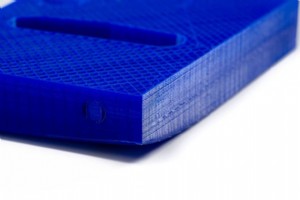
You just got started with 3D printing and you bought some PLA, as it’s the easiest filament to print with. Then you realize that the printing bed of your 3D printer can be heated and you think to yourself “huh, should I use a heated bed with PLA or not?”. So, this is what I will answer today
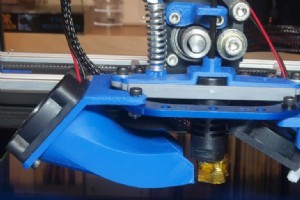
If you own a 3D printer and have used it at least once, you are probably aware of the importance of the layer fan. The proper configuration of this little component will make or break the outcome of your print. Needless to say, it is necessary to have a working layer fan ready to be used when r
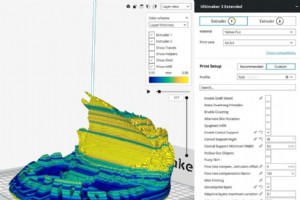
If you want to improve your print times without sacrificing print quality, then you might want to consider printing using adaptive layers. “Hey! But what are adaptive layers?” you might ask. Well, in this article I will go over what they are, how they work and how you could imple

When we get started in the 3d printing world, we first learn about the reverse relationship between the output quality of a piece and the movement speed of the printer. By this, I mean none other than the simple fact that a lower movement speed of the extruding will generally yield better looki
Most people in the 3d printing community constantly want to find ways to improve the overall quality of their objects. One of the most common issues that can make or break a print is the quality of the top surface. It may come as no surprise that we’ll want to fix these issues. In this ar

The most probable cause that brought you to this article is having a 3d printer that is currently unable to properly feed filament. So let’s make this intro short and go straight to answering the following question: how do you fix a 3d printer that is currently not feeding filament? Th
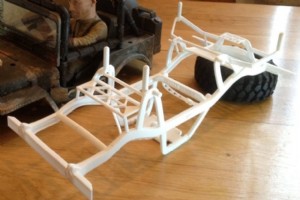
When I got started in 3D printing, I initially got a feeling of knowing almost everything there was to know in 3D printing. Shortly after, as can be explained by the Dunning-Kruger Effect, I learned that I actually only had a very superficial and weak grasp of the subject. The humbling experien
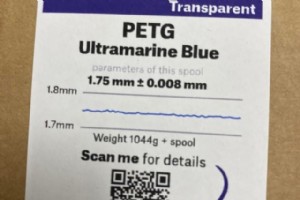
You may have recently entered the world of 3d printing and still don’t know that there are two standardized diameters of filament. It is also possible that you bought a used printer from someone who built their own machine 10 years ago when the most used filament diameter was 3mm. In any

If you’ve been 3d printing for a while, you are surely used to dealing with imperfections in your models. As time goes by, you also developed a 6th sense that tells you what the probable causes of the issue are, and how to solve it. If you are still in the process of developing your troub
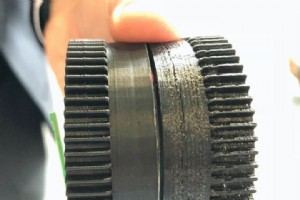
More often than not, we can be relatively confident that our 3D printer is well calibrated and ready to print incredibly good looking objects at our high quality standards. Suddenly, we decide to print a new object with a spool of filament that has not been used in a while. To our surprise, we
3D printing
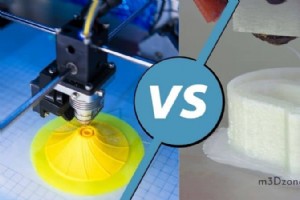
Choosing the Right 3D Printing Support: Raft, Brim, or Skirt Explained
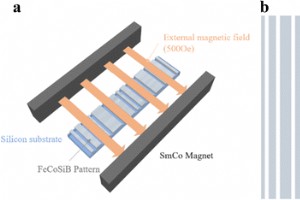
Tuning Microwave Resonance in FeCoBSi Stripe‑Patterned Films: Thickness‑Dependent Magnetic Characterization

How IoT Drives Productivity, Revenue, and Safety Across Industries

Private Cellular Networks: The Key to Unlocking Industry 4.0

