


Industrial manufacturing
3D printing

Real‑time data from AM machines is the foundation of scalable, repeatable additive production. By capturing live performance metrics, companies unlock higher equipment efficiency, superior quality, and deeper insight into their workflows. This article explores the full spectrum of benefits and cha

Automating AM processes, from design to post-production, can make AM adoption more appealing to manufacturers. Automation solutions, from robots to software, can

Most organizations encounter significant hurdles in additive manufacturing (AM) as their production scales: manual processes consume time, workflow traceability gaps surface, and inefficiencies become costly. A well‑designed MES (Manufacturing Execution System) can eliminate these pain points, but

In any 3D‑printing operation, workflow bottlenecks are inevitable. If left unchecked, they can delay deliveries, inflate costs, and stifle growth. Recognising and eliminating these bottlenecks early is key to maintaining reliability and scaling your business. This guide explains how to spot the mos
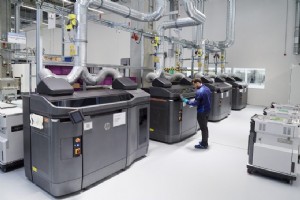
[Image credit: BMW Group] Understanding the Gartner Hype Cycle and 3D Printing’s Position The Gartner Hype Cycle visualises the life‑cycle of emerging technologies, with the “Plateau of Productivity” marking the point at which widespread, profitable adoption begins. Where does 3D printing sit on t

Whether you’re using additive manufacturing for rapid prototyping or batch production of spare parts, or aiming for serial manufacturing, a robust production management strategy is essential for smooth, efficient operations. In this article we dissect how additive MES software can address challeng
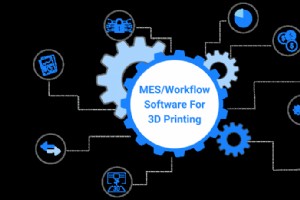
Every 3D printing service provider aspires to run like a Swiss watch: a request turns into an order in minutes, priorities are clear, machines operate at full capacity, parts are produced on schedule, and customers stay satisfied. Yet, for most providers, achieving such seamless coordination fee
Imagine generating a precise 3D printing quote in seconds instead of hours, freeing your team from pricing uncertainty. In this ideal world, prospects receive instant estimates immediately after a request, creating a seamless experience that boosts conversion rates. Unfortunately, many 3D printi

Our previous post showed how instant quotation software can elevate sales and enhance customer experience. Yet many 3D‑printing firms still rely on manual customer submissions for internal review and pricing. This article explains the bottlenecks they face and how automation can resolve them. How

Additive manufacturing (AM) is reshaping production by enabling parts to be created from digital files, unlocking agile, on‑demand manufacturing and virtual inventories. Traditional supply chains often carry costly, bulky physical inventories of spare parts—especially problematic for automotive f
In recent decades, globalisation has reshaped the marketplace, compelling consumers and firms to adapt rapidly. Today, however, a counter‑trend is emerging: distributed, localised production. This shift demands that businesses rethink how they create and deliver value. Before we explore the advant

While additive manufacturing (AM) is celebrated as a digital manufacturing breakthrough, many operations remain manual and siloed. Despite the promise of 3D printing, most companies still rely heavily on human labor and physical inventories. This article outlines the maturity spectrum of AM IT aut
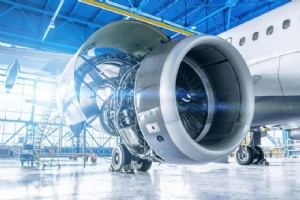
The aerospace and defence (A&D) sector has long championed 3D printing, using it for functional prototypes, tooling, and lightweighting critical components. Yet, scaling additive manufacturing (AM) beyond prototyping into repeatable, high‑volume production remains a formidable challenge for many OE
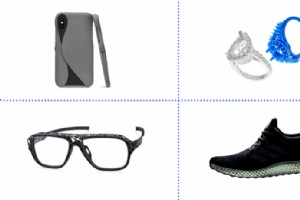
Additive manufacturing (AM) has long supported product development, yet its full impact lies in transforming production lines into agile, cost‑effective, and sustainable operations. To move from potential to measurable ROI, brands must build scalable AM workflows that deliver value to both custome

[Image credit: BMW] The automotive 3D‑printing sector is projected to hit a $9 billion market by 2029, with automation of AM operations key to realizing that growth. Below we outline the principal hurdles that automotive AM users face and show how digitisation and advanced software can tackle these
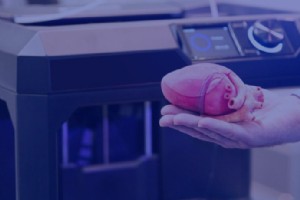
2020 was a watershed moment for healthcare. Hospitals, overwhelmed by COVID‑19, faced unprecedented shortages of ventilators, face shields, masks, and test swabs. With global supply chains strained, many turned to local 3D‑printing service bureaus to design, evaluate, and manufacture critical comp
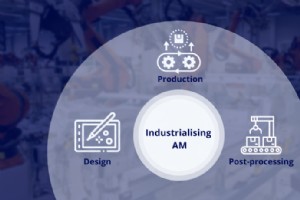
\n\n\n\nAdditive manufacturing hinges on three pillars—design, production, and post‑processing. Understanding the evolving trends in each area is essential for scaling 3D printing into mainstream manufacturing.\n\nAutomating Design for Additive Manufacturing\nDesign for additive manufacturing (DfAM)
Choosing the right MES for additive manufacturing can transform your production flow. Below is a concise comparison of AMFG and 3YOURMIND, highlighting key features, integrations, and deployment options to help you make an informed decision. Order Management Order management is the backbone of any

Do you find yourself starting each day in the additive manufacturing (AM) department by sifting through a flood of 3D‑printing requests in your inbox, only to manually transfer them into spreadsheets, calculate quotes, and confirm details with the requester? Typical duties—updating engineers on or
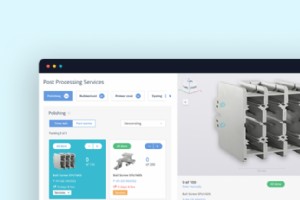
When talking about workflow management for additive manufacturing, it’s quite typical to think solely in terms of the production steps: scheduling incoming reque
3D printing
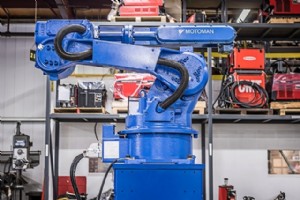
Inside the Motoman HP20: How This Versatile Industrial Robot Operates

Airbus Secures Life‑of‑Program Contract with Teledyne CML Composites for A400M Wing Components

Real‑Time Oil Quality Monitoring with SenGenuity ViSmart Viscosity Sensor for Power Generation Equipment

From Anonymous Visitors to Warm Leads: A Manufacturing Leader’s Step‑by‑Step Conversion Playbook

