Industrial manufacturing
3D printing
Selective laser sintering (SLS) delivers intricate, powder‑based parts, but the post‑processing stage—removing support material and excess powder—can be messy. Treating cleaning as a core part of your workflow is essential for protecting finish quality and ensuring compliance with industry standard

In additive manufacturing, the key to operational success lies in a seamless, automated data pipeline—from the first customer inquiry to final product delivery. Many firms struggle to synchronize disparate workflows into a unified process, a challenge that demands robust integration. Typically, whe

Any quality 3D‑printed product—whether a prototype or a production part—starts with a flawless file. Thoroughly checking and repairing the model before conversion to STL guarantees a smoother printing process and reduces costly post‑processing. Incorporate these six critical checkpoints into your w
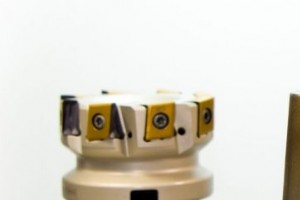
In recent years, additive manufacturing (AM) has made significant strides, and at RP Platform we are particularly excited by the emergence of hybrid processes that blend AM with traditional manufacturing methods. By combining 3D printing with CNC machining, manufacturers can harness the strengths o
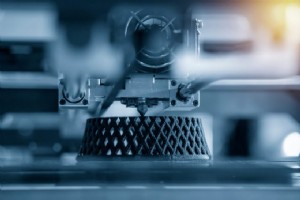
In an industry dominated by dozens of 3D file formats, establishing a universal standard remains a formidable task. Without a single file format, AM service providers often encounter situations where customer submissions cannot be processed because the printer’s software or hardware does not suppor

Over the past twenty years the customer journey has evolved dramatically. With the surge of online commerce, businesses now interact across a multitude of touchpoints—phone, email, in‑person, and web. While over 90 % of additive‑manufacturing clients still favor a human conversation, an increasing

Philip Cotton is a leading UK expert in 3D printing for education and the founder of 3Dfilemarket.com—a platform where designers share cutting‑edge, fully printable models. He teaches Product Design at Ladybridge High School, giving students hands‑on experience with 3D printing. Cotton earn
“Compared with a traditionally cast part, a printed part has superior strength, ductility, and fracture resistance, with a lower variability in materials’ properties.” Elon Musk For the past decade, metal 3D printing has moved from niche prototyping to mainstream production. Recent advances in meta
One of the primary benefits of additive manufacturing over conventional machining is the dramatic reduction in material waste during production. This not only yields real cost savings but also positions additive manufacturing as a truly sustainable, cost‑effective technology. Selective laser sinter

Since their debut in 1987, STL (Stereolithography) files have remained the industry‑standard format for additive manufacturing. This guide delves into the intricacies of STL, highlighting best practices to unlock its full potential in your 3D‑printing workflow. How they work STL files are available

According to a recent industry survey, additive manufacturing (AM) firms are prioritising faster project turnaround and lower operational costs. More than half of the respondents are already treating AM as a production tool rather than merely a prototyping solution. While the strategic goals are cl

Professor Neil Hopkinson has been a leading figure in additive manufacturing (AM) since 1993, holding research appointments at the University of Sheffield, Loughborough University, De Montfort University, 3D Systems, and the University of Nottingham. In January 2016 he became Director of 3D Printin

From its early days as a prototyping tool to its current status as a mainstream production technology, additive manufacturing (AM) has reshaped how products are designed and built. As the industry expands, so too does the need to protect the digital blueprints that underpin every print. Initially,

Pat Warner serves as the Additive Manufacturing (ADM) Manager for the Renault Sport Formula One Team. With a career spanning more than 19 years in F1, he has steered the team’s transition from early prototyping to full‑scale production of high‑performance printed components. AMFG: How did you origi

Advancing additive manufacturing hinges on continuous academic research, exploring new materials, printing techniques, and supporting software to broaden industrial adoption. Oslo School of Architecture and Design (AHO) is at the forefront, recently partnering with RP Platform to streamline and

In today’s hyper‑connected marketplace, every touchpoint—from mobile devices to industrial machinery—is linked online. The growing Internet of Things is driving manufacturers to fuse disparate systems, boosting efficiency and productivity. The additive manufacturing (AM) sector is no exception. Int

Operating a 3D printing service demands a precise balance of skilled labor, materials, and time‑critical workflows. As product complexity and customer expectations grow, efficient planning, control, and scheduling become critical to staying competitive. This article explores the realities of prod
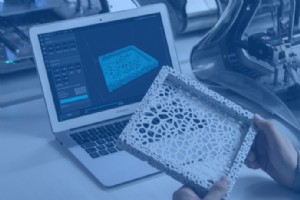
In today’s fast‑moving markets, organisations rely on cutting‑edge technology to stay ahead. Rapid prototyping has long been the quickest way to validate new ideas, and a well‑executed prototype pipeline can shave weeks—or months—from a product’s journey to market. As the manager of your RP departm
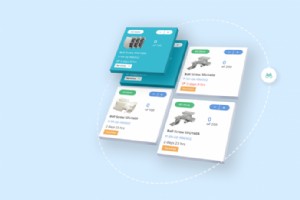
Adding a production‑ready, digital layer to spare parts manufacturing unlocks cost savings, faster availability and reduced supply‑chain dependency. As an AM department manager or innovation leader, you know that delivering high‑quality 3D‑printed parts on demand is more than a technical challenge
As the adoption of additive manufacturing (AM) accelerates, your organization is investing in AM facilities to lead the serial production frontier. Yet, scaling production volumes requires more than just machines and materials. Achieving a scalable AM workflow demands rigorous control, transpare
3D printing