Industrial manufacturing
3D printing

One of the most exciting aspects of the modern 3D printing sector is how frequently the technology is being deployed in new, previously unimaginable environments. In a recent interview, Dr. Richard Buswell of the University of Loughborough highlighted the potential of on‑site 3D printing for constr

Post‑processing a Direct Metal Laser Sintering (DMLS) part is a meticulous task—more involved than SLS, but with the right techniques you can achieve industrial‑grade aesthetics and performance. In this guide, we break down five practical steps that will help you finish your parts to professional s
3D printing is steadily becoming a cornerstone of modern medicine. Though we are not yet in a world where every hospital houses a printer, recent breakthroughs demonstrate that widespread adoption is nearer than we imagined. Below are the most compelling ways this technology is improving patient ou
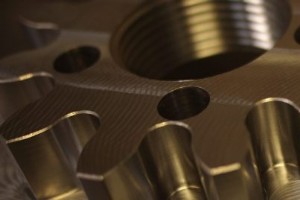
Since the early days of additive manufacturing, the industry has debated whether 3D printing could eventually replace CNC machining and other established methods. As the technology has matured, it’s clear that 3D printing will not supplant CNC; instead, it has carved out a niche as a powerful tool
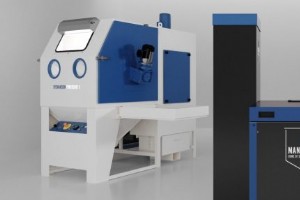
Left to right: DyeMansion’s Powershot C for depowdering, DM60 for colouring, and Powershot S for surface finishing. At AMFG, we empower users to streamline the post‑processing phase of 3D printing. New technologies that reduce time and improve quality are always on our radar. That’s why DyeMansion’
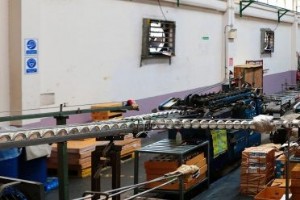
Previously, we reviewed the essential elements of a robust quality control workflow for 3D printing. In this post, we dive deep into the tools that enable continuous, real‑time monitoring of print jobs. Capturing live performance data from your printers offers several operational advantages. It let
Once a print run is finished, a rigorous quality inspection is vital. While meticulous data preparation and real‑time monitoring can prevent many errors before they occur, a range of issues can still arise during or after printing. For single‑use or small‑batch parts, a manual check is manageable.

After earning his Ph.D. from the University of Karlsruhe in 2008, Dr. Bastian Rapp has become the world’s leading expert on using 3D printing for microfluidics and related technologies. As founder and director of NeptunLab at the Institute of Microstructure Technology (IMT) of the Karlsruhe Institu
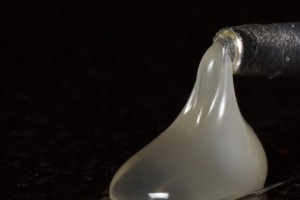
When a design exceeds the build envelope of a 3D printer, the most practical approach is to segment the model into smaller, printable components and then assemble them into a single finished part. This workflow is common in both industrial prototyping and hobbyist projects, and it opens the door to
Material science is rapidly evolving in additive manufacturing, driven by targeted research into niche applications and growing industrial adoption. Earlier this week we spoke with Dr Bastian Rapp of NeptunLab, who explained how his team is engineering proprietary 3D‑printing resins tailored to the
In the United Kingdom, additive manufacturing (AM) research is thriving, fueled by government investment and EPSRC support. From pioneering new materials to refining production processes, UK institutions are tackling the challenges that once held back manufacturers and proving 3D printing’s value a
At RP Platform, we were eager to learn about Desktop Metal’s latest breakthroughs—Bound Metal Deposition (BMD) and microwave sintering. BMD blends metal powder with a plastic filament binder and prints via a process akin to fused deposition modelling. Microwave sintering, on the other hand, uses me
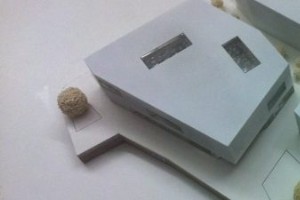
We are proud to be highlighted by 3Dprinting.com in an in‑depth feature that explores our collaboration with 3Faktur. Their cutting‑edge technology has opened a new avenue for visionary architects, allowing them to quickly order high‑precision, full‑scale 3D‑printed models of their concepts. We loo
Recent studies at Texas A&M University, Essentium Materials, and Texas Tech are redefining the capabilities of Fused Deposition Modeling (FDM). By printing with carbon‑nanotube (CNT)‑coated filaments and then applying precision microwave irradiation to weld the layers, researchers have produced
In September 2016, General Electric (GE) announced the acquisition of Swedish additive‑manufacturing company Arcam AB—a landmark event that sent ripples through the manufacturing press. Just a few months later, in December 2016, GE added Concept Laser to its portfolio, followed by a strategic partn
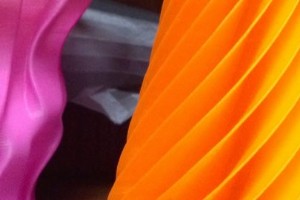
Achieving a flawless finish is the final step that transforms a solid FDM print into a polished, professional component. Below are proven, time‑tested techniques to elevate the appearance and performance of your prints. 1. Remove Support Structures First Supports are essential to keep layers from s
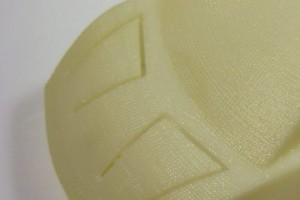
Fused Deposition Modeling (FDM) is a clean technology, so the post‑processing cleanup is usually straightforward. While it doesn’t generate the same volume of waste as SLS—especially when using dissolvable supports—removing any residual material is essential if you plan to paint or apply a finish.

Prodways Group has unveiled Rapid Additive Forging (RAF), a groundbreaking metal 3D‑printing technique that builds parts layer by layer in a cloud of inert gas. The process delivers finished blanks in a matter of hours—orders of magnitude faster than conventional casting or forging—while generating

Rapid.Tech remains a marquee event on the 3D‑printing calendar. In 2017, the conference attracted more than 200 exhibitors and 4,800 visitors who converged on Germany to explore the latest advances in additive manufacturing. Despite a hot, air‑conditioning‑free venue, the RP Platform team found the

At the 2017 Rapid.Tech show, ACEO®—a leading division of Wacker Chemie and a long‑time RP Platform user—announced a game‑changing silicone 3D printing solution. After years of research, the team has successfully developed a dissolvable support material that meets the complex geometries demanded by
3D printing