Industrial manufacturing
3D printing

Resins play a pivotal role in 3D‑printing research, enabling rapid production of highly accurate parts. 3D‑printing resins are liquid photopolymers that are primarily used with Stereolithography (SLA) and Material Jetting technologies. This guide explores the key resin types, the core printing meth

As 3D printing matures, its impact is widening beyond aerospace, automotive, and medical sectors. From regenerative medicine to the toy market, the technology is reshaping industries in unexpected ways. Below are ten fields where 3D printing is already driving change and where its influence is pois

Have you ever thought about 3D printing flexible parts? If so, Thermoplastic Polyurethane or TPU, as it’s commonly known, is definitely a material to add to your

Accurate capacity forecasting is essential to additive manufacturing production planning, yet it remains a complex challenge. How can manufacturers prioritize and schedule jobs while assessing cost‑efficiency? Introducing Holistic Build Analysis At AMFG, we’ve spent significant time develo

Additive manufacturing continually pushes the boundaries of material science, unlocking new possibilities for parts that were once impossible to produce. A standout breakthrough in this field is Scalmalloy, a high‑strength metal powder alloy engineered specifically for the aerospace sector. Below w

Jigs, fixtures and grips are indispensable, yet often overlooked, tools that underpin every manufacturing line. Their quality directly determines productivity, safety and product consistency. In recent years, industry leaders such as Volkswagen, Boeing, and Jabil have turned to 3D printing to prod
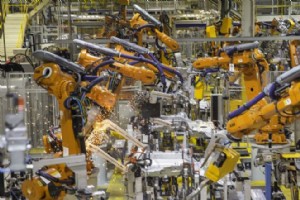
Artificial intelligence is accelerating the shift to fully automated production, laying the foundation for the next wave of smart factories. By augmenting human skills, delivering real‑time insights, and unlocking rapid design iteration, AI is reshaping every facet of modern manufacturing. The Four
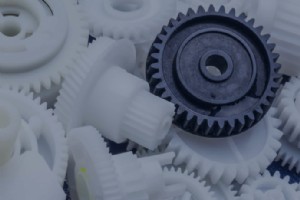
In the spare‑parts industry, the challenge is always to balance production costs, lead times, and inventory levels. 3D printing—an advanced digital manufacturing technology—offers a solution by enabling virtual inventories and on‑demand production, which reduces storage costs and improves servic

Since its first application in 1989, aerospace has been a pioneer in additive manufacturing. Today the sector accounts for 16.8 % of the $10.4 B AM market and remains a major driver of research and development. Leading firms such as GE, Airbus, MOOG, Safran and GKN not only adopt 3D printing to low

The Rapid.Tech+Fab Con 3.D trade show opened its doors on 5 June 2018, drawing the brightest minds in additive manufacturing to Germany’s second‑largest AM fair. With groundbreaking products and research on display, we’ve highlighted the five technologies that promise to reshape the industry. 1. A
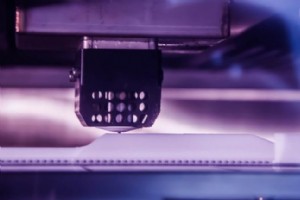
Binder Jetting is among the most widely adopted powder‑bed 3D printing technologies. Success hinges on a design approach that aligns with its unique process characteristics. Unlike conventional manufacturing, Binder Jetting demands distinct considerations to unlock its full potential. This guide di

Plus, examples of the technology in action. Did you know that 76 percent of consumer‑goods companies are already using 3D printing? Consumer‑goods brands are embracing additive manufacturing to deliver faster, more customer‑centric products at lower cost. With 3D printing increasingly adopted acro

3D printing has evolved far beyond a rapid‑prototype tool; it is now a core component of automotive manufacturing.According to a 2018 Jabil survey, 94 % of automotive stakeholders plan to expand their additive manufacturing (AM) capabilities.In the following sections, we examine the key benefits of
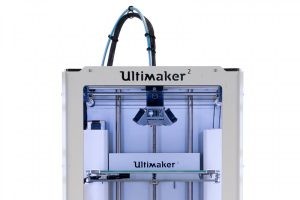
Fused Deposition Modelling (FDM) remains the go‑to technology for hobbyists, service bureaus, and OEMs alike. Whether you’re prototyping on a budget or producing functional parts, FDM delivers design flexibility and a wide range of thermoplastic options, including emerging metal filaments. However,
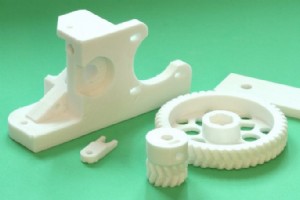
Nylon, or polyamide, is the industry’s most sought‑after 3D‑printing filament. Its abrasion resistance, toughness, and superior strength set it apart from common ABS and PLA. In this guide, we’ll explain why nylon excels, highlight the best printing technologies, and share practical tips for achiev

Ceramics are an emerging frontier in additive manufacturing, enabling production of jewelry, kitchenware, aerospace components, and custom prosthetics. Despite inherent challenges—such as fragile green parts requiring sintering—many manufacturers have introduced robust solutions for both desktop an

According to a Defence IQ study, 75% of industry leaders predict 3D printing will become standard in defence within the next decade. Additive manufacturing (AM) is already proving its worth by enabling on‑demand production of replacement parts, cutting costs, and unlocking new design possibilities.

At AMFG, automation is core to our identity. Additive manufacturing is evolving swiftly from rapid prototyping to full‑scale end‑part production. With AM system sales climbing, more enterprises are investing in this transformative technology—ushering in the age of smart, digitalized manufacturing.

Material Jetting stands out among 3D printing technologies for its ability to produce highly accurate parts with a smooth surface finish. Since its emergence in the late 1990s, it has become the go‑to solution for full‑colour visual prototypes, injection moulds, and casting patterns. In this guide

Acrylonitrile Butadiene Styrene (ABS) is one of the most widely used thermoplastics in 3D printing. Its exceptional strength, high heat resistance, and low cost make it a favorite in both consumer and industrial settings. While ABS is more challenging to print than PLA, its durability and versatili
3D printing