Industrial manufacturing
3D printing
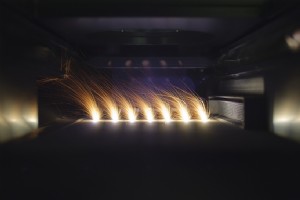
Adopting metal 3D printing can be daunting: you must develop new applications, qualify materials, and master complex processes. German firm Aconity3D tackles these hurdles by offering modular, open‑architecture laboratory metal 3D printing systems that let customers experiment with process parameter

[Image credit: Health Canada] Creating better-fitting, longer-lasting and higher-performing bone implants is an ongoing quest for orthopaedists and surgeons alike. 3D printing is contributing enormously to the advancements in this area. &

The need for specialised skills and expertise in additive manufacturing is crucial for the technology’s adoption. Mastering additive principles is challenging due to a steep learning curve and significant time investment. The Barnes Group Advisors (TBGA), a US-based consultancy, tackles thi

2019 marked a pivotal year for 3D printing, as the technology rapidly transitioned from prototyping to industrial production and became a core element of modern manufacturing ecosystems. Keeping pace with this fast‑moving industry is challenging, so we sifted through more than 30 expert interviews

This article was updated in May 2021. The automotive sector is under relentless pressure to deliver higher‑performance vehicles while simultaneously streamlining production, supply chains, and logistics. Additive manufacturing—commonly known as 3D printing—has emerged as a powerful ally in meeting
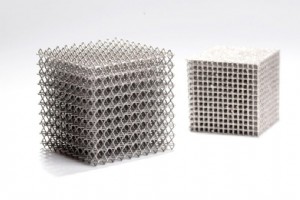
Metal 3D printing promises rapid, complex fabrication, but it still demands meticulous design, post‑processing, and iterative testing. California‑based VELO3D addressed these pain points by introducing its laser‑based Sapphire printer last year, a culmination of four years of focused R&D. The Sapp
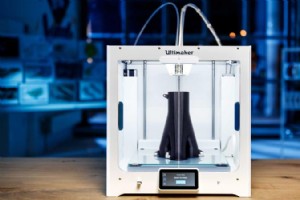
Over the past decade, desktop 3D printing has evolved from a hobbyist niche into a cornerstone of modern industry. By dramatically reducing cost and lead time, these machines are now essential for rapid prototyping, tooling, and even end‑use parts across a range of sectors. RepRap: Democratizing 3D
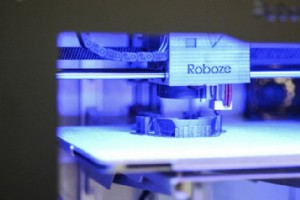
Founded in 2013, Roboze has delivered precision FFF 3D printers and a library of 12 high‑performance materials. With five printers and a growing portfolio, the company now targets industrial sectors such as aerospace, automotive, oil & gas, medical, and defence. 2024 data shows more than 300 units
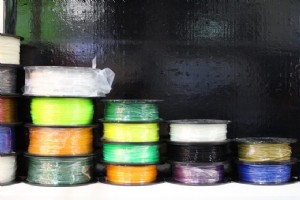
Advancements in extrusion‑based 3D printing are reshaping the trajectory of Fused Filament Fabrication (FFF), also known as FDM. FFF is the most widely adopted additive manufacturing technology, driving significant revenue and an expansive installed base (SmarTech, 2017). As adoption spreads across

In the past year, the 3D‑printing landscape has expanded at an unprecedented pace. From metal to polymer and beyond, 12 breakthrough technologies promise to transform manufacturing, reduce costs, and accelerate time‑to‑market. Metal 3D Printing 1. Aurora Labs’ Multilevel Concurrent Printing (MCP®)

Heat exchangers power countless everyday appliances—from air‑conditioners and car engines to refrigerators. Designing these compact devices has traditionally been a complex task, balancing efficient cooling with limited space. Conflux Technology, an Australia‑based company, tackles this challenge
Titanium 3D printing is redefining manufacturing across aerospace, medical, automotive, and motorsports thanks to its lightweight, corrosion‑resistant, and high‑temperature capabilities. The unique properties of titanium Sector Key Properties Typical Applications

As additive manufacturing (AM) shifts from prototype to production, service bureaus must stay agile and anticipate industry changes. Graphite Additive Manufacturing, a UK‑based AM provider, combines motorsport expertise with industrial solutions, delivering production parts, tooling, and prototypes

What are the forces shaping the 3D printing materials market as the industry matures? Materials remain one of the three pillars that underpin 3D printing—alongside hardware and software. The Wohlers Report 2019 noted that the material segment recorded unprecedented growth in 2018, driven by the exp
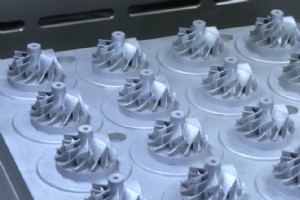
Metal 3D printing is advancing rapidly across all fronts. New materials, faster build speeds, and higher precision are unlocking a range of industrial applications that were previously impossible. Yet, navigating the available technologies and integrating them into existing workflows remains a chal
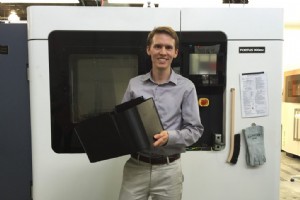
Manufacturing‑as‑a‑Service (MaaS) is a transformative business model poised to reshape the global manufacturing sector. Simply put, MaaS platforms connect customers with a vetted network of manufacturers to deliver production services on demand. The advantages are clear: agile, decentralized manufa

In 2018, Silicon Valley startup Arevo captured industry attention by unveiling what it described as the world’s first 3D‑printed carbon‑fiber bike frame. The project highlighted the distinct strengths of Arevo’s proprietary composite 3D‑printing technology—a fusion of robotics and software that de
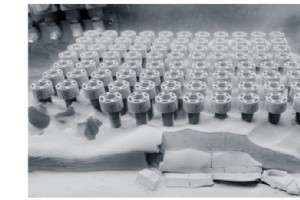
Image above: The M5 screws 3D printed using Digital Metal’s system [Image credit: Digital Metal] Metal binder jetting is undergoing a renaissance. Over the
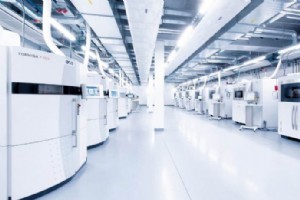
Image credit: EOS 3D printing now powers prototyping, product development, and production across sectors—from aerospace to construction—driving digital transformation with faster lead times, design freedom, and on‑demand manufacturing. Adoption Across Industries Our Maturity Chart maps eight key in

Stereolithography (SLA) and Digital Light Processing (DLP) are now the leading vat‑polymerisation 3D printing technologies. Their rapid evolution over the past decade has propelled them from rapid‑prototyping tools to production‑grade systems capable of delivering flawless parts for dentistry, jewe
3D printing