


Industrial manufacturing
3D printing

3D printing is rapidly reshaping the eyewear industry, moving from rapid prototyping to direct manufacturing of frames and lenses. According to SmarTech Analysis, the global 3D‑printing market for eyewear is projected to hit $3.4 billion by 2028, with final‑parts production alone expected to reach $
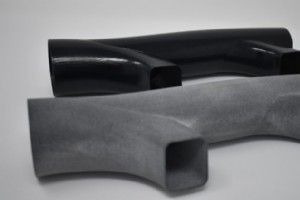
Post‑processing is often dubbed 3D printing’s dirty little secret – a manual, labour‑intensive step that can derail scaling efforts. Yet, advances in automation are turning this bottleneck into a competitive advantage. In this week’s Expert Interview, we sit down with Joseph Crabtree, CEO of Addit

Check out Part 2 of the AM Around the World series, which explores the adoption of 3D printing in the APAC region. North America and Europe still dominate the additive manufacturing (AM) market, hosting the largest share of industrial 3D‑printing firms and the most patents. However, the region’s le

In less than a week, the 3D‑printing community will converge in Frankfurt, Germany, for Formnext—the world’s largest additive‑manufacturing (AM) trade show. Formnext’s fifth edition is slated to be the most expansive yet, with over 740 exhibitors—including AMFG—showcasing the latest breakthroughs

Check out Part 1 of AM Around the World series, which explores the adoption of 3D printing in North America and Europe. Asia-Pacific (APAC) is transforming into the fastest growing 3D printing market. The region is expected to grow at th

3D printing materials are rapidly expanding. In 2019 the additive manufacturing (AM) materials market reached a value of $1.5 billion and is projected to climb to a striking $4.5 billion within the next five years. Chemical giants and metal producers are not only supplying new materials but are als
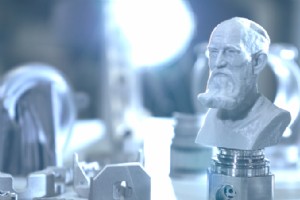
German multinational engineering and technology company Bosch is a global leader in automotive components, industrial technology, consumer goods, energy, and building solutions. Bosch has embraced additive manufacturing (AM) across every division, using it to accelerate prototyping and enabl

3D printing is more than a manufacturing tool—it reshapes how companies deliver value, streamline operations, and boost profitability. This article examines five powerful 3D‑printing‑enabled business models, detailing their benefits and real‑world examples. 1. On‑Demand Manufacturing Balancing supp
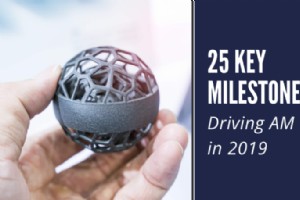
2019 marks yet another positive year for the additive manufacturing (AM) industry. This year, the industry has continued to mature into a production-ready process, with more companies adopting the technology or ramping up their involvement in the
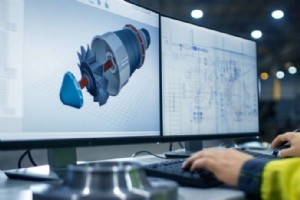
The capabilities of 3D printing software are growing, as the industry continues to mature. Historically, the 3D printing software segment has lagged behind hardware and materials. Recent breakthroughs, however, are closing that gap, enabling faster, higher‑quality production and more effi
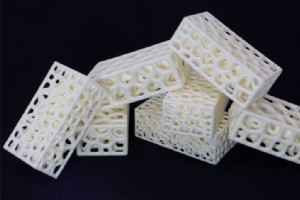
3D printing is evolving into a smarter process as more companies integrate Artificial Intelligence. Inkbit, a U.S. start‑up, has created a multi‑material inkjet 3D printer that literally has eyes and brains. While multi‑material 3D printing has existed for years, it has largely been confined to p

Post‑processing is often the bottleneck in industrial additive manufacturing (AM). Every AM technology demands a unique set of finishing steps that must be as automated as possible to keep production running smoothly. In recent years the industry has begun to address these challenges. New solutions

America Makes is the United States’ national accelerator for additive manufacturing (AM), driving research, development, commercialization, and widespread adoption of 3‑D printing technologies. Founded in 2012, the institute has completed 88 R&D projects and expanded from 65 founding members to mo
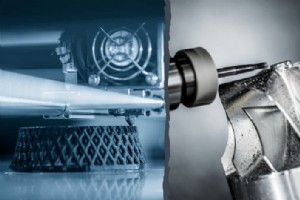
3D printing is not just a replacement for conventional manufacturing—it is a powerful ally that boosts efficiency, quality, and flexibility. Below are five key ways 3D printing supports traditional production processes, backed by real-world examples and measurable gains. 1. Conformal Cooling for In

3D printing is rapidly becoming the go‑to technology for spacecraft manufacturing, especially for rockets. Start‑ups and established aerospace giants alike are leveraging additive manufacturing to produce rocket components that deliver superior performance, lower costs, and faster time‑to‑market. I
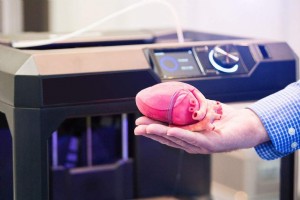
3D printing is creating an enormous opportunity for the medical industry. According to a report by market research firm, SmarTech Analysis, the market for medical 3D printing is currently estimated to be worth $1.25 billion. By 2027, the market v

[Image credit: CCDC Army Research Laboratory]Metal 3D printing spans a wide array of processes, each with distinct advantages, applications, and maturity levels. When selecting a technology for production, understanding its current capabilities and limits is essential. Yet, separating fact from hype

Jigs, fixtures and other tooling aids form the backbone of any production floor. Yet it’s not uncommon for these tools to take weeks to produce, creating bottlenecks that stall the entire workflow. To eliminate these delays, Dunlop Systems and Components, a UK automotive‑manufacturing specialist, e
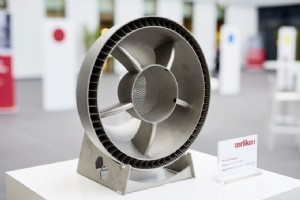
Oerlikon, a global technology and engineering group, serves some of the most safety-critical industries, including aerospace and defence. Increasingly, additive manufacturing has become a key part of its offerings, with the company establishing a

[Image credit: Adidas] 3D printing is reshaping footwear design, enabling brands to create bespoke styles and meet the surge in demand for personalized products. SmarthTech Analysis predicts that the footwear 3D‑printing market will grow to a $9 billion revenue opportunity over the next decade, bec
3D printing
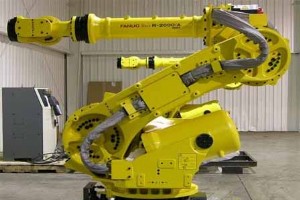
7 Essential Industrial Robots Revolutionizing Manufacturing

Targeted Folic Acid‑Conjugated Chitosan Nanoparticles Deliver Genistein, Boosting Anticancer Efficacy Against Cervical Cancer

Mastering Accuracy, Precision, and Tolerance in 3D Printing
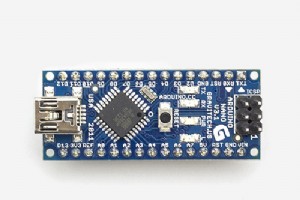
Arduino Nano RTC Clock: Precise Timekeeping with DS1307

