Industrial manufacturing
3D printing

Manufacturing service users have shifted from simply expecting on‑time delivery and quality to demanding 24/7 access, seamless ordering, real‑time visibility, and transparent pricing. These heightened expectations place customer experience at the forefront of competitive strategy for 3D printing s
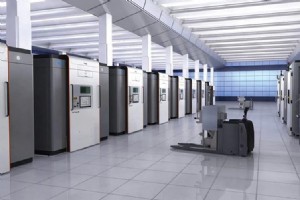
[Image credit: 3D Systems]The evolution of digital technologies has fundamentally reshaped manufacturing. Modern facilities are increasingly interconnected, creating the smart factories of tomorrow.Today, more than one‑third of production sites have already embraced smart factory concepts, and indus
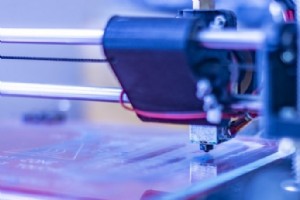
Why On‑Demand Digital Manufacturing Is Growing Just‑In‑Time (JIT) production, long the hallmark of lean manufacturing, cuts inventory costs by delivering goods only when customers demand them. However, JIT’s reliance on external suppliers and zero safety stock exposed many firms to supply‑chain dis
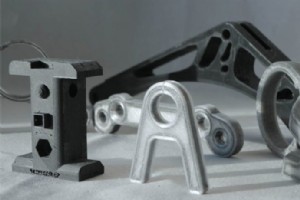
Composite 3D printing, though still a nascent technology, is rapidly advancing, unlocking new possibilities for producing parts that are both robust and lightweight. Anisoprint, a Russian start‑up, is at the forefront of this evolution. The company has pioneered a material extrusion process called
Metal 3D printing has entered a unique period in its history. The developments in hardware, software and materials ensure it continues to mature to unlock new applications and create products with a high level of reliability. Today, we la
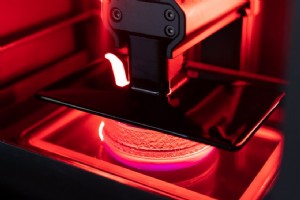
Resin‑based 3D printing has moved beyond rapid‑prototyping into true production capability. Origin, founded in 2015 by two software engineers, is leading this transition with a platform that unites software‑driven control, modular hardware, and an open‑materials philosophy. We sat down with Origin’
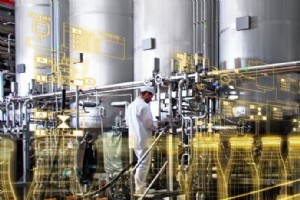
With ever‑changing consumer demands, supply‑chain volatility, and rising costs, the food and beverage sector is undergoing rapid transformation. Small suppliers aim to reduce production costs, while large producers push for higher volumes. Both groups are seeking technologies that can help them nav
Efficient additive manufacturing hinges on robust manufacturing execution. Adopting proven practices and the right tools maximises both productivity and value. Manufacturing Execution System (MES) software tailored for additive manufacturing streamlines workflows by synchronising data across system

[Image credit: Schmalz] 3D printing is a cornerstone of modern industrial robotics, offering unparalleled design freedom, cost efficiency, and rapid turnaround for custom grippers and end‑effectors. In an era where customization is becoming the norm in automation, additive manufacturing delivers ta
Autonomous vehicles, electric cars, and mass customisation are redefining the automotive landscape. To stay competitive in the Industry 4.0 era, manufacturers are accelerating the adoption of 3D printing technologies. 1. 3D Printing Powers Vehicle Electrification A recent Jabil survey shows that 48

Industrial 3D printing is evolving to keep businesses resilient and agile amid new complexities and opportunities. While the COVID‑19 pandemic introduced uncertainty into the industry, some companies suffered a downturn, whereas others adapted and grew. This article examines how the pandemic has re
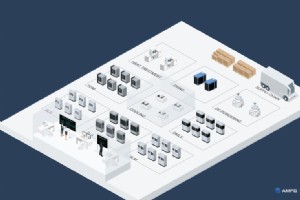
Do you ever feel lost on the production floor, unsure where bottlenecks are hiding? Many additive manufacturing (AM) teams struggle because they lack a clear, real‑time view of their operations. The digital complexity of AM demands flexible, data‑driven control, yet outdated tools—paper, spreadshee
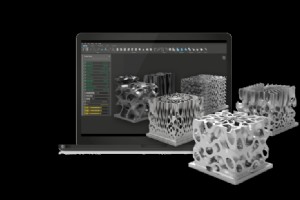
Engineers today have an impressive suite of software tools that tackle complex challenges in additive manufacturing (AM). Generative design software is a standout example, leveraging advanced computation to generate innovative, lightweight structures that are costly or impossible to produce with co

2020 was a landmark year for AMFG and the additive manufacturing sector alike. Amid a global pandemic, we faced unprecedented challenges and seized new opportunities to advance autonomous manufacturing with our MES solutions. With 12 months of rigorous growth now behind us, here are some of the hig
In April, AMFG hosted its inaugural Additive Manufacturing Landscape Digital Conference, bringing together 3D printing experts and industry leaders to discuss the current state of additive manufacturing. This article continues the conversation with Part 2, where we distill the most impactful insigh
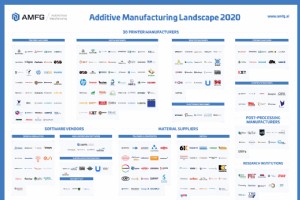
Update 16/06/2020: Following community feedback, the landscape now includes nine additional companies. Since AMFG released the inaugural Additive Manufacturing Landscape in 2019, the industry has accelerated rapidly. To capture this evolution, we present the second edition of our annual landsca
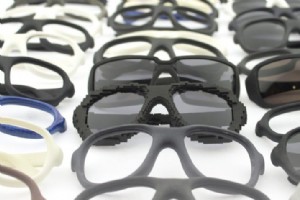
From bespoke sunglasses to personalized smartphone colors and shoe designs, consumers increasingly demand products that reflect their individuality. A Deloitte Consumer Review shows that over 50 % of shoppers express interest in customized offerings. With rising expectations for tailored experience
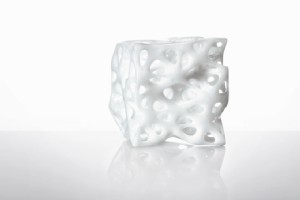
Ceramic 3D printing is a cutting‑edge additive manufacturing discipline that is already shaping industries ranging from healthcare to aerospace. Despite its relative novelty, the technology is moving from prototype to production across a broad spectrum of applications. Only a handful of companies
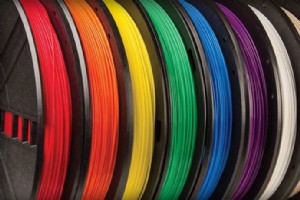
3D printing is advancing at a breakneck pace, driven by continuous improvements in material science and certification standards. The Senvol Database reports that the catalog of additive manufacturing (AM) materials expanded from roughly 1,700 in 2019 to 2,245 in 2020—a 30 % jump in available option
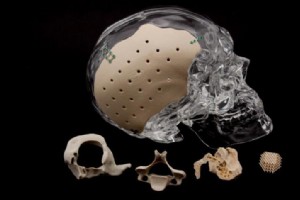
While ABS and nylon still dominate the 3D printing landscape, the demand for robust, high‑temperature materials is rising sharply. Industries such as aerospace and medical are turning to high‑performance polymers that can withstand extreme environments. The current leaders in this space are the Pol
3D printing