Industrial manufacturing
3D printing

TCT Show 2019 (24–26 September) is the UK’s largest 3D‑printing event, drawing over 10 000 visitors and 300 exhibitors. It remains a pivotal venue for professionals to discover cutting‑edge technologies and forge industry connections. Below are seven standout technologies that you won’t want to m

3D printing is rapidly emerging as a pivotal technology in electronics manufacturing. While initially focused on rapid prototyping, it is now increasingly applied to produce fully functional electronic components. By 2029, the global market for 3D‑printed electronics is projected to exceed $2 billi
In the age of Industry 4.0, manufacturers prioritize efficiency and innovation. 3D printing, coupled with robotics and automation, is a powerful enabler of both. About Eckhart Eckhart is a U.S.-based leader in industrial automation, specializing in lift assists, secure tools, and autonomous guided

Manufacturing is undergoing a sweeping digital transformation. A recent survey found that 74% of manufacturers believe adopting digital technologies is essential for long‑term success. Yet turning investment into operational reality remains a major challenge. Additive manufacturing (AM) sits at the

Updated in 2020 Design flexibility, material efficiency and low‑volume production make additive manufacturing (AM) an attractive option for many companies. Yet, to fully leverage AM in a production environment, several obstacles must be addressed. Technological Challenges 1. Slow Production Speeds
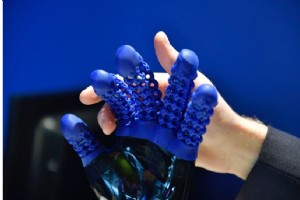
Material science in additive manufacturing is advancing at a breakneck pace, and silicone 3D printing has emerged as a game‑changing technology. This elastomeric material is prized for its biocompatibility, thermal conductivity and heat resistance. Based in Switzerland, Spectroplast is at the foref
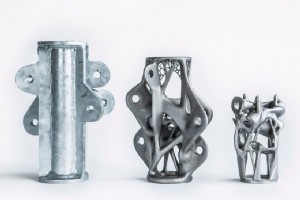
For years, software lagged behind hardware and materials in the additive manufacturing (AM) space, but that gap is narrowing fast. Companies are now delivering next‑generation tools that will drive industrial‑scale AM forward. Below, we explore the key trends reshaping the 3D printing software mark

\nOver the past year, major rail operators such as Deutsche Bahn, Bombardier and Angel Trains have significantly expanded their 3D‑printing capabilities.\nAccording to a recent EY study, 16 % of logistics and transportation firms now use additive manufacturing to produce spare parts.\nWhat is drivin

Additive manufacturing (AM) stands at the forefront of industrial innovation, enabling rapid prototyping and complex geometries that were once impossible. As manufacturers embrace AM, they unlock new design possibilities and streamlined production workflows. In this article, we examine five recent
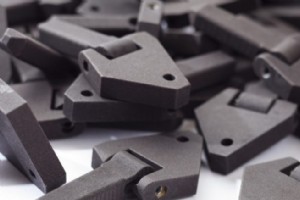
AMFG has released its inaugural State of the 3D Printing Industry Survey Report, capturing the latest trends in the additive manufacturing (AM) service provider market across more than a dozen countries. The survey offers a firsthand look at how this segment is performing today and its outlook for
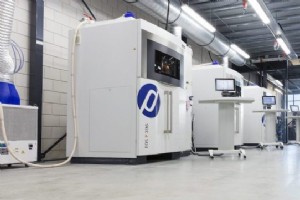
This interview was first featured in AMFG’s State of the Industry Survey 2019: AM Service Providers. To download the 36‑page report, click here. Founded in 2014 and based in the Netherlands, Parts on Demand is a 3D printing service bureau that specialises in series production, tooling, moulds and
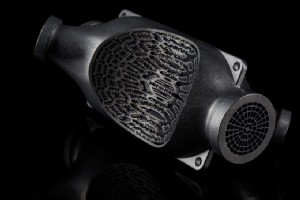
[Image credit: Conflux Technology] The industrial potential of 3D printing is expanding rapidly. Despite this growth, many still underestimate the true capabilities of additive manufacturing. AMFG’s 2019 State of the 3D Printing Industry Survey highlights that a lack of knowledge remains a top barr
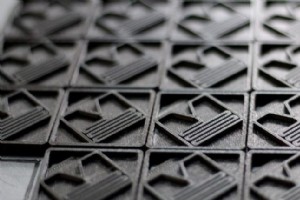
This interview was first featured in AMFG’s State of the Industry Survey 2019: AM Service Providers. Download the 36‑page report. Christina Perla, co‑founder and CEO of Makelab, leads a New York‑based service bureau that delivers 3D‑printing solutions across consumer goods, architecture, and indus
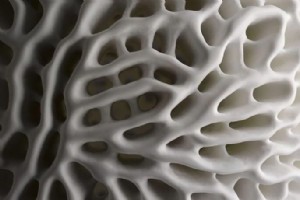
By harnessing the unprecedented design freedom of 3D printing, engineers are turning the most ambitious concepts into reality. 3D printing can create shapes and features that conventional manufacturing cannot. To illustrate its power, we highlight seven impressive designs that were only possible th
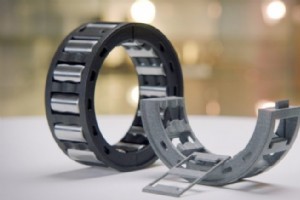
[Image credit: Bowman Additive Production] This week, we continue our Application Spotlight series by looking at bearings, critical components that are used to reduce friction between moving metal parts. In this article, we’ll dive into the benefits 3D printing provides for the design and produc
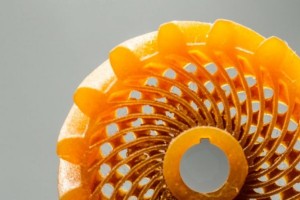
[Image credit: Fortify]Fortify, a Boston‑based startup, has pioneered the Fluxprint™ technology, combining magnetically‑aligned composite fibers with Digital Light Processing (DLP) to produce high‑resolution, high‑strength composite parts that were previously unattainable.About FortifyFounded to bri
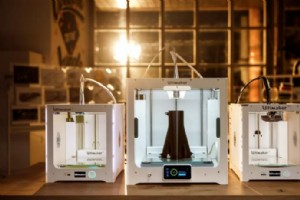
[Image credit: Ultimaker] In early November, desktop 3D‑printer pioneer Ultimaker unveiled a new branding strategy to reinforce its B2B focus. Ultimaker’s new trajectory highlights a wider shift in the 3D‑printing ecosystem: enterprises are embracing the technology for full‑scale production, not

3D printing is reshaping bike manufacturing, enabling lighter frames and faster production of custom components. In this edition of our 3D Printing Application Spotlight series, we explore how additive manufacturing is driving innovation in bicycle production, from design flexibility to rapid proto

Photocentric is a UK‑based manufacturer of 3D printers and photopolymer materials, founded in 2002. The company pioneered what it calls Daylight Polymer Printing, a resin‑based process that uses ordinary LCD screens instead of UV lasers or projectors to cure liquid resin layer by layer. By leveragi
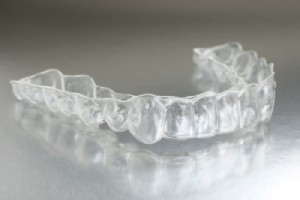
Digital dentistry— the integration of digital technologies into everyday dental practice—is reshaping the industry. Among the most influential innovations is 3D printing. From bridge models and surgical guides to dentures, 3D printing is already pivotal. However, the most pervasive use today is in
3D printing