Industrial manufacturing
3D printing
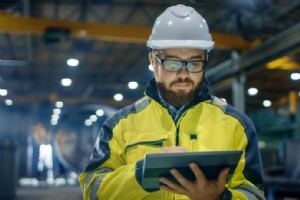
Since its inception in the 1980s, additive manufacturing (AM) has evolved from a rapid‑prototyping tool to a technology that can slash production costs, shorten lead times, enhance performance, and enable mass customisation at scale. Yet, scaling AM to full‑blown production still faces several crit
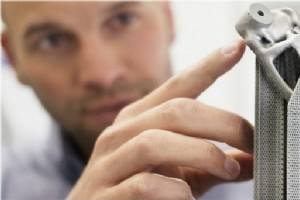
Metal 3D printing is increasingly transforming high‑value, low‑volume manufacturing across many sectors. Its continued evolution hinges on the development of new, high‑performance materials. voestalpine, one of Europe’s largest steel‑technology leaders, has become a key player in advancing these m
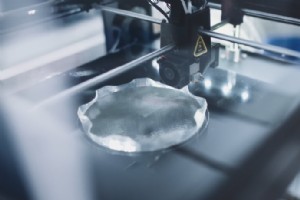
Imagine shoes that automatically adjust to your foot shape or a medical implant that adapts precisely to a patient’s anatomy when triggered by a stimulus. These scenarios are becoming reality thanks to 4D printing, a rapidly evolving field that combines additive manufacturing with smart materials a

Direct Energy Deposition (DED) is a family of metal additive manufacturing processes that melt and fuse material layer by layer. While it can fabricate new components, its primary strength lies in repairing and refurbishing existing parts. DED is widely adopted across aerospace, defense, oil & gas,

Materials are the third pillar of additive manufacturing, alongside hardware and software. They determine the mechanical performance, durability, and manufacturability of every printed part. As the AM market expands, manufacturers are actively seeking polymers, resins, metals, and ceramics that de
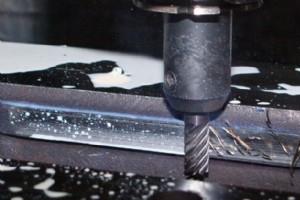
3D printing and CNC machining are the two most frequently employed techniques for prototyping and low‑volume production. While both rely on CAD data and a range of materials, one adds material layer by layer (additive) and the other removes it from a solid block (subtractive). Selecting the appropr

2018 marked a decisive shift for additive manufacturing. With breakthroughs across software, hardware and materials, the industry moved beyond early hype into reliable, production‑ready solutions. Valued at over $7 billion in 2018 (Wohlers Report), industrial 3D printing has solidified its role in
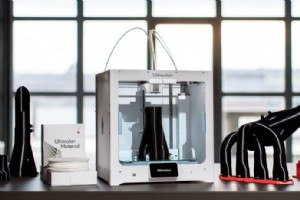
Since its founding in 2011, Ultimaker has become one of the most trusted names in desktop 3D printing. With a clear mission to democratize additive manufacturing, the company delivers open‑source printers, high‑quality materials and user‑friendly software. 2018 marked a pivotal year: in April, Ulti
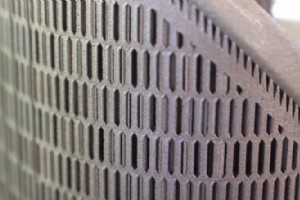
Support structures are the backbone of reliable 3D prints. While 3‑D printing unlocks free‑form geometry, it relies on supports to keep parts from warping, collapsing, or losing dimensional fidelity. In this comprehensive guide we examine what supports are, why they’re essential across printing tec
Standardisation is the bedrock of any mature industry. For the rapidly evolving world of additive manufacturing, it is not a luxury but a necessity. According to a recent EY survey, 46 % of companies plan to use 3D printing for end‑part production by 2022. As the technology pivots from prototyping
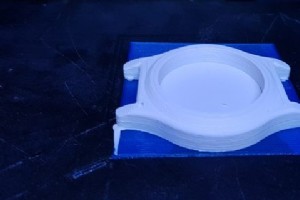
Ceramic 3D printing is still an emerging field, yet its versatility makes it ideal for a broad range of industrial applications—from bearings and semiconductors to aerospace and jewellery. As the market matures, companies are actively working to make ceramic additive manufacturing fully viable. Nan
What are the secrets to a successful additive manufacturing operation? Additive manufacturing is steadily moving from prototyping into full‑scale production. While the technology has advanced dramatically over the past decade, several core challenges remain that must be addressed to deliver reliabl

Generative design is a powerful software tool that empowers engineers and designers to tackle challenges with unprecedented innovation and efficiency. By defining clear goals and constraints, the algorithms explore a vast array of potential solutions, giving users a wealth of optimized options. Al
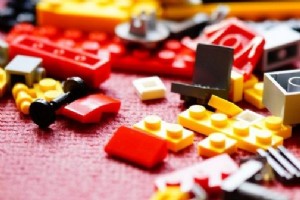
When 3D printing first emerged, most people imagined it as a niche manufacturing tool. Today, however, the toy sector is harnessing its power to stay ahead in a consumer‑driven market. From slashing time‑to‑market to enabling fully customised products, 3D printing offers tangible advantages that tr
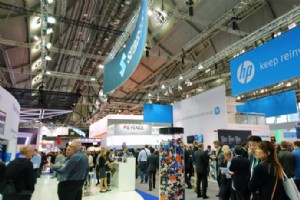
In just a few days, Frankfurt will host one of the world’s premier additive manufacturing events: Formnext. From 13‑16 November, the trade show will showcase the latest advances in AM, including cutting‑edge hardware, materials, and software solutions. The AMFG team is preparing its booth, but we’r
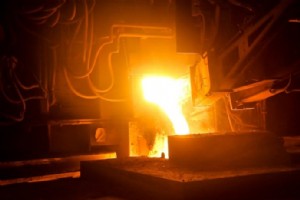
Metal casting has stood the test of time, yet it faces modern challenges of cost, labor, and lead time. 3D printing offers a powerful solution, enabling foundries to produce tooling—dies, patterns, and molds—more efficiently and affordably. Overcoming Traditional Limitations While die casting, sa
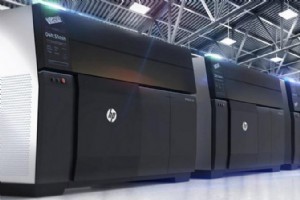
HP has long been a trailblazer in 3D printing, setting industry milestones with its 2016 Multi Jet Fusion launch. That breakthrough opened the door to high‑volume, production‑grade parts made from polymer. Now, two years later, HP is expanding that vision with HP Metal Jet, a new 3D‑printing solut

In Formula One, every fraction of a second counts. Teams must constantly refine their cars to stay ahead of rivals and comply with the ever‑evolving FIA regulations. That rapid iteration demands a culture of relentless innovation, and additive manufacturing has become the engine behind many breakth

Integrating 3D printing with industrial robots is emerging as a powerful strategy for the next generation of manufacturing. Two primary forces drive this trend: the need to produce large, highly accurate parts additively, and the opportunity to embed 3D printing into fully automated, digital produc
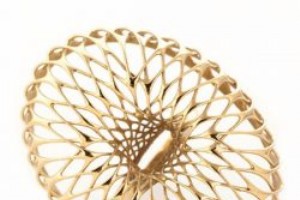
According to a recent SmarTech analysis, the additive‑manufacturing market for precious‑metal materials is projected to reach $250 million by 2028. While still emerging, 3D printing of gold, silver, and platinum is already reshaping high‑end, low‑volume sectors that demand unparalleled customizatio
3D printing