Industrial manufacturing
3D printing

Polylactic Acid (PLA) remains the most popular filament for FDM printers. Its low warping, biodegradability, and wide color palette make it the go‑to choice for beginners and seasoned users alike. However, its inherent brittleness limits it to non‑functional prototypes, decorative items, and low‑st

3D printing is moving beyond a novelty to become a game‑changer for electronics. While it remains most popular for rapid prototyping, the technology’s speed, design freedom and custom‑tailoring potential are reshaping the industry’s production paradigms. How 3D Printing Works with Electronics Mate

Photo credit: Branch Technology 3D printing is emerging as a transformative force in construction, promising faster builds, lower costs, and unprecedented design freedom. While still in its early stages, the technology offers a clear path toward more sustainable, efficient, and resilient infrastruc
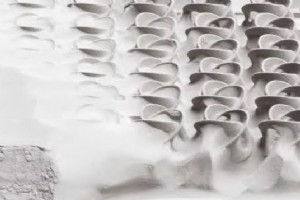
Above: Digital Metal’s 3D printing technology uses metal binder jetting. Binder jetting has become a staple in additive manufacturing, offering rapid production of sand molds, metal components, decorative items, and prototypes at a fraction of the cost of conventional methods. With dozens of machin

Professor Ian Campbell is a leading researcher at Loughborough University, where the Design for Additive Manufacturing (DAM) programme is redefining how complex parts are conceived and produced. With more than forty peer‑reviewed publications, he serves as editor of the Rapid Prototyping Journal a
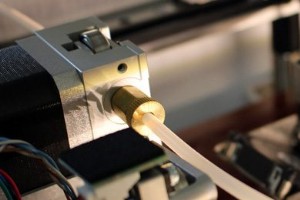
Metal 3D printing has evolved rapidly, enabling the creation of lightweight, highly complex components for aerospace, automotive, and medical industries. While the technology offers unprecedented design freedom, it also presents a set of recurring challenges that can compromise part performance. In

Additive manufacturing unlocks unparalleled design freedom, but it demands a distinct engineering approach. While each 3D printing technology and material has its own nuances, these four core principles apply broadly across all processes. For a curated list of the best CAD tools, see our guide. Key
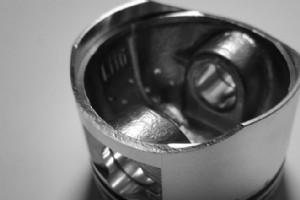
Metal additive manufacturing has experienced explosive growth across a range of industries, leading to a proliferation of 3D printing metal systems on the market. Direct Metal Laser Sintering (DMLS) is one of the most popular technologies, delivering high‑quality metal components with exceptional pr

Reverse engineering—extracting digital data from a physical object—paired with additive manufacturing creates a powerful workflow that shortens development cycles, cuts costs, and expands design freedom. From legacy aerospace components to bespoke medical implants, this synergy enables companies to
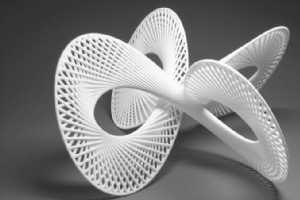
As the pioneering 3D‑printing method, stereolithography (SLA) delivers parts with exceptional accuracy and ultra‑smooth surfaces at a fraction of the cost of other techniques. However, achieving a truly first‑class finish requires a deliberate post‑processing routine. Because SLA builds rely on rem
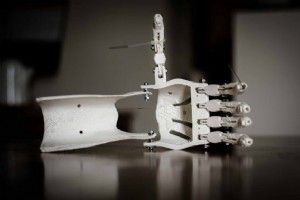
The medical sector is one of the fastest‑growing arenas in additive manufacturing, with applications ranging from patient‑specific implants to realistic functional prototypes and advanced surgical tools. A 2017 SME survey found that more than 97% of medical AM professionals expect additive manufact
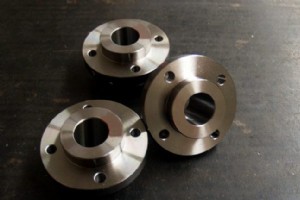
Electron Beam Melting (EBM) is a cutting‑edge metal additive manufacturing process that uses a focused electron beam to fuse powdered metal into solid components. Launched by Swedish company Arcam (now part of GE Additive) in 1997, EBM is renowned for producing lightweight, high‑density parts that
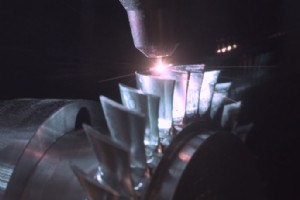
Wire Arc Additive Manufacturing (WAAM) is an emerging metal 3D‑printing technology that enables the fabrication of large, high‑strength parts across aerospace, marine, and energy sectors. Though less known than powder‑based systems, WAAM offers distinct advantages in scale, cost, and material versa

The annual Wohlers Report has become the additive manufacturing industry’s most coveted reference since its first edition 23 years ago. With 76 co‑authors spanning 32 countries, the report aggregates insights from the world’s largest network of AM professionals. As new system makers, material suppl
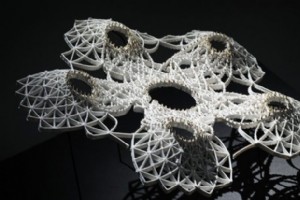
Universities worldwide are increasingly investing in 3‑D printing laboratories, turning campuses into hubs of innovation where students and faculty push the boundaries of additive manufacturing (AM). As part of our ongoing series on AM’s impact across sectors, we turn the spotlight on education—exa
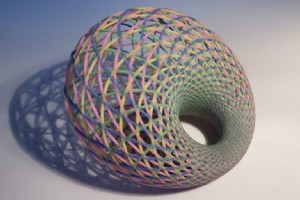
Multi‑material 3D printing is a cutting‑edge additive manufacturing technique that fuses distinct materials into a single part, unlocking performance and functionality that traditional single‑material prints cannot achieve. By integrating varying mechanical, optical, and functional properties durin

Metal 3D printing is reshaping manufacturing, with sales of metal additive‑manufacturing systems jumping 80% since 2017. The technology gives designers unparalleled freedom to craft organic shapes and lightweight structures that would be impossible with conventional methods.To fully exploit this cap
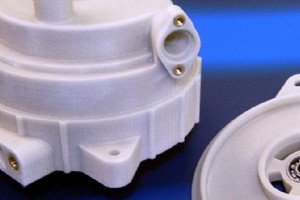
Selective Laser Sintering (SLS) has evolved from a prototyping tool into a mainstream solution for producing low‑volume end parts and support structures such as jigs and fixtures across diverse sectors. By unlocking unprecedented design freedom, SLS delivers tangible advantages that can transform p

With the 3D printing services market projected to hit $13 billion by 2022, the sector presents a massive growth window for service bureaus. Yet, as demand surges, the challenge of scaling operations while preserving a competitive edge grows too. Many bureaus still rely on manual, disconnected proce

Since its introduction in the mid‑1980s, Selective Laser Sintering (SLS) has established itself as one of the most reliable and versatile additive‑manufacturing technologies. Its ability to produce lightweight, high‑strength parts in a matter of hours makes it a favorite for everything from rapid p
3D printing