


Industrial manufacturing
3D printing
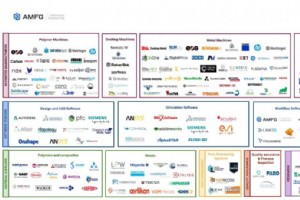
Update 26/05/2020: We’ve released our Additive Manufacturing Landscape 2020 report and infographic, covering 231 organisations driving digital manufacturing. Explore the full article. Over the past decade, additive manufacturing (AM) has evolved from a niche prototyping tool into a cornerstone
Jabil, a $22 billion manufacturing powerhouse, operates over 100 facilities across 29 countries and employs 190,000 people worldwide. From industrial design to end‑to‑end supply chain logistics, the company delivers comprehensive manufacturing solutions to Fortune 500 clients. With a longstanding r
Adopting additive manufacturing is more than just buying a printer; it demands the right software to guide design, simulation, workflow, and security. The benefits of 3D printing are undeniable, but successful implementation hinges on several critical factors: the design tools chosen, seamless wor

Since its 2013 founding, Carbon has accelerated from a niche startup to a $1.7 billion+ leader in additive manufacturing. Its proprietary Digital Light Synthesis™ (DLS) technology now powers production for aerospace, automotive, consumer goods and medical sectors. High‑profile customers such as adi

3D printing is injecting fresh momentum into the consumer goods sector. By enabling rapid prototyping and direct manufacturing, the technology is unlocking new product concepts, driving cost efficiencies, and delivering unprecedented levels of personalization. 1. Arevo’s First 3D‑Printed Carbon‑Fib
With the demand for high‑performance polymers in additive manufacturing accelerating, major material players are expanding their portfolios. As the industry shifts from prototyping to serial production, the need for engineering‑grade materials that satisfy stringent performance criteria across auto
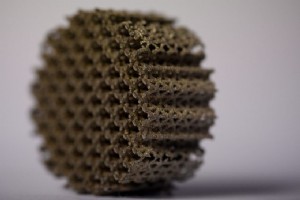
Quality assurance (QA) is the cornerstone of reliable metal 3D printing, yet it remains the most demanding step in the process. As additive manufacturing expands into high‑performance sectors, the expectation is that each part meets stringent mechanical and dimensional specifications. For metal pr

The 3D printing sector has surged over the past decade, welcoming a wave of innovators poised to reshape manufacturing. From cutting‑edge hardware to breakthrough software, these startups are driving the next wave of additive manufacturing. Explore our latest feature on 10 Promising 3D Printing Sta
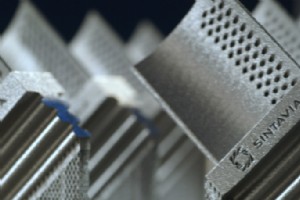
Sintavia is an independent manufacturer that delivers metal additive manufacturing services to critical sectors such as aerospace, defence, and oil & gas. Focused on serial production, Sintavia offers a fully integrated service—from design and build to post‑processing, testing, metallurgy, and pow
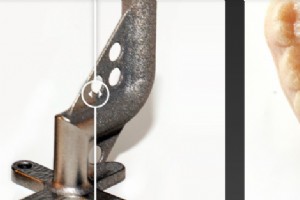
Before and after: 3D‑printed parts following post‑processing using PostProcess Technologies’ automation solutions. Image credit: PostProcess Technologies Post‑processing remains the most labor‑intensive step in additive manufacturing, consuming 30‑60% of the total production time. The core of this
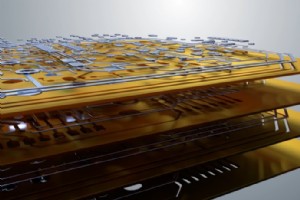
The electronics industry is rapidly embracing additive manufacturing, reshaping how we develop everything from drones and satellites to laptops and smartphones. Yet at its core, any electronic system depends on components—printed circuit boards (PCBs), antennas, sensors—that have traditionally bee

Post‑processing is often the overlooked half of additive manufacturing, yet it is the final key to achieving the quality, precision, and aesthetic finish demanded by industrial customers. While the first stages—design and build—are increasingly automated and digitally driven, the post‑processing ph

2018 marked a pivotal phase of growth and maturation for additive manufacturing. The hype of previous years – promising 3D printers in every home – faded into reality as the industry pivoted toward solid industrial applications. While still a fraction of the $12 trillion manufacturing sector, addit

In 2018, 3D printing solidified its role as a commercial, industrial manufacturing technology. Hardware, material, and software breakthroughs demonstrated that additive manufacturing is an integral part of modern production. With an impressive year under its belt, what will 2019 bring for the indus

What does the future of automotive production look like? Ford Motor Company may just have the answer. In the summer of 2018, Ford opened its state‑of‑the‑art Advanced Manufacturing Center in Michigan. The 135,000‑square‑foot, $45 million facility brings together collaborative robots, VR, AR, and

2018 was a landmark year for additive manufacturing. Breakthroughs in technology and software moved the industry closer to delivering on its promise of a truly industrial manufacturing solution. Despite these encouraging developments, several critical questions remain as the industry looks ahead. #
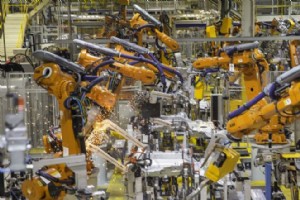
Industry 4.0 is a term you’ll encounter whenever you explore additive manufacturing or modern production systems. It isn’t just a buzzword; it represents the convergence of digital technologies with traditional manufacturing, reshaping how factories operate. What is Industry 4.0? Industry 4.0 captu

A deep dive into polymer 3D printing: technologies, promising developments, applications, and more. As major chemical companies are now joining the 3D printing w
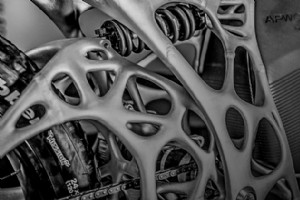
Performance racing thrives on relentless innovation. In a sport where speed and precision are paramount, engineering excellence is non‑negotiable. Additive manufacturing (AM) is emerging as a key catalyst for this evolution. Carbon Performance, a UK‑based startup, harnesses AM to produce high‑perf

In the fast‑moving world of additive manufacturing, staying abreast of industry developments is critical. Trade shows offer a unique blend of learning, networking, and firsthand exposure to the latest technologies. This guide compiles the most influential AM events of 2019, helping you plan your ca
3D printing

Lattice Launches Certus‑NX: Compact, Low‑Power FPGAs with High‑Density I/O and Built‑in Security
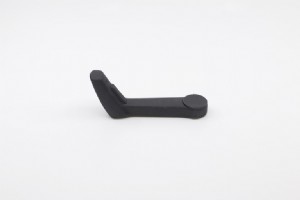
3D-Printed Throttles Propel Pure Watercraft’s Electric Boat Innovation

Addressing Manufacturing Hurdles for India’s Emerging EV Startups
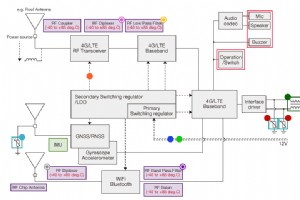
Powering V2X & Autonomous Driving: Inductors & RF Passives in Telematics Control Units

