


Industrial manufacturing
3D printing

3D printing delivers rapid, cost‑effective prototyping and low‑volume production. However, production costs can still climb if design, material selection, and workflow are not optimized. The following expert‑backed strategies will help you keep expenditures in check without compromising quality. 1.
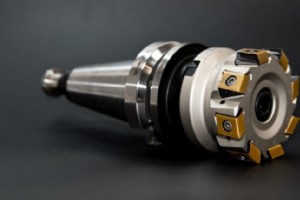
In high‑performance sectors such as automotive and aerospace, the pursuit of lighter metal components is paramount. Reducing weight directly translates to better fuel efficiency, lower operating costs, and compliance with tightening emissions regulations. 3D printing—by building parts layer by laye

In additive manufacturing, the integrity of a part can make or break a product—especially in aerospace, medical, and automotive applications where flawless performance is non‑negotiable. Traditional inspection methods often miss hidden flaws such as porosity, voids, and inclusions that can compromi

Metal 3D printing has surged in popularity, as highlighted by this year’s Wohlers Report. While not every production scenario calls for additive manufacturing, a handful of applications consistently demonstrate that metal 3D printing delivers superior design freedom, structural complexity, and cost

In our latest series on AI’s industry impact, we examine how breakthroughs in artificial intelligence are reshaping aerospace manufacturing and operations. According to a recent Accenture study, 80 % of top executives in aerospace and defense expect AI‑driven decisions to touch every workforce segme

Rapid prototyping has long been a cornerstone of additive manufacturing. While earlier methods required days, weeks, or even months to produce a model, 3D printing can deliver functional prototypes overnight, dramatically accelerating design cycles and cutting time-to-market. What is Rapid Prototyp

From nimble startups to established OEMs, firms are redefining what 3D printing can achieve. With complex designs, shorter lead times, and real‑world impact, the technology is rapidly integrating into production lines. Below we highlight twelve organizations that are setting new industry standards.

As autumn approaches, the UK’s premier additive‑manufacturing event, the TCT Show, is set to return to Birmingham from 25 to 27 September. With nearly 300 industry leaders—including AMFG—joining the event, the show will draw more than 10,000 visitors eager to explore the latest AM systems, software

Over the past decade, additive manufacturing has shifted from rapid prototyping to true production. While many still view 3D printing as a niche prototyping tool, the industry is rapidly embracing it for end‑use parts. But how can manufacturers transition from prototyping to production, and what hu
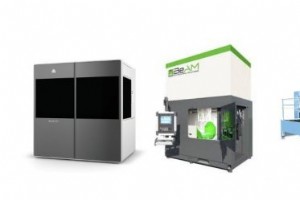
Large‑scale 3D printing offers capabilities that smaller systems simply cannot match, from producing massive prototypes to manufacturing high‑volume, complex parts. With build volumes exceeding 500 × 500 mm, these industrial systems are reshaping sectors such as aerospace, automotive, and manufactu

As additive manufacturing (AM) moves from prototyping to full‑scale production, manufacturers face critical challenges in process repeatability and quality assurance. Simulation software offers a data‑driven path to higher part consistency, reduced waste, and faster time‑to‑market. Below, we high
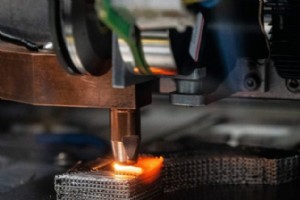
The rise in metal 3D printing in the last year has been well documented. With new players entering the market at a rapid speed, Digital Alloys is one company contributing to this evolution. Founded in 2017, Digital Alloys has developed its paten

Advances in 3D printing—faster processes, automation, and higher production volumes—have transformed additive manufacturing into a cost‑saving engine across the entire product lifecycle. From design to final assembly, the technology can dramatically lower expenses while accelerating time‑to‑market.

Should you outsource your 3D printing projects or build an in‑house capability? With additive manufacturing reshaping design, prototyping and production, many firms face the same dilemma: keep the technology on‑premises or partner with a specialist service bureau. The right choice hinges on your ob
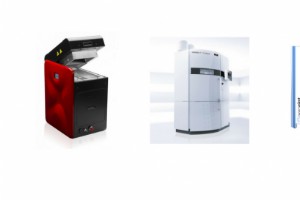
Selective Laser Sintering (SLS) is one of the most widely used 3D printing technologies, with many OEMs and manufacturers employing it to produce high‑quality end parts and prototypes. To help you navigate the SLS landscape, we’ve compiled a list of six top‑performing SLS machines that cater to a r

Stereolithography (SLA) is the oldest of all 3D printing technologies, its emergence marking the start of the 3D printing revolution. Today, the 3D printing market offers a wide choice of SLA 3D systems, ranging from desktop 3D printers to larger
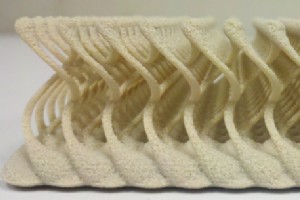
\nHigh‑performance thermoplastics, such as PEI, PAEK and PPSU, are increasingly in demand for industrial‑grade manufacturing applications.\nWithin the field of additive manufacturing, Fused Deposition Modelling (FDM) is the most common technology for printing with these filaments.\nIn this tutorial,
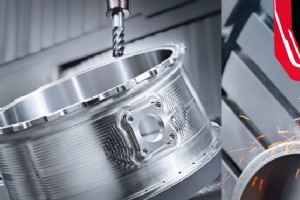
[Image credit: DMG Mori] For decades additive manufacturing (AM) and traditional subtractive manufacturing have been viewed as separate ends of a spectrum. In reality, the most advanced factories are blending the two to create parts that are both geometrically complex and dimensionally precise. H

As additive manufacturing (AM) continues to evolve, optimizing designs specifically for the technology becomes essential to fully harness its capabilities. While AM unlocks complex geometries, lightweight structures, and tailored material distribution, this freedom demands a new design mindset. Rel
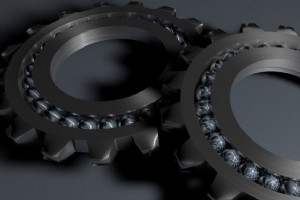
As the industrial 3D‑printing market expands, manufacturers are unlocking new efficiencies—from rapid prototyping to on‑demand spare parts—driving faster product launches and cost reductions. Key Benefits of Industrial 3D Printing 1. Cost‑Efficiency and Faster Time‑to‑Market Additive manufacturing
3D printing

Photonic Computing: Light-Based Technology Replacing Traditional Transistors

Infrared Electromagnetic Field Redistribution on Graphene by Silver Nanoparticle Dimers
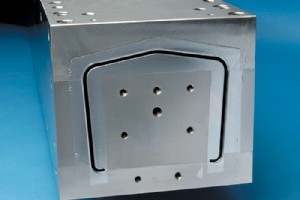
CAMX 2021 Exhibit Preview: LUM Industries – Leading Innovator in Pultrusion Dies
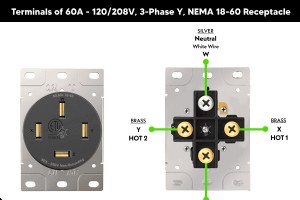
Step‑by‑Step Guide to Installing a 3‑Phase 60A NEMA 18‑60 Receptacle (120/208 V)

