



Photonic Computing: Light-Based Technology Replacing Traditional Transistors
Photo-tonic or optical computing is an overturning system of using computer devices. Photo-tonic computers are meant to use Infrared light or photons instead of electric current. As we all know that so many countries are facing issues of power crises. Using light as a power source for digital computing is a great achievement. 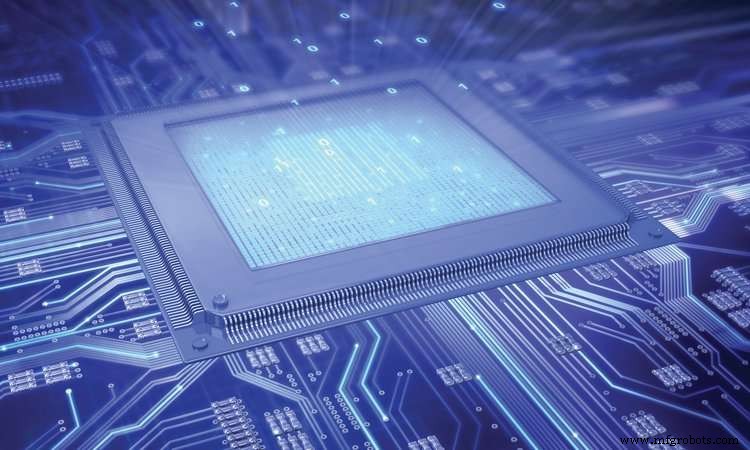
Photo-tonic computing
Photo tonic computing also termed optical computing is an advanced type of computing where photons are used through lasers or diodes for computation. Light is used in the formation of the basics of logic gates instead of electrical transistors. Photons work as carriers of information using linear optical instruments (including wave plates and optical reciprocal mirrors) mainly for processing quantum information. Using quantum memories and photon detectors to detect for storing quantum information.
Historical overview
This is the era of technology that has the objective of making tasks easier. Time availability has shortened since different tasks and projects need to be completed within deadlines to meet the requirements of business and other operations. Computations through computers have made things a lot easier by bringing calculations, projections, the transmission of information, and communication at a distance of a click.
Transmission of data from one place to another has always been a problem.
Over the history when Alexander Graham Bell introduced telephonic communication in 1876, Radio invention in 1985 laid a new era of communication ground and then in 1947. Bell Labs introduced transmission through transistors and then satellite communication and transmission came across and communication and transmission started wirelessly and through wired connections.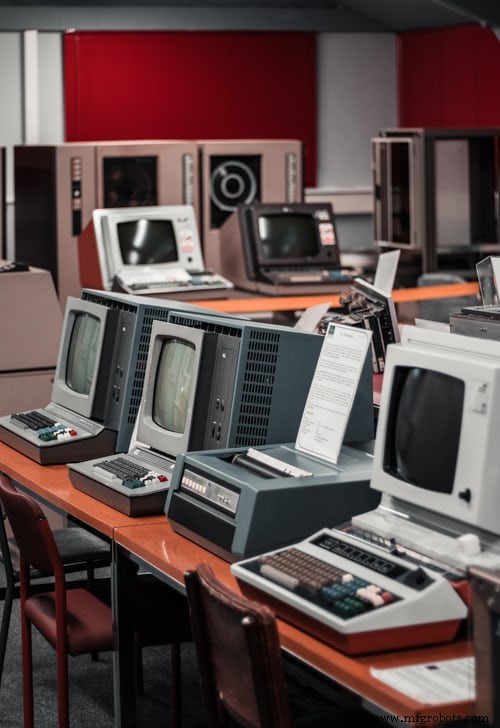
Need for photo-tonic/Optical computing
Data transmission through wired connections is found speedier in some cases to meet commercial requirements and household needs. Transmission of data through transistors has made it possible to process and emit data with a good speed but there is always a loss of energy and time as noticed, that’s where it brings a need for a speedier medium to transmit data.
Advantages of photo-tonic/optical computing
Optical computing has numerous advantages including:
- Brilliant higher speed
- There is not any risk of short circuit
- Higher density
- No heating issues
- Durable and long-life
- Minimum or no power-loss
- Larger bandwidth
- Easier to process data due to speed
- Higher storage density
- Lowest transmission loss
Cons of photo-tonic/optical computing
- Expensive production
- Bulkier and fragile hardware
- Photo-tonic crystals are challenging in the aspect of production
- Computing is speedier but complex
While there are few setbacks of optical computing, however, there is the possibility that in near future optical computing will capture its space and will be operating at every stage as it’s a need to overcome such issues as a result of transistors which include overheating and size problems.
However, this stage has not been achieved yet because of manufacturing issues and investments in such high-end computing. But as technologies are necessities of commercial and households for transmission and data processing.
Advancements
Companies such as MIT’s Light-matter and light-elligence, Optalysys, and Luminous are working over the production of photo-tonic chips, which work much faster than already being used in computers. Lightmatter claims that its chip named Envise is five times faster than chips being used in computers named Nvidia, which is already being used in the world’s most powerful center which is famous for the highest efficiency regarding energy consumption.
This chip is most efficient, will help improve in every field such as autonomous working vehicles using artificial intelligence, pharmaceutical companies, and factories using automatic processing and manufacturing of components using robotic systems. All these works need the speedier transmission of data for proper and accurate execution of processes. The more accuracy and speedy delivery of information of data from one place to another will bring greater functionality and boost productivity, optical computing is a marvelous tool for this purpose.
Industrial Technology
- Using a Transistor as an Electrically Controlled Switch
- Insulated‑Gate Bipolar Transistors (IGBTs): Merging FET Precision with BJT Power
- Unijunction Transistor (UJT) & Programmable UJT (PUT): Design, Operation, and Oscillator Applications
- Finite-Length Transmission Lines: Impedance, Reflections, and Termination
- Waveguides Explained: Fundamentals, Modes, and Practical Applications
- Fog Computing Explained: Bridging Cloud and Edge for Faster, Smarter Data
- Automatic Street Light Control System with LDR and BC‑547 Transistor – Simple, Reliable, Energy‑Saving
- Understanding Ultraviolet Light: Risks, Sources, and Safety Measures
- Understanding the TIP120 Transistor: Basics, Features, and Applications
- BC547 Transistor: Key Features, Applications & Usage Guide