Industrial manufacturing
3D printing

Whether you’re a hobbyist or a seasoned professional, the 3D printing market is bursting with new options—from compact desktop units to large‑scale industrial systems. As global manufacturers invest more heavily in additive manufacturing, breakthroughs in technology and materials are emerging faste
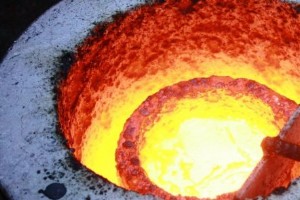
3D printing has already transformed injection moulding by enabling lightweight, cost‑effective molds and consistent quality. Foundries are now extending this advantage to sand casting, combining rapid digital tooling with the versatility of traditional metal casting. What is sand casting? Sand cast
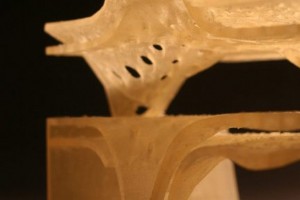
First introduced by Stratasys in 2007, Polyjet 3D printing—though less common than SLS or SLA—offers unmatched surface fidelity. It can render details as fine as 0.1 mm and finishes with a naturally smooth, high‑quality surface that typically requires no post‑processing sanding or polishing. Key Ap

The additive manufacturing (AM) sector is currently experiencing rapid innovation across processes and technology. New software solutions now enable seamless integration of multiple processes, machines, and tools via a single, centralized platform. When implemented, these solutions unlock automatio
Successfully removing support structures from metal parts can be tricky, especially when a pristine, smooth finish is required. This guide offers proven strategies to streamline post‑processing and reduce stress on your parts. Avoid supports whenever possible Minimising support use is the first lin

Across the world, industry leaders are deepening their commitment to additive manufacturing (AM) by funding pioneering research into new printing techniques, materials, and process optimisations. From university partnerships to dedicated research facilities and venture backing of breakthrough start

While still a niche compared to metal or polymer 3D printing, ceramic additive manufacturing has grown rapidly over the past decade. Its unique combination of strength, heat resistance, and aesthetic appeal makes it ideal for both artistic projects and functional industrial parts. This guide expla

Invented and patented by Chuck Hull – founder of 3D Systems – in 1984, stereolithography (SLA) is the first 3D‑printing technology and the foundation of modern additive manufacturing. The method proved 3D printing a viable manufacturing tool, spurring further innovation and expanding its use across
When a new manufacturing technology emerges, its implementation cost is the first metric professionals scrutinize. In additive manufacturing (AM), controlling long‑term expenses is critical to ensuring a positive return on investment, even as the technology delivers transformative benefits. One of

\nIn filament‑based 3D printing, routine extruder upkeep is essential to maintain quality and efficiency. The risk is higher when switching between materials—tiny remnants of one filament can contaminate the next print, compromising accuracy and wasting time and material.\nDuring a build, inspect th
Material science in additive manufacturing is evolving rapidly to meet the increasingly sophisticated demands of AM specialists and their clients. One especially intriguing development is the fulfillment of a long‑held dream: 3D printing with silicone. While the potential benefits of this approach
At RP Platform, we are dedicated to advancing additive manufacturing by developing more effective and efficient post‑processing solutions. Our focus is on techniques that deliver outstanding finishes while also being practical for production environments. Recently, engineer Christian Reed introduce

In‑House Finishing Doing all post‑processing yourself gives you ultimate control. Your team can apply any technique available on your shop floor, from simple cleaning to advanced surface treatments. However, this flexibility comes with real costs: you must own the equipment, train staff, and mainta

Boeing has announced a $1 billion partnership with France’s Dassault Systèmes. The deal will bring Dassault’s 3DExperience software into Boeing’s additive‑manufacturing (AM) operations worldwide, enabling the design and production of 3‑D‑printed aerospace components across all sites. The 3DExperien
Selective laser sintering (SLS) builds solid objects layer by layer by fusing fine powders with a laser. For industrial 3D printing, the powders are almost always based on nylon, a synthetic polyamide. Within this family, the industry focuses on two key variants: PA11 and PA12. Both polyamides brin
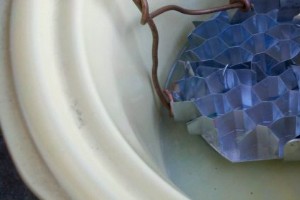
When it comes to finishing 3D printed parts, a growing array of techniques offers exceptional results. In this guide we focus on one of the most reliable and hands‑free methods for achieving a smooth, glossy surface: vapor polishing. What is Vapor Polishing? Vapor polishing uses solvent fumes—most

In September 2023, the scientific community highlighted a breakthrough ink capable of 3D‑printing flexible structures that replicate human bone. The developers emphasize its superiority over traditional grafts—donor bone harvests that are invasive and painful—and over conventional implants, which c
In the evolving world of additive manufacturing, metal plating has emerged as a cost‑effective bridge between rapid prototyping and high‑performance metal components. While direct metal 3D printing has advanced, its high material and equipment costs, combined with post‑processing demands, make it l
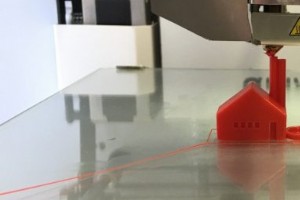
Automation and streamlining are already shaping the next phase of additive manufacturing, as the industry pivots from rapid prototyping to full‑scale production. While material science and printer hardware evolve at a breathtaking pace, integrating these advances into day‑to‑day production lines rem

For both prototyping and production, clients expect high‑quality parts delivered on schedule. That expectation demands a production workflow that is not only efficient but also tightly integrated with a quality‑assurance system that verifies every component before it leaves the shop floor. The firs
3D printing