



Comprehensive Wiring Color Codes Guide – U.S., Europe, Canada & More
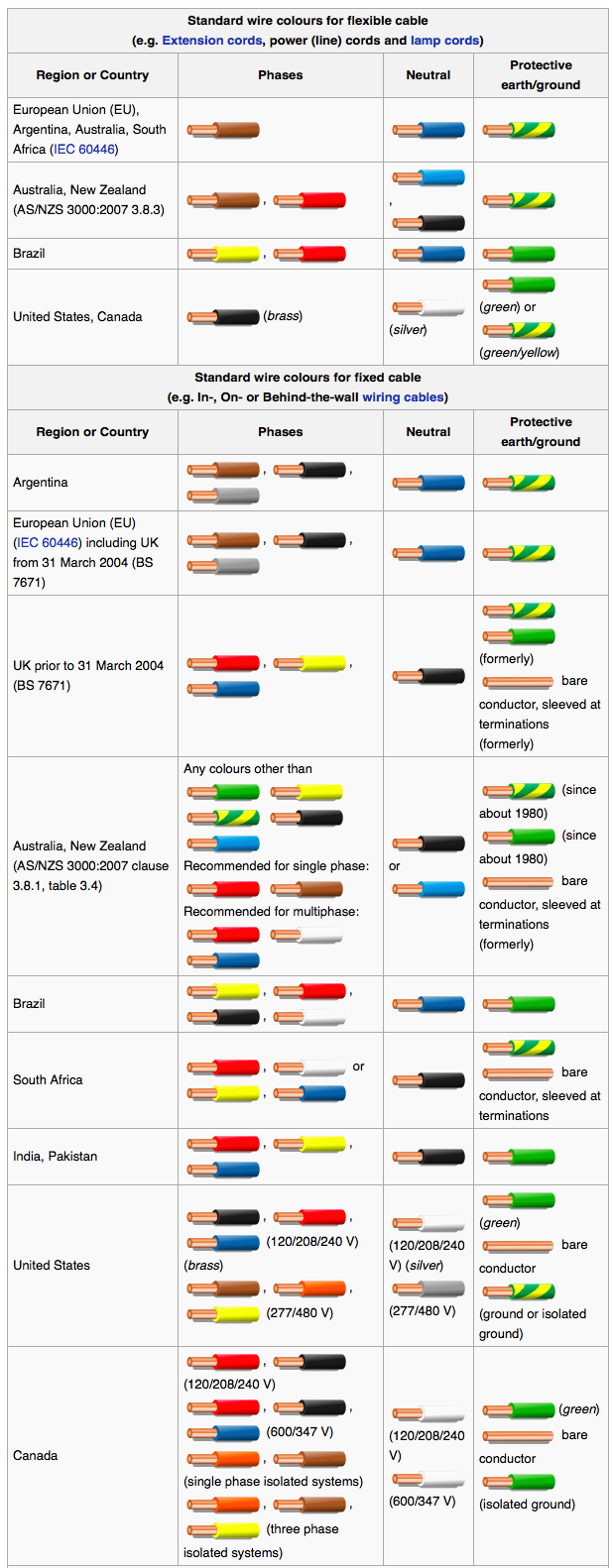
Explore the most widely adopted wiring color codes used across the globe. This guide explains the standards for residential, commercial, and industrial installations, ensuring you choose the correct code for safety and compliance.
Looking for Wiring & Resistor Calculators?
Check out our Wire & Resistor calculators in the Tools section to streamline your design process.
Basic Wire Color Code Information by Region
Wire identification relies heavily on color codes. Selecting the appropriate standard depends on your geographic location, voltage requirements, and the nature of the installation. Older systems may use legacy codes, so always document the standard you follow—this enhances safety and eases future maintenance.
U.S. Wiring Color Codes
In the United States, color codes are typically applied to power wires in “branch circuits” — the wiring that runs from a circuit breaker to the final load.
AC Wire Colors for 120/208/240 Volts
- Phase 1: Black
- Phase 2: Red
- Phase 3: Blue
- Neutral: White
- Ground: Green, Green with Yellow Stripe, or Bare Wire
If a high‑leg connection is used (rare in new installations), the higher‑voltage phase should be marked orange.
AC Wire Colors for 277/480 Volts
- Phase 1: Brown
- Phase 2: Orange
- Phase 3: Yellow
- Neutral: Gray
- Ground: Green, Green with Yellow Stripe, or Bare Wire
For high‑voltage systems, a comprehensive labeling scheme is essential. Include circuit identifiers and lock‑out/tag‑out points in your documentation.
DC Power Wire Colors
- Positive (non‑ground): Red
- Negative (non‑ground): Black
- Ground: White or Gray
International Wiring Color Codes
Many countries adopt standardized codes through legislation or industry practice. Below are key examples for Europe (IEC) and Canada.
Wire Color Codes for Europe (IEC)
- Phase 1: Brown
- Phase 2: Black
- Phase 3: Grey
- Neutral: Blue
- Ground: Green with Yellow Stripe
Canadian AC Wiring Color Codes
- Phase 1: Red
- Phase 2: Black
- Phase 3: Blue
- Neutral: White
- Ground: Green with Yellow Stripe
When Are Color Codes Applied to Wiring?
Manufacturers typically pre‑color narrow wires using insulation of distinct colors. For larger conductors (often >#6 AWG), color bands are added during installation. Use self‑laminating wire wraps or heat‑shrink tubes to create durable, professional labels. Accurate labeling not only enhances safety but also speeds troubleshooting and compliance audits.
Industrial Technology
- Resistor Color Codes – A Comprehensive Guide to Decoding Value, Tolerance, and E-Series Standards
- Standard Wiring Color Codes for AC & DC Circuits – IEC, US, UK & Canada
- Wire Resistance in Circuits: Why Length & Shape Usually Don’t Matter
- Television: From Mechanical Origins to Smart Future
- AC & DC Wiring Color Codes: NEC & IEC Standards for Safe, Compliant Installations
- ABYC Cable & Wire Color Coding Guide for Yachts, Boats, and Marine Wiring
- Capacitor Color Codes Explained – How to Read Capacitor Values & Use the Calculator
- Master Inductor Color Codes: Quick Guide to Decode Inductance Values
- Understanding QR Codes: Definition, Uses, and Benefits
- Mastering Resistor Color Codes: Quick Guide for Electronics