



Mastering Resistor Color Codes: Quick Guide for Electronics
To begin, resistors are common devices in electronic components and circuits. Besides, with a closer look at it, you will notice various resistor color codes. These colors represent the total value of the resistor.
Therefore, It’s important to know the resistor’s value before incorporating it into an electronic component, such as the SAMD21. This article will help you learn more about resistor color codes and how to identify them.
What is the Resistor Code Colour?
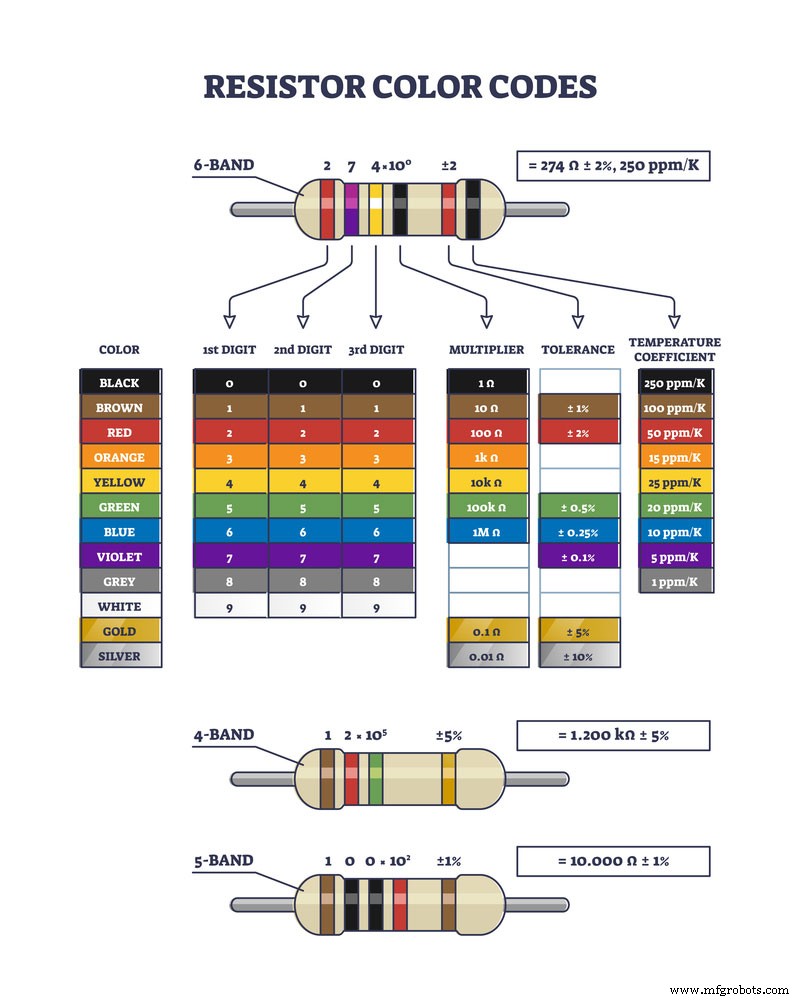
Resistor Color Codes
Resistor code colors are colored marks printed on resistors to display the electrical resistance and tolerance values. The resistor’s physical value indicates the wattage rating.
Generally, designers print the tolerance, resistance value, and wattage rating on the resistor’s body as letters or numbers if the resistor is big enough. It is the case with large power resistors.
However, the print is unclear if the resistor is very small, for example, in a ¼ watt carbon. Thus, the specifications are shown using resistor color codes.
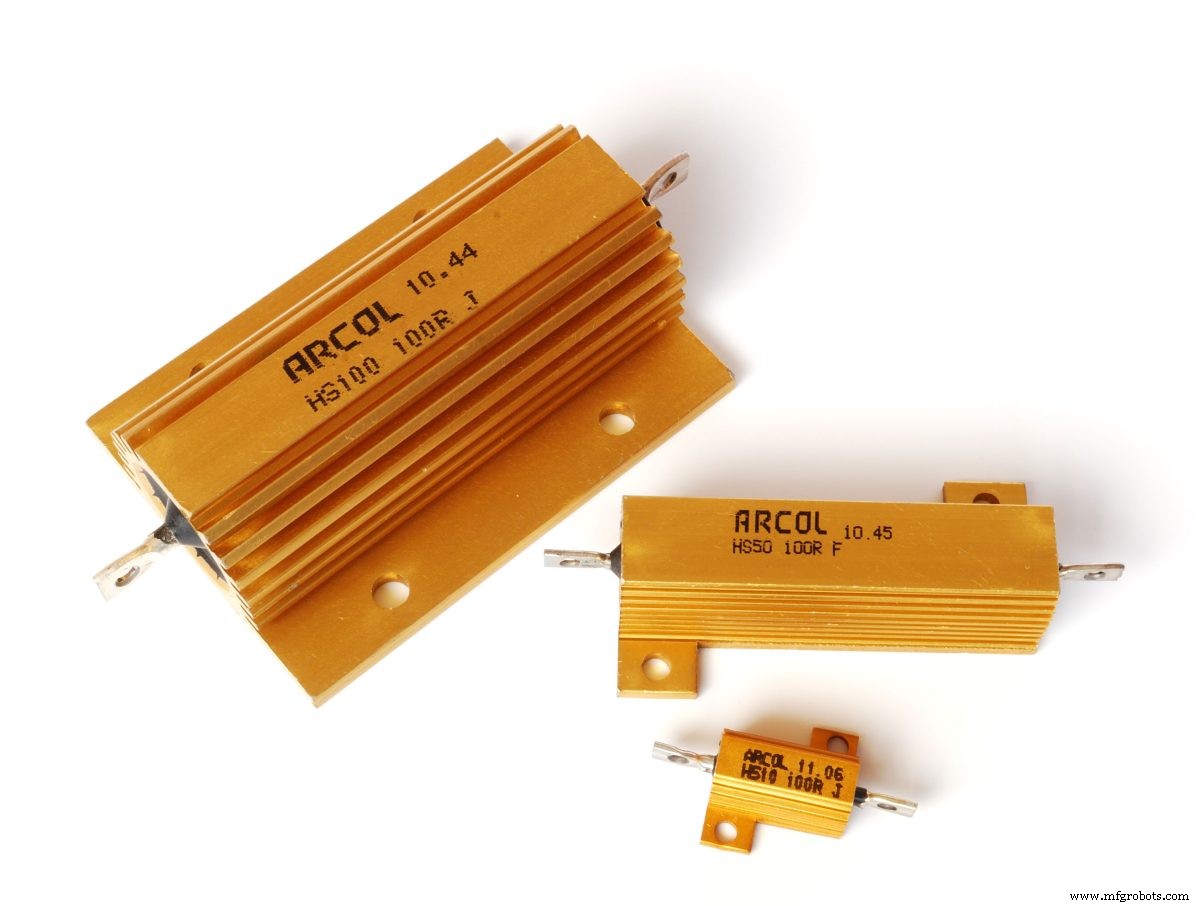
Arcol High Power Resistor
Source: Wikimedia Commons
How to Identify Resistor Color Code?
3-Band Resistors: Designers use these resistors when there is a need for a low resistance value.
For example, a 1Ω resistor with three bands will have colors brown, black, and gold. In addition, the resistance value for this resistor will fall between 1.2 ohms and 0.8 ohms.
4-Band Resistors: These resistors have three color bands located on the left side of the resistor and one on the right.
The first two color bands represent the resistance, the third represents the multiplier, and the fourth is the tolerance. Also, the 4-Band Resistors have tolerances below 20%.
5-Band Resistors: These resistors have a total of five color bands. The first three bands are the significant digits of resistance. Lastly, the fourth is the multiplier, and the fifth color band is the tolerance.
Besides, In a 5-Band Resistor, an extra band may indicate the reliability of the resistor or the temperature coefficient. For example, A 270k ohm resistor will have colors red, violet, black and orange to represent its value.
6-Band Resistors: These have six color codes. The first three represent the resistance value. The fourth, fifth and sixth are the multiplication factor, the tolerance, and the temperature coefficient, respectively.
The temperature coefficient gives off the behavior of a resistor under specific heating conditions.
Resistor Color Code Chart
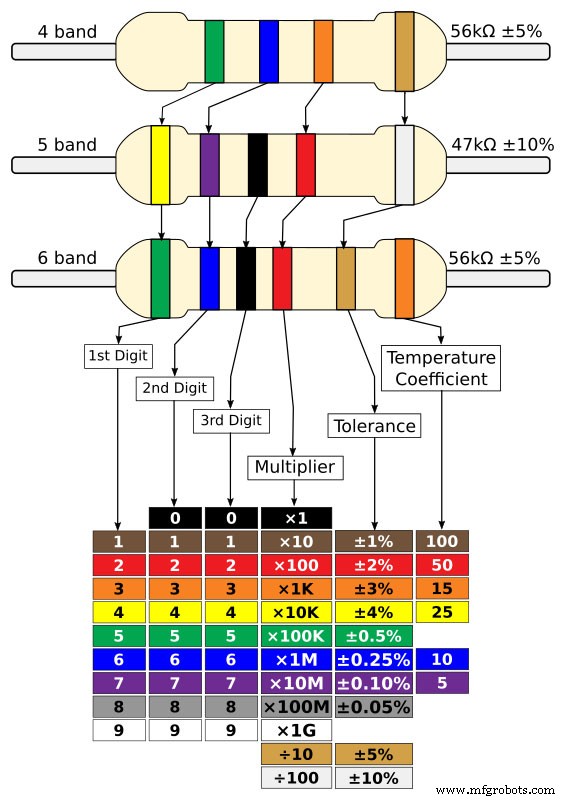
Resistor Colour Chart 4, 5, 6 Bands
Source: Google’s Creative Commons
Calculating Resistor Values
It would help if you read color bands from left to right. Start with the colors and then the multiplier in ohms.
For example, if a resistor has the color bands yellow, violet, and red, the calculation is as follows:
- Yellow = 4
- Violet = 7
- Red = 10^2
This translates to: 47 x 10^2 = 4700Ω.
Conclusion
This article summarizes the various resistor color codes and how you can calculate the total value. Also, if you have any questions, feel free to contact us on our page.
Industrial Technology
- Resistor Color Codes – A Comprehensive Guide to Decoding Value, Tolerance, and E-Series Standards
- Standard Wiring Color Codes for AC & DC Circuits – IEC, US, UK & Canada
- Comprehensive Wiring Color Codes Guide – U.S., Europe, Canada & More
- Decode SMD Resistor Codes: Quick Guide to Determining Resistance Values
- Resistor Color Code Calculator: Accurate 3‑Band to 6‑Band Resistor Value Estimation
- AC & DC Wiring Color Codes: NEC & IEC Standards for Safe, Compliant Installations
- Capacitor Color Codes Explained – How to Read Capacitor Values & Use the Calculator
- Master Inductor Color Codes: Quick Guide to Decode Inductance Values
- Mastering Resistor Values: Calculations, Color Codes, and Standard Series
- Arduino Leonardo vs UNO: Key Differences & Similarities for Your Next Project