



PIC18 Microcontrollers: Features, Performance, and How to Use Them
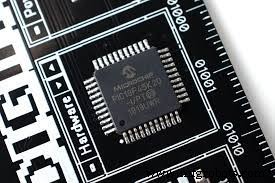
PIC Microcontroller
Do you need a microcontroller that’s easy to program and interface with other peripherals? If yes, then the PIC18 microcontroller is what you need.
Why? Because the PIC18 microcontrollers have exceptional speeds and simplicity when executing programs. Also, when compared to other microcontrollers, this PIC stands at the top because of how popular they are and the number of features.
Therefore, in this article, we’ll break down everything about the PIC18 microcontroller and how to use it in your circuit.
Let’s get started!
What Is PIC18F452 Microcontrontollers?
In truth, Programmable Interface Controllers (PIC) microcontrollers are small but powerful microcontrollers that you can program to carry out a wide variety of tasks.
Plus, you can find these microcontrollers in electronic devices like
- Control systems
- Phones
- Alarm systems
- Computers, etc.
Electronic Devices
All microcontrollers in the PIC family have registers that work as RAM. They also come with a stack that saves return addresses.
Furthermore, the PIC18F452 is a flash-based 8-bit microcontroller with MIPS and CMPS. It also features up to thirty-four I/O pins from forty pins and can be dishing out a lot of power.
Indeed, the PIC18F452 microcontroller has 8-bit and 16-bit timers (3), a 10-bit digital-analog converter with up to 8 channels, and an SPI, 12C, USART peripheral.
Plus, it doesn’t require a lot of power as it only uses a maximum of 0.2uA standby current. Also, it consumes nothing more than a 1.6mA standard current when operating on 5v OF 4 Mhz.
Types of PIC Microcontrollers
Naturally, there are four types of PIC microcontrollers based on their internal architecture. So, these four types include
- Baseline PIC
- Enhanced mid-range PIC
- Mid-range PIC
- PIC18
We’ll be focusing on PIC18 for this article.
PIC18F452 Pin Configuration
The PIC18F452 microcontroller has 40 pins, each with its unique feature. Plus, we’ll list out all the pins and their functions here for you.
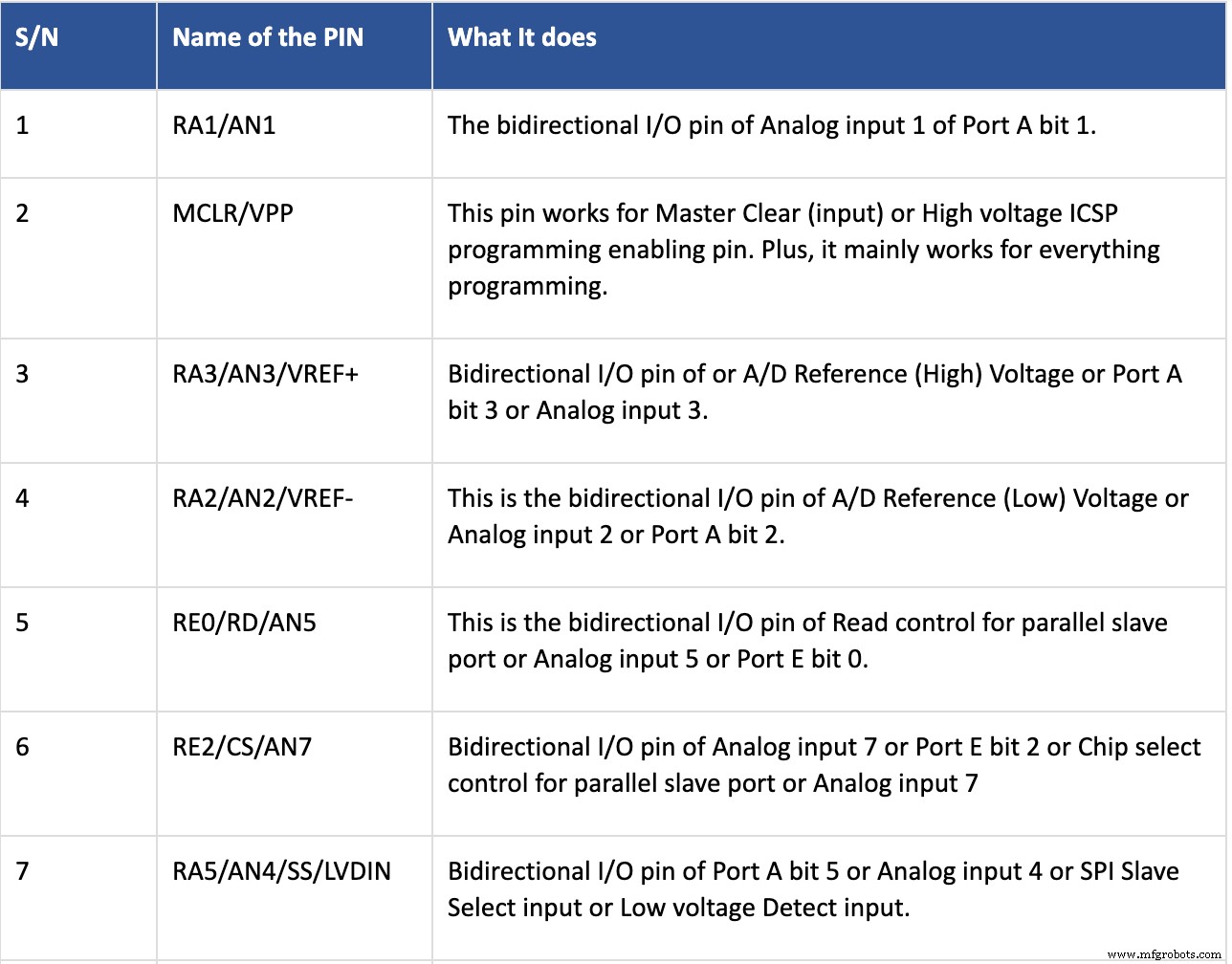
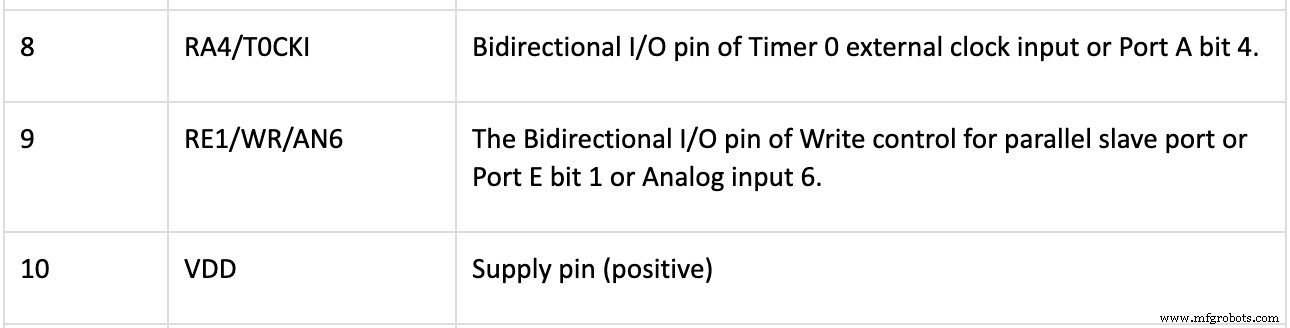
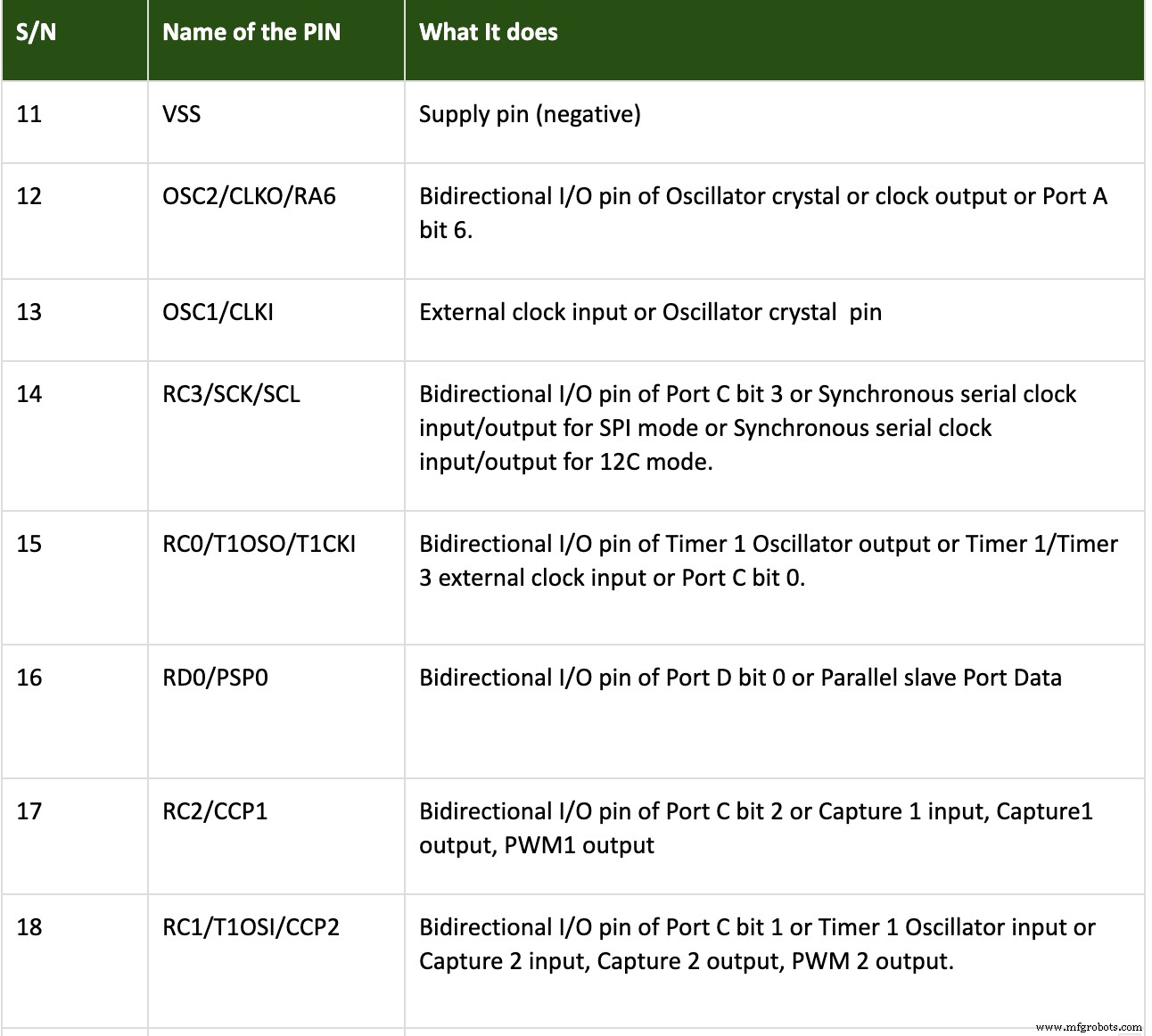
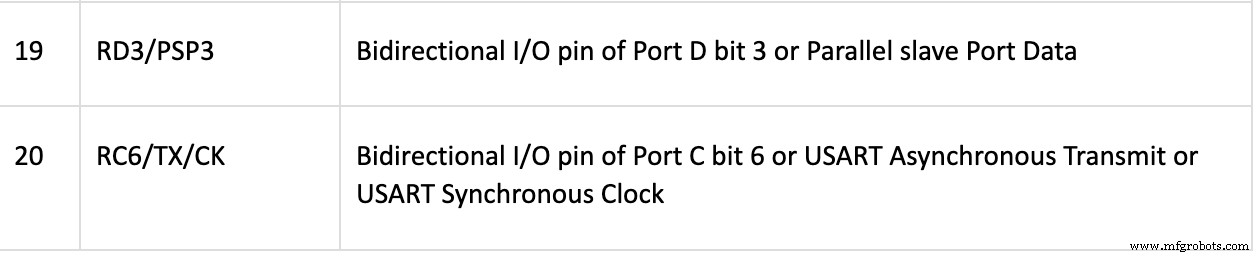
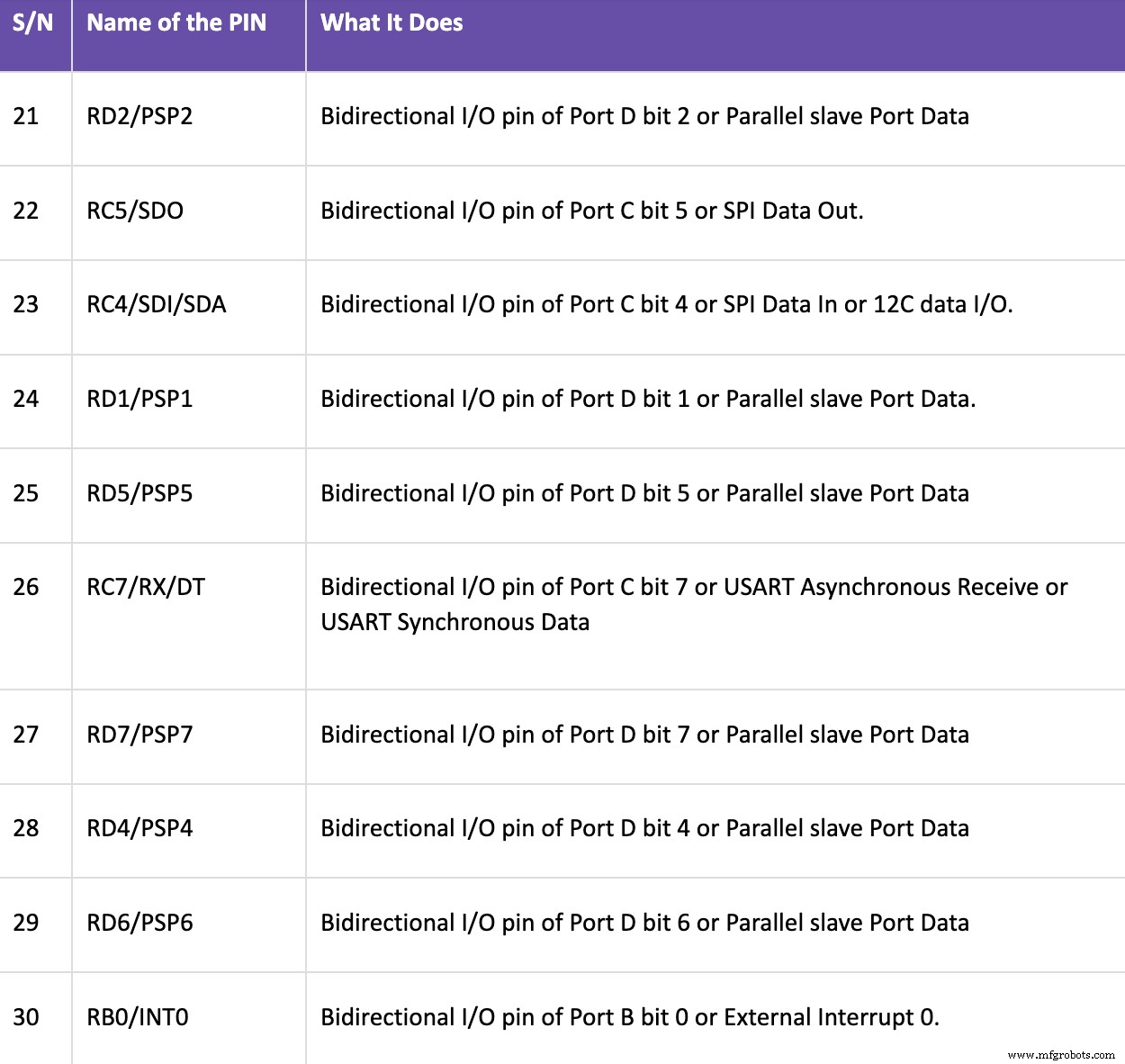
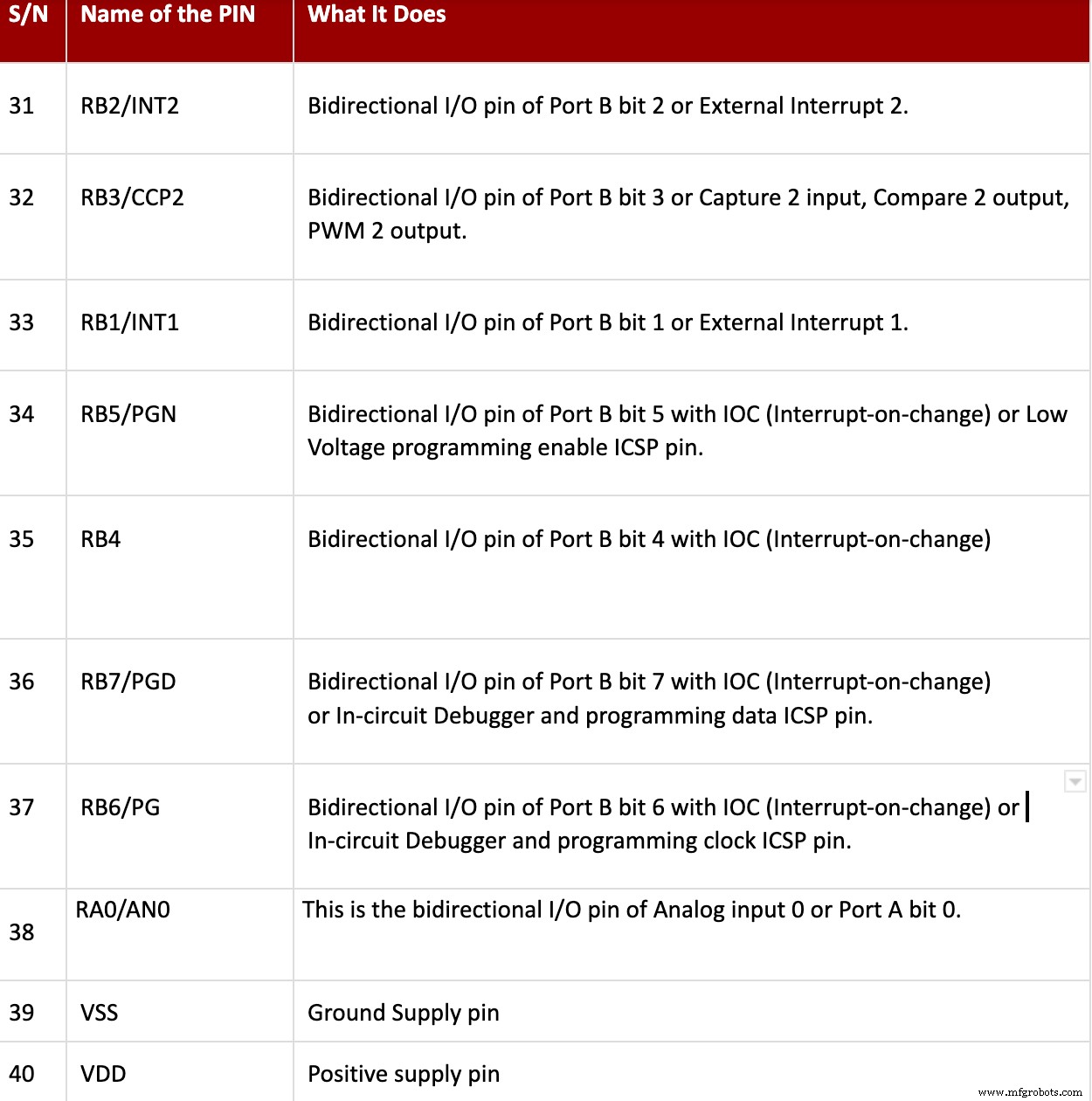
The images above show the various pin configuration for the PIC18 microcontroller.
Alternatives for The P1C18F452
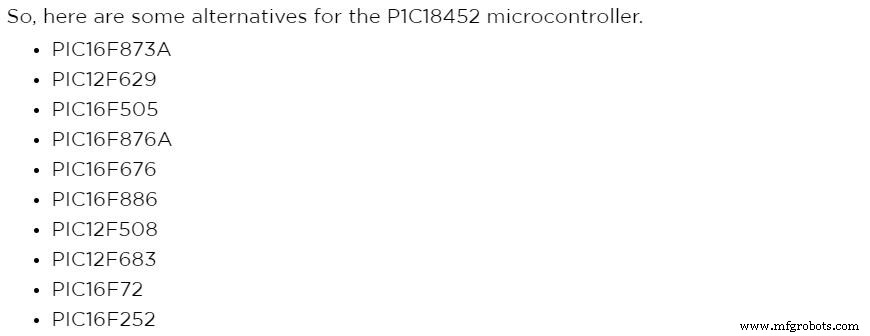
Detailed Features of PIC18F452
Specifically, let’s shed more light on the PIC18F452 microcontroller’s features:
- 34 I/O pins and 8-bit CPU
- An 8-bit timer with Three 10-bit timers
- Pin count: 40
- One 10-bits 8-channel ADC module
- 2v minimum operating voltage and 5.5v maximum operating voltage
- No comparators and DAC modules are available
- It has an external Oscillator with no internal oscillator
- Three communication peripherals including UART, SPI, and I2C
- 32kb of program memory and 256-byte of Data EEPROM
- 10 MIPS of CPU speed, 1536 of byte Ram bytes, and 8-bit Architecture
- PPS (Peripheral Pin Select) and operational amplifier not available
- No ADC with computation and internal voltage reference
- DAC converter and max DAC resolution, not present
- Zero cross detect and signal measurement timer missing
- Two PWM outputs
- No hardware limit timer and USB modules
- WWDT (Windowed Watchdog Timer) and angular timer absent
- The PIC can’t handle high voltages
- -40oC minimum and 125oC maximum operating temperature
Programming PIC Microcontrollers
Indeed, there is a variety of software you can use to program PIC microcontrollers. You can even utilize assembly language to program the PIC.
No doubt, you’ll need more than one software to program this controller fully. Plus, an IDE is where you do the primary programming occurs. Other things you need include a compiler and an IPE.
The best part is, you can get free software on the internet that can handle the programming.
Now, you’ll need a PICkit3 device for uploading your code into the PIC. But that’s not all. You’ll also need some hardware like:
- Breadboard

Breadboard
- Crystal oscillators
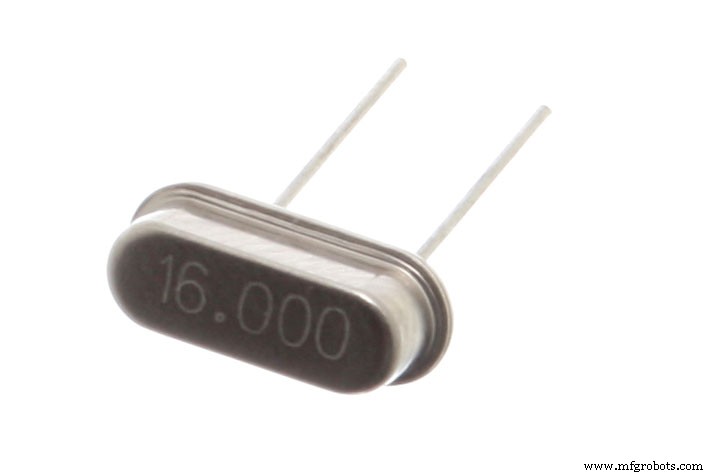
Crystal oscillators
Source: Wikimedia Commons
- PIC ICS
- Capacitors
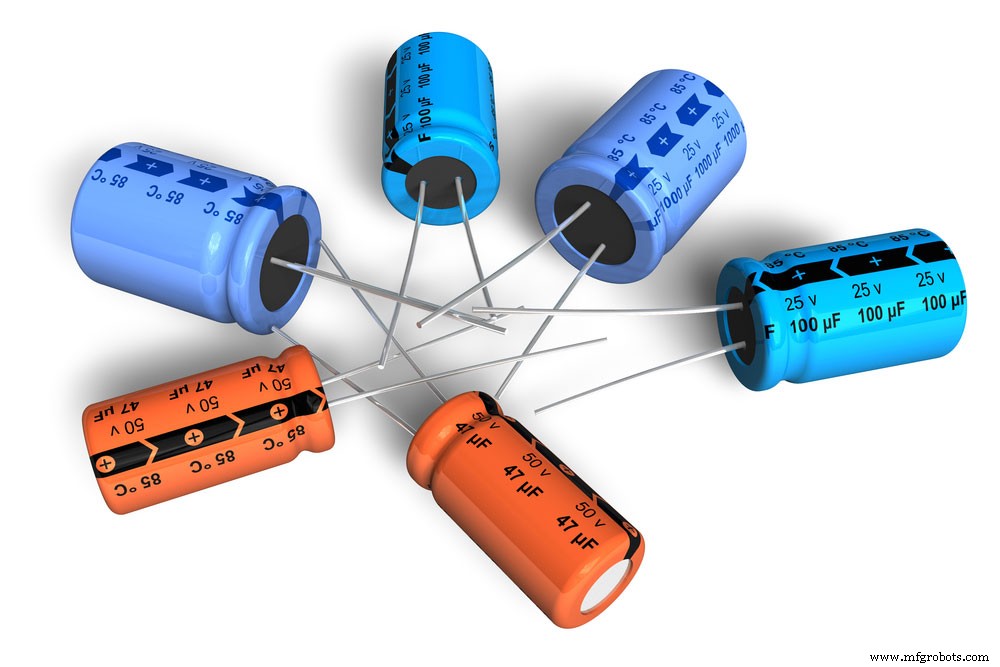
Capacitors
- Soldering stations
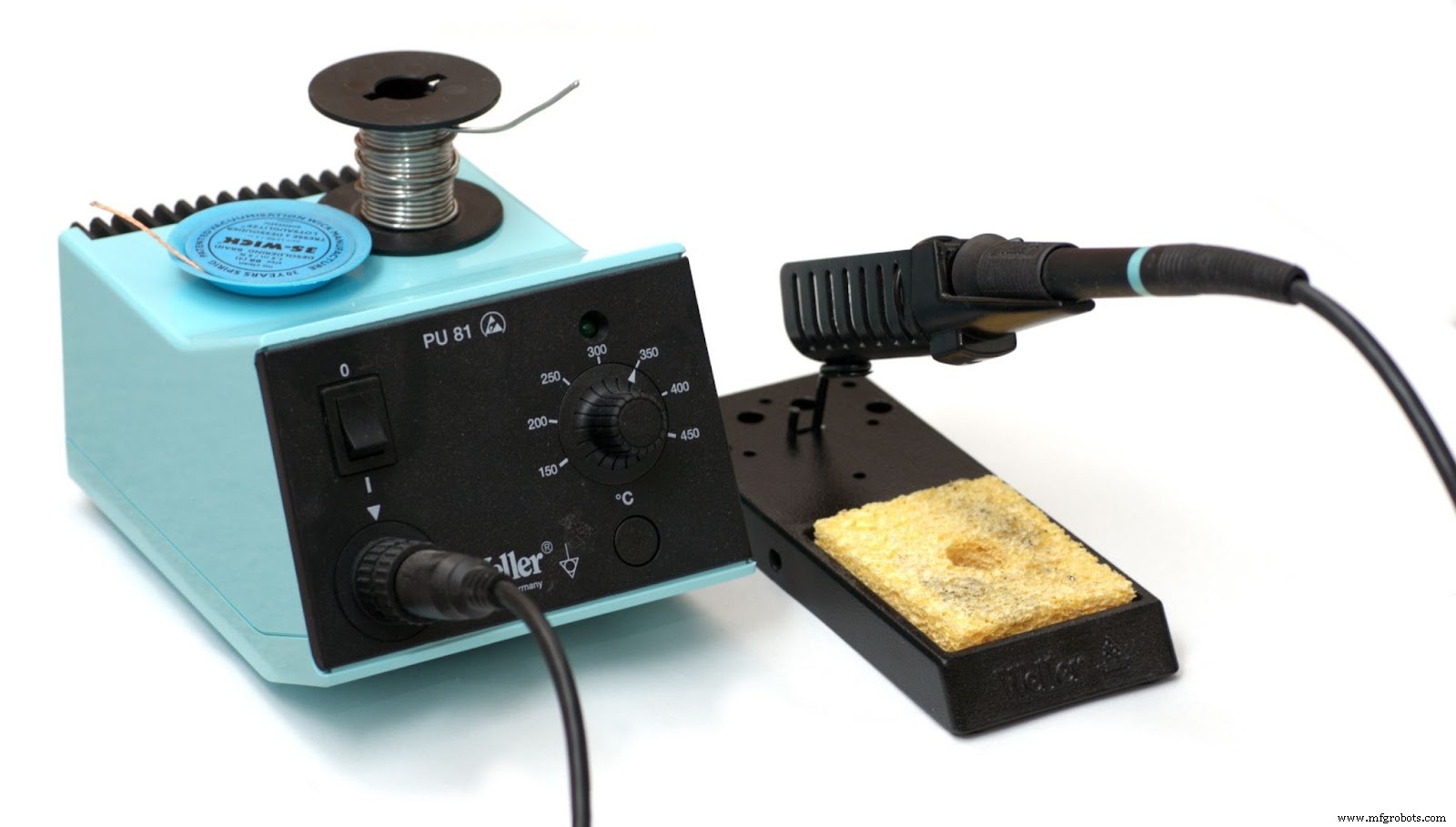
Soldering stations
Source: Wikimedia Commons
And more.
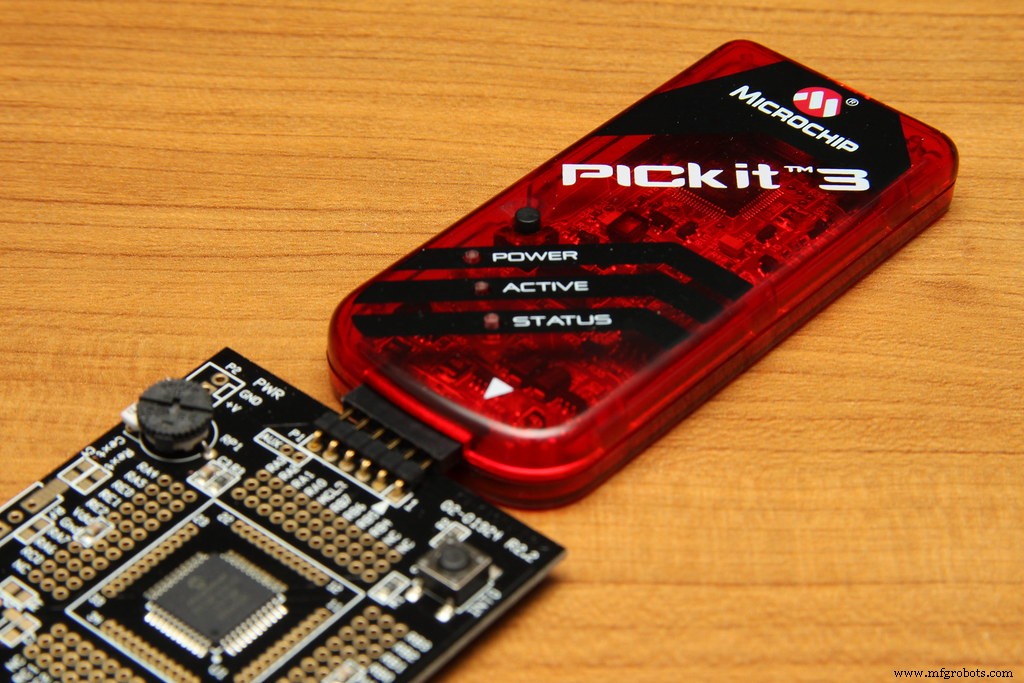
PICit3
Applications
You can use the 8-bit PIC for applications like:
- Analog data processing
- Integrating Sensor
- Output-input operations
- Small scale and low-cost applications
- Real-time control applications
- Data logging
- Development tools
Difference Between the PIC16 and the PIC18
The first notable difference is the PIC18 boasts more speed than PIC16 and can reach operating speeds of 48Mhz. Also, PIC18 features hardware division, and PIC16 doesn’t.
There’s also the case of bank switching where PIC18 makes it more stress-free than PIC16.
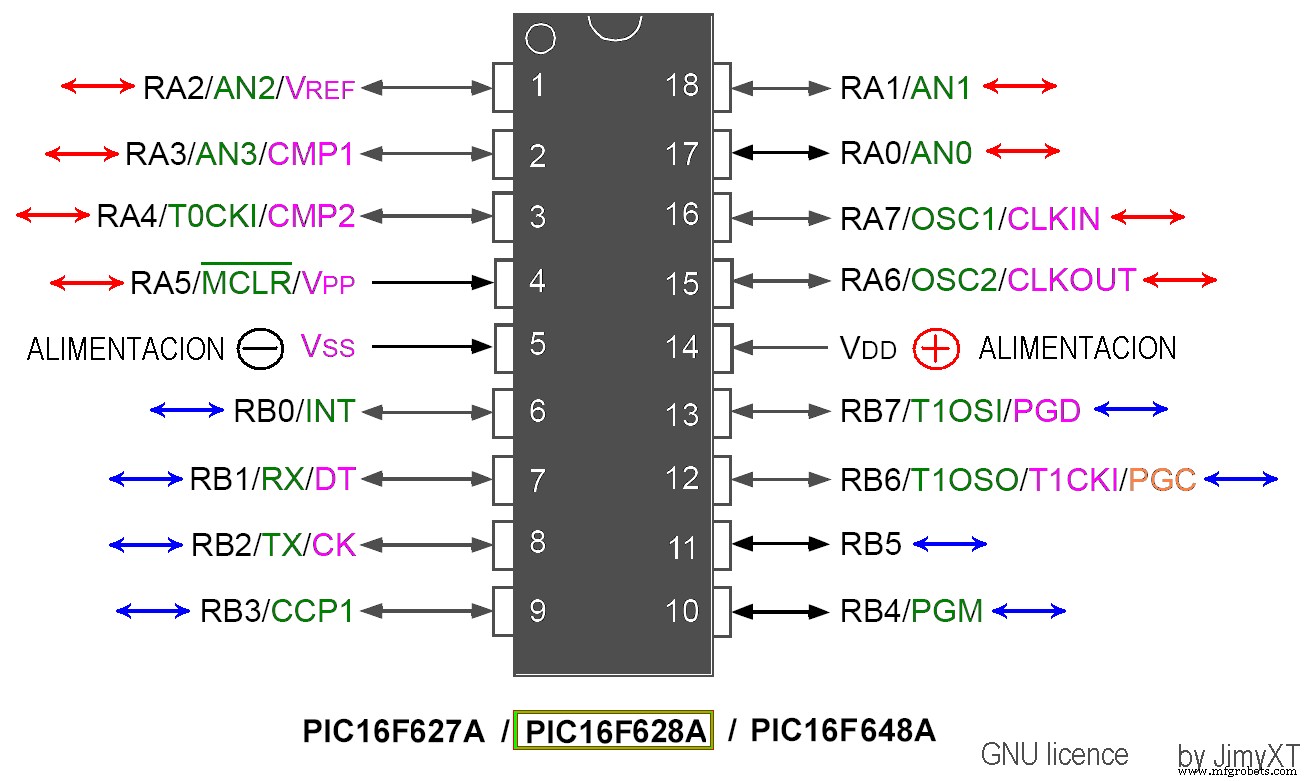
PIC16 Microcontroller
Final Thoughts
PIC18 microcontrollers have designs that allow them to handle simple control applications. In the past, the PIC represented the Peripheral Interface Controller. But today, the PIC stands for Programmable Intelligent Computer.
Today, the PIC microcontroller has become an intelligent device with data RAM. Plus, it has enough space for storing any program you want. In other words, the PIC18 microcontrollers aren’t only combinations of memory, processors, and peripherals.
So, we’d like to hear from you. Do you have questions concerning this topic?
Please, don’t hesitate to contact us and we’ll be pleased to be of assistance.
Industrial Technology
- P‑F Curve Explained: Mastering Reliability‑Centred Maintenance
- Mastering C# Queues: Enqueue, Dequeue, and First‑In‑First‑Out Operations Explained
- Exploring 6G: The Future of Ultra-Fast Connectivity
- Copper Brazing Explained: Techniques & Tips for Strong, Reliable Connections
- Mastering the Raspberry Pi Camera Pinout: A Complete Guide to Setup and Usage
- TIP122 Pinout Guide: Features, Functions, and Practical Usage
- Water Flow Sensors: How They Work & How to Use Them
- EGM Sensor Explained: How It Works and Practical Uses
- Arduino SD Card 101: Setup, Connection, and Usage Guide
- Understanding Reference Designators: How to Label PCB Assembly Connections