



NEMA 23 Stepper Motor: Specs, Applications, and Practical Use Guide
Motors are essential components when converting the energy in your systems connections. Importantly, for electronics enthusiasts looking for motors, your priority is to find a reliable motor with high motor efficiency. Therefore, this article discusses the nema23 stepper motor, its pin configurations, specifications, applications, and how to use one in your connections.
1. What is the Nema 23 Stepper Motor?
The NEMA 23 is mostly a hybrid bipolar stepper motor with high torque. Additionally, the motor is a 2-phase stepping motor used to generate power. Notably, it stands out because its step angle is 1.8 degrees. With this angle, there are 200 steps for every single turn. Therefore, each revolution of this dual-shaft motor covers 1.8 degrees.
Also, the motor’s design focuses on delivering maximum torque at operating speeds. As a result, the design reduces vibration and noise. Thus it is preferred in precision motion controllers.
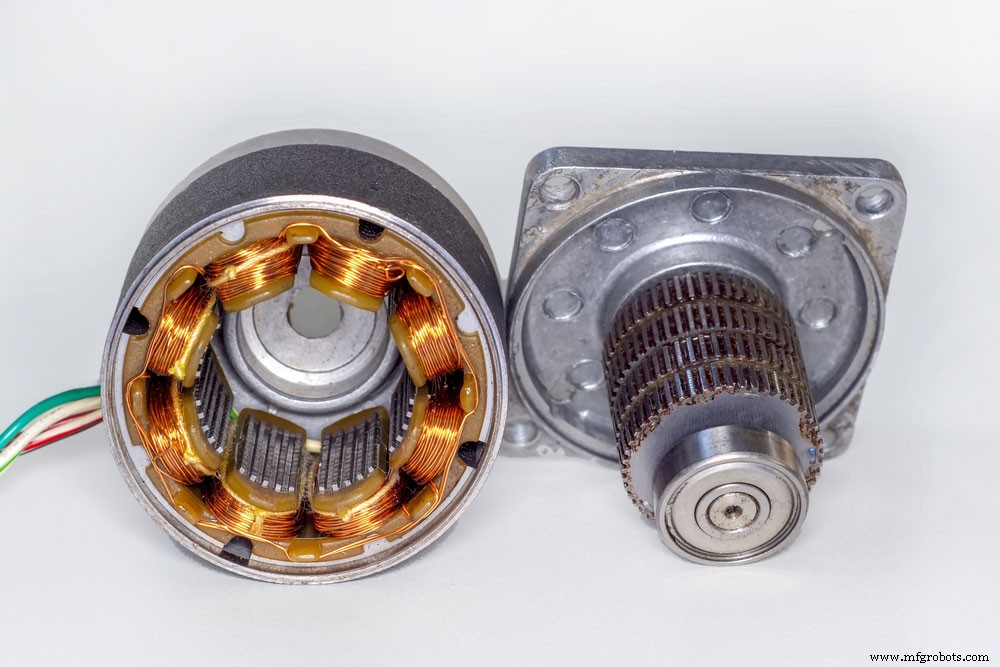
(Image of a disassembled stepper motor set)
2. Pin Configuration
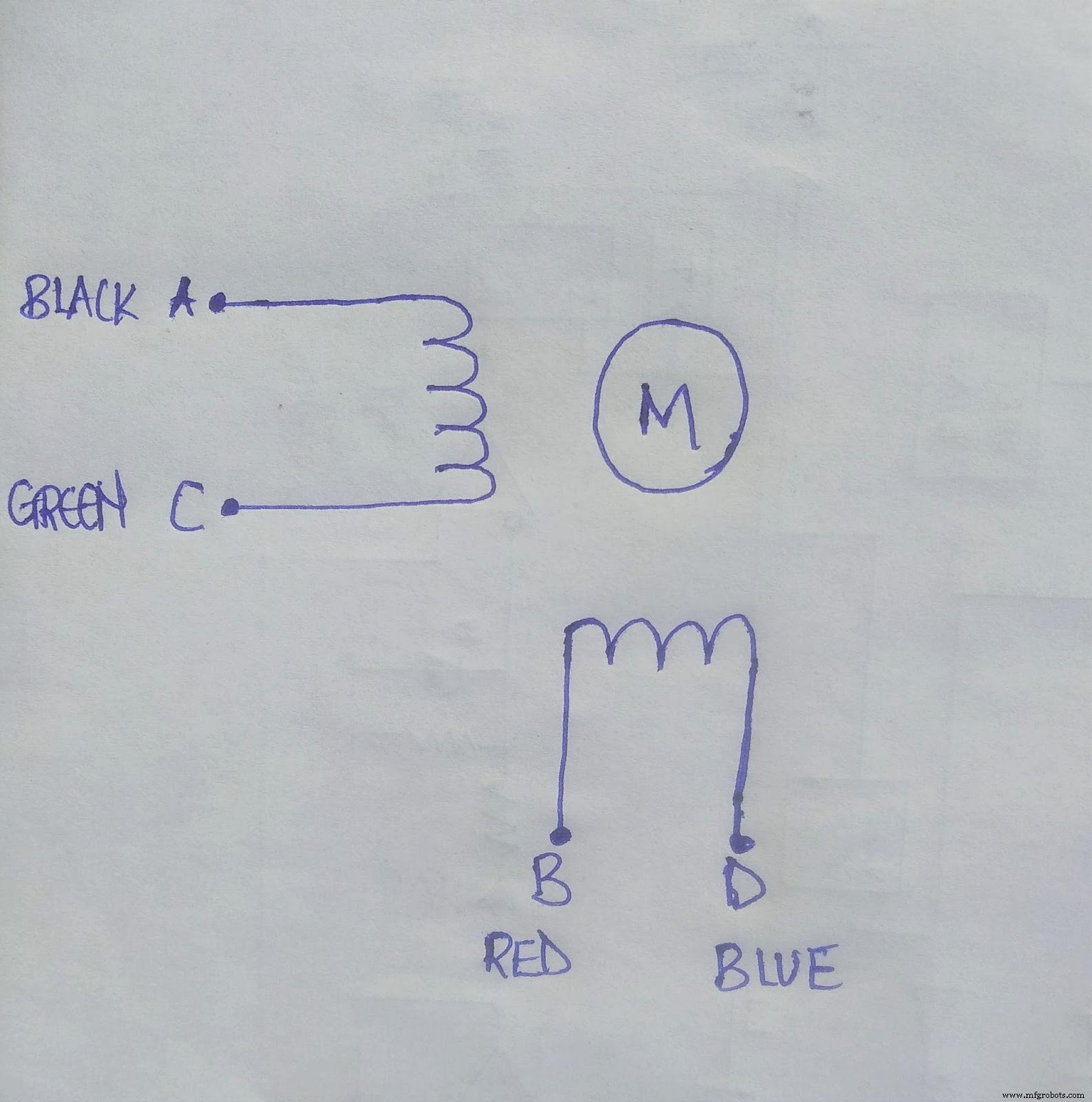
Notably, the nema23 motor wirings have four wires that are different colors. These are; (Black, Green, Red, and Blue). However, these wires are uncovered.
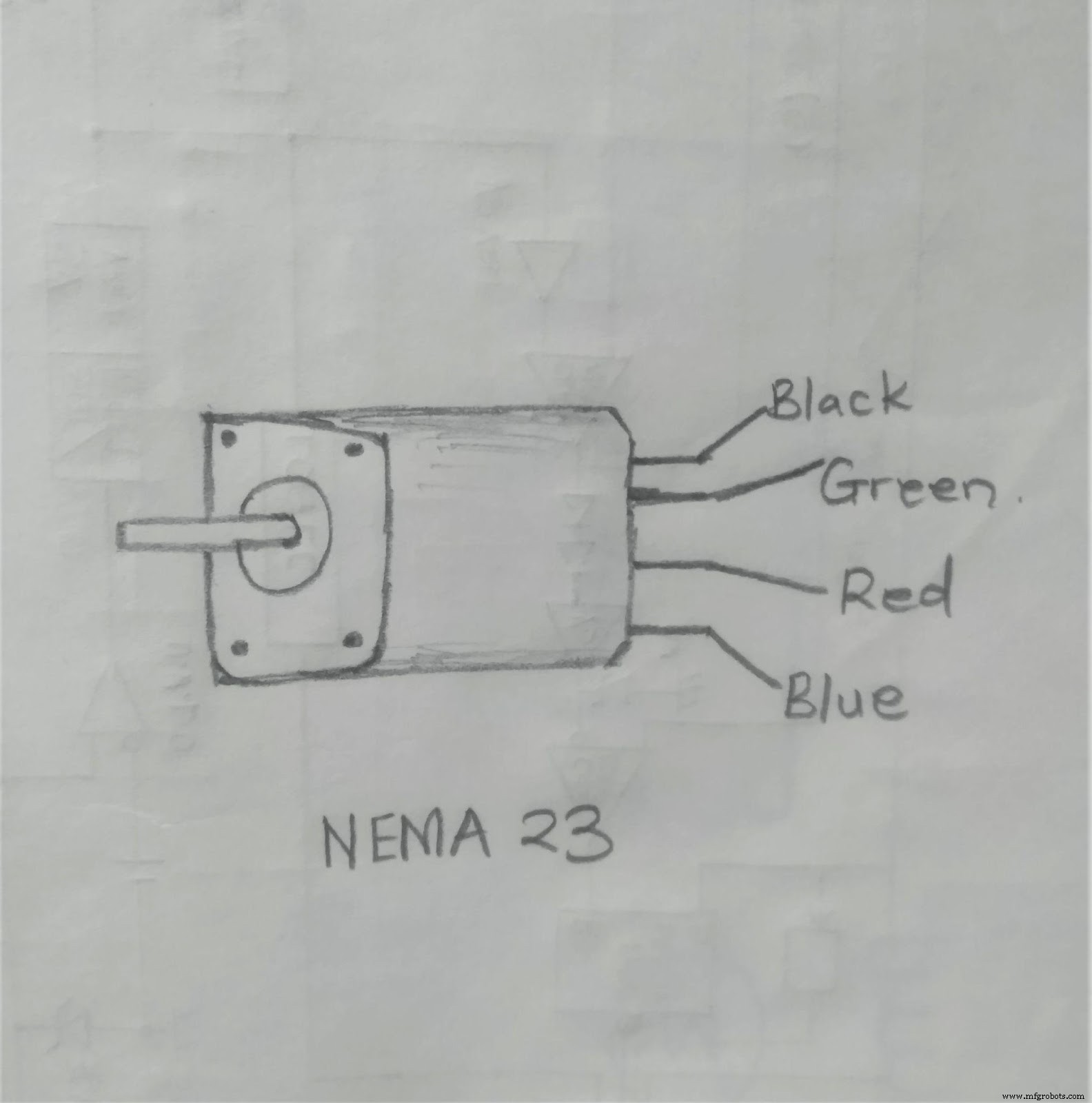
(Diagrammatic representation of the NEMA 23 pin configuration)
Simply, one coil is wired with black and green wires. However, the remaining coil attaches to the red and blue wires. Additionally, using two H-bridges can control this motor. But, keep in mind that you should always use a motor drive.
3. Specifications of the Nema-23 Stepper Motor.
- Firstly, its operating motor driving voltage is 3.2V
- Second, the current working rating is 2.8A
- Has a motor length of 3.1 inches
- Its step angle is 1.8 degrees.
- Notably, the running steps per revolution (SPR) is 200
- Number of Phases: 4
- Also, it produces a torque output of 270 oz-in (N-cm)
- Additionally, it experiences a low noise level (3dB)
- The number of Leads is 4
- Also, the motor diameter shaft is 0.250 (6.35)
- It operates at a Phase resistance of 3.6mH
- Lastly, the maximum motor shaft length is roughly 0.810 inches.
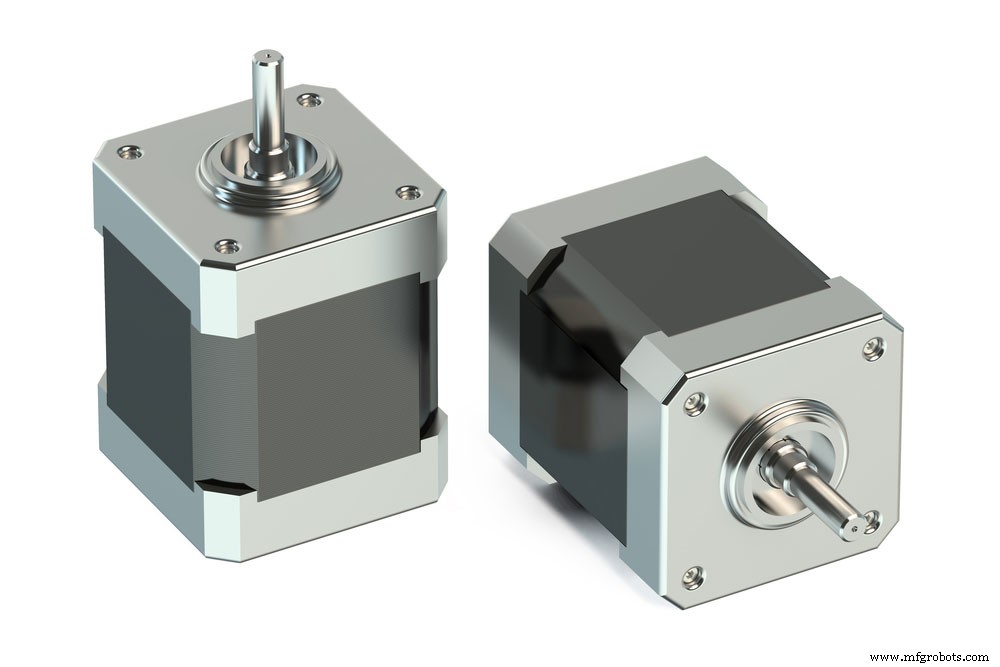
(isolated stepper motors on white background)
4. Other stepper Motors and Motors
Firstly, notable stepper motors are; NEMA 14, NEMA-17, NEMA-34, and the 28BYJ-48 Stepper Motor.
Also, other important motors you should know are BLDC Motor, DC motor, 12V DC motor, and the servo motor.
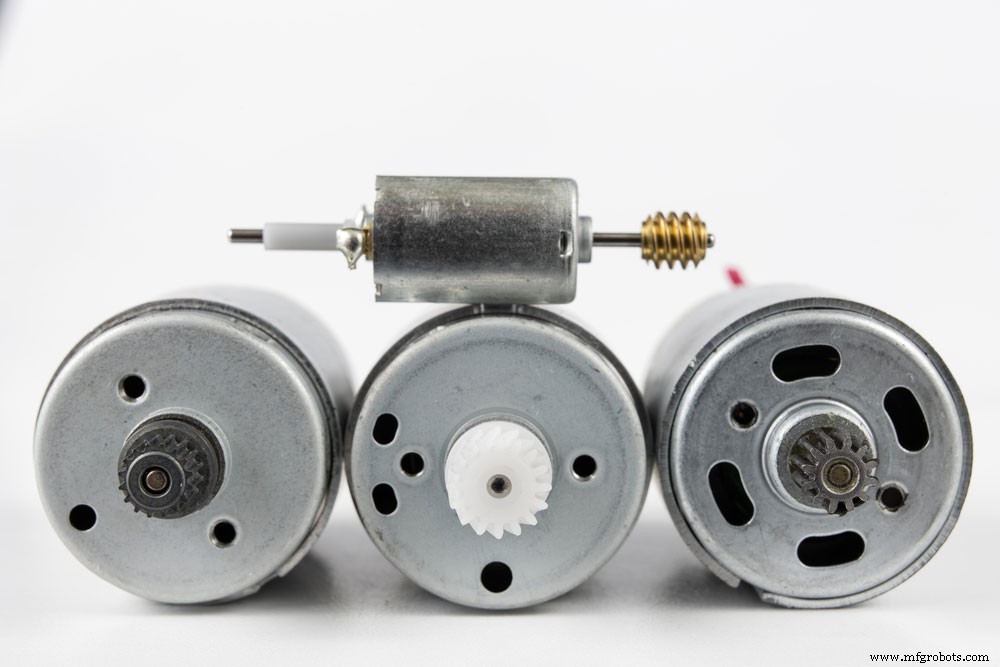
(electrical motors used in appliances)
5. How to use NEMA 23 stepper motor?
Particularly, this stepper motor needs a lot of power for torque-speed performance. Therefore, instead of directly monitoring it with H-bridges, use a powerful stepper motor driver. Moreover, to make this motor move, we must look at the coil diagram below.
(Diagram showing motor coil energizing logical sequence)
Notably, from the diagram above, our NEMA23 motor has four wires. All wires have different colors. Significantly, the motor can only move if the coils turn on in a logical order. Importantly, a microcontroller may easily set up the motor driving procedure. Also, you can make a digital circuit instead.
Note; Always check the stepper motor datasheet for additional information.
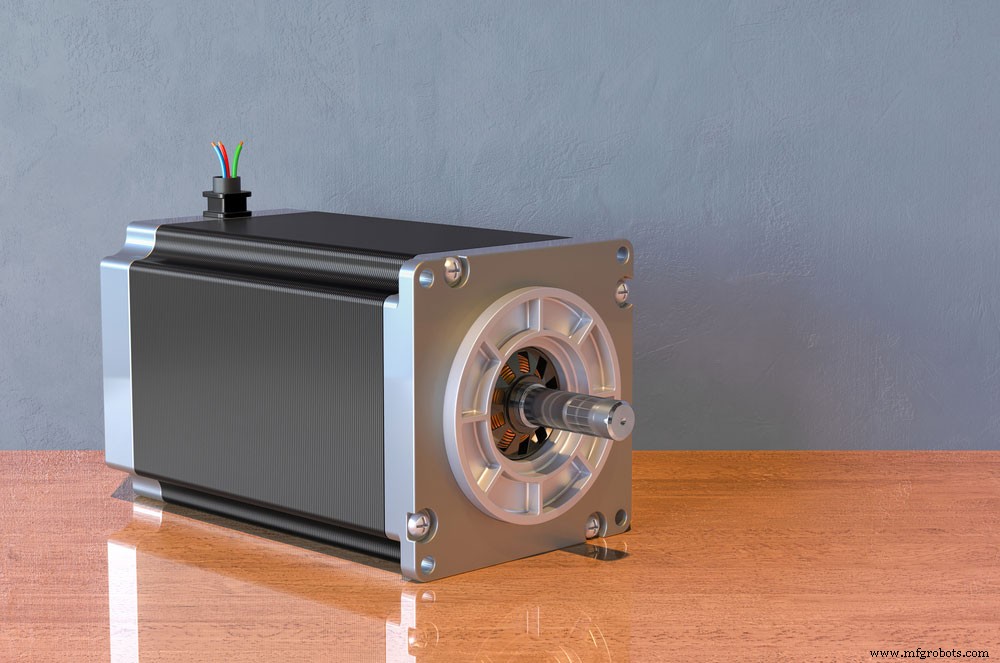
(image of a stepper motor on a wooden desk)
6. Applications
Notable uses of this hybrid stepper motor are in ;
- 3D printers
- CNC machines
- laboratory automation
- Robotics
- Medical imaging applications
- Industrial automation
- Security cameras
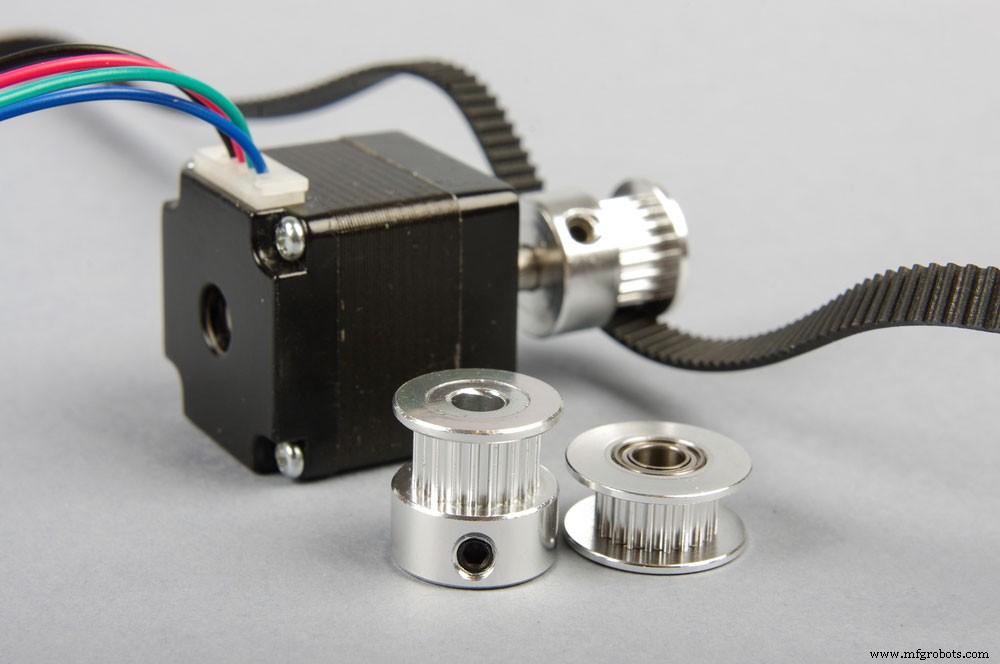
(stepper motor used in 3D printers and pulleys)
Conclusion
The NEMA 23 Stepper motor provides excellent characteristics that make them an easy-to-use, reliable electronic component.
Moreover, if you’re interested in further learning about your related motor projects, contact us! Our team is always happy to answer any electronic component questions from you.
Industrial Technology
- How Brushless DC Motors and ESCs Operate – A Technical Overview
- Mastering the IR Blaster: How to Use Infrared Remotes on Your Phone
- VFD Schematics Explained: Circuit Diagrams, Types, and Building a Variable Frequency Drive
- 2N5089 Transistor Pinout & Specifications: A Comprehensive Guide for Audio and Switching Applications
- Water Flow Sensors: How They Work & How to Use Them
- 78L05 Pinout Guide: Features & Wiring Instructions
- Light Intensity Sensors: Features, Uses, and Arduino Integration Guide
- EGM Sensor Explained: How It Works and Practical Uses
- Master the 28BYJ-48 Stepper Motor: A Complete Arduino Integration Guide
- Choosing the Perfect Motor Driver: A Comprehensive Guide