


Industrial manufacturing
Industrial Technology

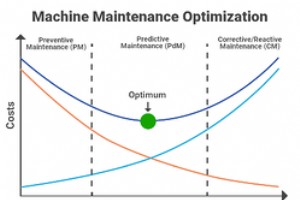
For discrete manufacturers, machines are the lifeblood of production. If equipment is maintained properly, then efficient production, lower costs, on-time delivery, and increased customer satisfaction can all be achieved. Companies have continued to rely on broad averages and expectation

This article is part of a series addressing the most pressing concerns manufacturers have when it comes to Industry 4.0 and Industrial IoT solutions. In the rapidly changing manufacturing technology space, it can be difficult to distinguish valuable solutions and approaches from shiny ob
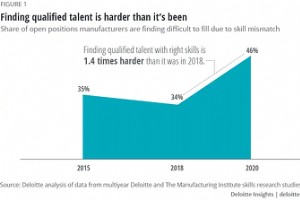
In today’s fast-paced market, manufacturing leaders are increasingly seeking transformational technology to drive operational improvement. They recognize the potential of solutions like MachineMetrics, which provides rich machine data and valuable, data-driven insights. But during conver
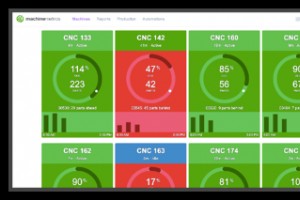
A manufacturing company is only as good as its equipment. But more importantly, how well the organization uses its equipment. Without knowing the overall equipment effectiveness (OEE) of production machines, companies risk losing ground in a hyper-competitive manufacturing environment.
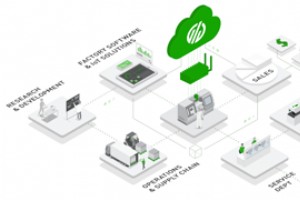
With each generation of manufacturing, advances have taken place in the form of process adjustments, continuous improvement initiatives, and programs such as Lean and Six Sigma. Operators, line supervisors, and senior managers can successfully implement these methodologies to improve ef
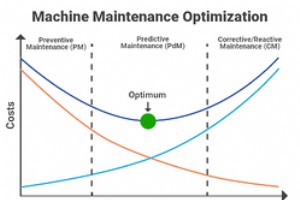
The power of data brought to life by the rise of the Industrial Internet of Things (IIoT) and the Fourth Industrial Revolution (Industry 4.0) technologies is undisputed. For manufacturing, it’s no longer a question of whether companies will digitize and incorporate these systems into the

Kepware has long been synonymous with industrial connectivity. Having been founded in the mid-1990’s, they have successfully helped connect a large variety of industrial equipment across a wide range of industries, giving a multitude of engineers the tools to successfully roll out M2M pr
This article is part of a series addressing the most pressing concerns manufacturers have when it comes to Industry 4.0 and Industrial IoT solutions. In the rapidly changing manufacturing technology space, it can be difficult to distinguish valuable solutions and approaches from shiny ob

CNC machining is a big business. It’s estimated that as of 2020, CNC machining is an $81.95 billion industry and is expected to reach $128.4 billion by 2028. This growth is being driven by greater demand for precision parts, a result of increases in technology, and customization. Not to
Keeping equipment running efficiently requires managing a dynamic balance in uptime, run time, fully productive time, and a myriad of other factors. Get it right, and a finished product can be produced at the lowest cost and highest efficiency. Get it wrong, and plant performance suffers
Every manufacturing company wants to reduce changeover time. The changeover process may take days or weeks in some industries and only a few minutes in others. In industries where small lots or single pieces are produced, reducing regular changeover times through continuous improvement p
In today’s hyper-competitive manufacturing environment, those who don’t improve risk being left behind. Continuous improvement has long been the goal of a slate of methodologies, including Lean, Six Sigma, and others. But what is continuous improvement in the manufacturing sector? How ca
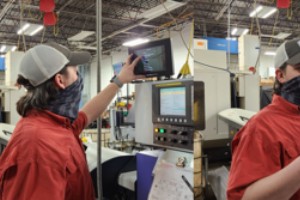
Tool breakage has always been a challenge for machining operations. These breaks can occur during regular machining cycles due to tool wear that eventually results in failure. They may also occur due to improper settings, human error, equipment malfunction, or for a variety of other reas
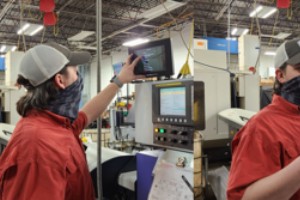
With labor, transportation, and material costs rising in every manufacturing sector, companies are anxious to find ways to save money. For CNC machining, tooling is an additional, often unforeseen, cost that must be incurred as a part of the business. Developing a better understanding o
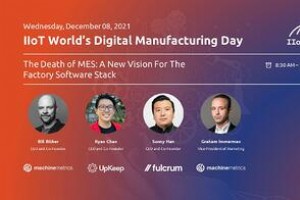
Recently, I had the chance to host a panel at IIoT World’s Digital Manufacturing Day with technology leaders from Fulcrum, UpKeep, and MachineMetrics. During the panel, titled The Death of MES: A New Vision for the Factory Software Stack, we challenged the standard approach to building m
This article is part of a series addressing the most pressing concerns manufacturers have when it comes to Industry 4.0 and Industrial IoT solutions. In the rapidly changing manufacturing technology space, it can be difficult to distinguish valuable solutions and approaches from shiny ob
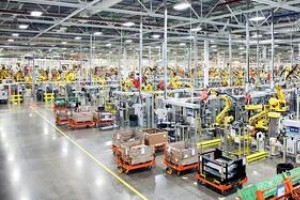
Companies have realized the benefits of information technology for many years. And with the arrival of the Industrial Internet of Things (II0T) technology, a new revolution of digitization of production is underway. But as both these technologies continue to mature, IT/OT convergence is
The expense of tooling combined with scrapping defective parts makes extending tool life an important objective for metal cutting companies. Traditional machining relied on settings determined experimentally to determine the life of a machine tool. Operators could log part counts until a
If Ive learned anything from the recent return to in-person events, its that nothing can match the energy and depth of insight gained from face-to-face interactions. At EASTEC, I spent three days speaking with local manufacturers, suppliers, and customers, and it is clear that the urgenc
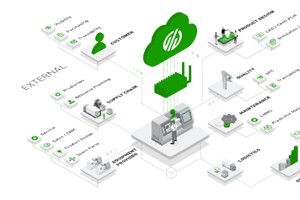
Manufacturing leaders today are having an increasingly difficult time choosing software that meets their ever-growing needs. Traditionally, manufacturing operations would use an ERP/MRP system that was designed for their facility, and fill in gaps with Microsoft Access, Excel, or paper.
Industrial Technology

7 Proven CMMS Tips to Accelerate Setup and Boost Productivity
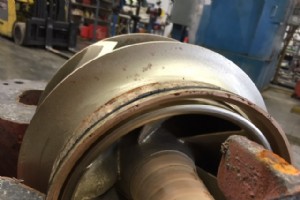
Preventing Critical Pump Failure with i-Alert2: A Wisconsin Plant Success Story

Interview with Dr. Billy Wu, Imperial College London: 3D Printing Innovation in Research & Education

Top 7 Trusted CNC Router Manufacturers in China – Quality & Reliability
