Industrial manufacturing
Industrial Technology


Manufacturing technologies provide an unprecedented transformation for business profitability and competitiveness. Among the technologies that have recently transformed manufacturing are Big Data, IoT, 3D printing and Artificial Intelligence. However, the evolution of these is increasingly r
Nexus Integra is the integrated operations platform that allows you to connect all your equipment and system and process them using Big Data technology, providing you with a unique operations framework for monitoring and analysing your business. Optimise costs and make your business profitab
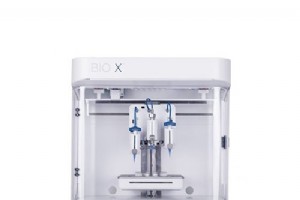
Additive manufacturing is one of the results of the transition from analogue to digital industrial processes. It refers to the set of technologies that allow objects to be manufactured sequentially, usually layer by layer. The most basic additive manufacturing technology is arguably 3D print
Monitoring all points of production from a single central system has become a challenge for industrial companies. This has become a real necessity for organisations that, at the very least, want to maintain productivity levels in situations that are difficult to control, such as, for example
The digital transformation, to be real, must happen in a unique way for each entity and follow an individualised transformation plan according to the needs of each industry and each company, as well as the point of digitalisation where they stand. Digitalisation, in addition to an advance in
In the industry, digital twins refer to the mapping of physical asset models on a digital platform, where a virtual replica of any physical object or process is created. The modeling in is created using information from massive amounts of design, manufacturing, inspection, repair, sensor, an
Edge Computing is a system of micro data centres that are installed at the edge of the network, allowing efficient processing of data locally and close to the source. Applied to enterprise facilities, such as production plants, this infrastructure can be hosted by service providers and great
IoT and Big Data play a very important role in the digital transformation of both companies and any organisation that wants to be at the forefront of data management and visualisation. Digital transformation allows an organisation to compete in a changing economic environment with the help o
The crisis caused by the COVID situation has shown the lacks and weaknesses of the supply chains. Big commercial surfaces couldn’ afford the rythm of sales and didn’t satisfy the needs of the market making it undersupplied. In this post we will discuss the current management of supply chains
Artificial intelligence has brought about a change in the pattern of the operation of industry, driven by a new form of interaction between man and machine. This industrial revolution, which has given rise to Industry 4.0, is characterised by intelligent factories where humans and cyber-phys
Applying Big Data technology is perhaps the most important project in the minds of most executives today, all with high expectations about the monetisation of this data. However, a very high percentage of them fail. To be more specific, according to a compilation of studies carried out by co
Business Process Management (BPM) is a set of software and services that provide complete visibility into a company’s business processes. It is a management and automation system, which can be used to guide these processes and maximise the value of the business. Why is BPM helpful? BPM
OEE (Overall Equipment Effectiveness) is a “best practice” metric used to assess the efficiency with which a manufacturer’s operation is being used. It identifies the percentage of planned production time that is truly productive. This formula, if calculated and interpreted
Before the arrival of the Covid-19, volatility was already becoming a motto among supply chain and manufacturing leaders. Now, as companies adjust to the new normality, an indispensable long-term question arises: How will manufacturing companies be able to overcome the problems caused by the
Today, permanent and inflexible procedures still abound in supply chain management. As the global consumer market expands and the needs of modern customers and suppliers evolve, supply chain management is inevitably increasing in complexity and the context of supply chain management is becom
Within the new generation of technologies that are transforming the industry, ‘digital twins’ are emerging as a popular application on the production line. As more organisations invest in smart equipment and digital capabilities to maintain a competitive advantage, digital twins
As the world becomes more connected and digital platforms become more sophisticated, many business models have managed to create a central infrastructure that allows interactions between producers, consumers and the entire value chain in an automated and efficient manner. This more open and
Industrial automation has taken a leap forward and has become essential in order to guarantee the competitiveness of companies in the future. Industry 4.0, or connected and automated industry, provides the opportunity for any industrial organisation to obtain detailed information on producti
More and more companies are incorporating new monitoring technologies based on the “Cloud” model in order to reduce costs, increase their productivity and profitability and, of course, find effective solutions for monitoring their resources. What is Cloud Monitoring? Cloud Monitoring is the
Applying digital capabilities to all elements of the company and the comprehensive monitoring of data is vital to manage risk and discover new opportunities to generate income. To do so, companies need an IIoT industrial platform, that integrates and governs all of the systems and data. This
Industrial Technology