


Industrial manufacturing
Industrial Technology


Is this misunderstood method the best choice for your 2-axis metal cutoff? Abrasive cutting is a much-misunderstood method of precision metal cutting. Due to its name, some potential users may assume that the method produces rough edges, a lot of burrs, and other surface defects. Those as
Is ECC a good choice for your 2-axis metal cutoff? Using a combination of electrochemical erosion and grinding, electrochemical cutting (also known as ECC) produces a burr-free, shiny surface to a tight tolerance of ±0.005” (0.127 mm). Like abrasive cutting, the electrochemical method does not c
What makes it such a specialized — and rare — grinding method? One underlying principle of electrochemical grinding is that it’s a version of surface grinding and yet a category unto itself. That’s because of some inherent realities of the electrochemical process. In fact, one of the paradoxe
Why is grinding between the centers so important? Despite the name, OD grinding is not just about shaping the outside diameter (OD) of a part. As a type of cylindrical grinding, it requires that the object being ground has a central axis of rotation. In fact, OD grinding occurs on the externa
How to Make Sure Your RFQ Doesn’t Skip Any “Finishing” Steps When it comes to completing a request for quote, no detail is too minor to include. But being human, even the most conscientious of us can miss small but important details, such as surface finish requirements. Picture it: You’ve
What do flat lapping services accomplish? When people tour the Metal Cutting facilities to learn about what we do, they’re often surprised to see we have three types of lapping equipment. But the real surprise is that so many people are not familiar with the profoundly simple (and beneficial) pr
Why grind with two wheels at once? True to its name, double disk grinding uses two opposing abrasive wheels to grind two sides of a material at the same time. This makes it a very efficient grinding method for achieving a tight tolerance surface finish, flatness, and parallelism in the right app
Why are grinding and honing used on inside diameters? There are many different of finishing processes that are valuable in the production of small metal parts. Typically deployed at the end of manufacturing, these processes include methods of high precision internal grinding. In this blog, we

How to Check Concentricity of Two Diameters (and Other Factors in Tube Sourcing) The issue of how to check the concentricity of two diameters often comes up in tube sourcing. It involves determining the wall thickness — the measurement between the outside diameter (OD) and inside diame
Does flatness matter in small parts production? Surface flatness is one of the Geometric Dimensioning and Tolerancing (GD&T) standards used to communicate how a part should be manufactured. It can also be an important consideration when optimizing for manufacturability. Along with pos
Where the Swiss Lathe Started — and Where It Is Now A photo of an original Swiss machine recently got us thinking about the origins of this capability. While the Swiss screw machine has been around since the early nineteenth century, it seems that Swiss turning is a top-of-mind production met
Machining Specialty Features for Steerable Medical Devices The ability to steer a small medical device is a crucial capability for many minimally invasive interventional and diagnostic uses. In conjunction with the physician’s skills, it is what allows a surgeon to, for example, steer a catheter
Is an automatic lathe a practical choice for 2-axis metal cutoff? In the world of precision metal cutting, the automatic lathe is most commonly used for the shaping of metal parts. So the question is, can and should you use a lathe for the process of 2-axis cutoff? Automatic Lathe Process
The Importance of the Guide Bushing in Swiss Screw Machines Back in 2011, Citizen Machinery Company introduced an adaptive guide bushing designed to help eliminate the costs associated with processing non-ground bar stock. Citizen is a machine tool specialist and a leader in CNC turning technolo
What Does “Free of Defects” Really Mean? A fundamental issue arises when an engineering drawing says “free of defects,” “free of residue,” “clean of oil, grease, and particulate,” “free of debris,” “no scratches,” or otherwise indicates that no material surface imperfections are acceptable. Draw
Specifying a Device’s Capabilities and How It Is Calibrated Here at Metal Cutting Corporation, calibration tolerance is yet another important aspect of quality control and our Quality Management System (QMS) Recall that in instrument calibration, a measuring device is compared against an accu
Achieving Precise, Complex Features for Orthopedic and Dental Applications Compared with a lot of other medical devices, bone screws have a seemingly simple structure: a threaded cylinder with a head on one end and a tip on the other. Yet, there can be a surprising amount of complexity in the de
Improving Wear Resistance in Catheters and Other Devices Bushings have an array of uses in medical devices ranging from hospital beds to prosthetic joints. In general, these bushings: Serve as spacers to prevent metal-to-metal contactReduce friction between metal componentsEase the movement o
A Glance Back at Tungsten Ca. 2007, Courtesy Of ITIA The International Tungsten Industry Association (ITIA) is an esteemed organization that our colleagues at Nippon Tungsten have been a member of for many years. While we at Metal Cutting are experts in how to cut tungsten and in using
Creating Features to Improve Functionality in Medical Devices If you are not in the medical device industry, you may be surprised to learn that the term electrodes does not just refer to the ones Metal Cutting Corporation makes for resistance spot welding and die sinker EDM. In fact, me
Industrial Technology
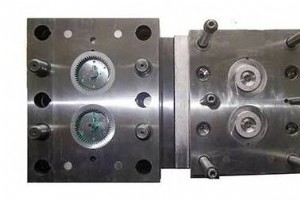
How Plastic Injection Mold Manufacturers Drive Innovation & Quality
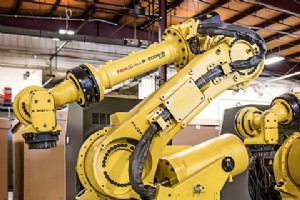
Enhance Production Quality: Fanuc Robots for Error‑Proof Cutting
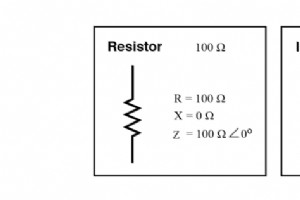
Understanding Resistance, Reactance, and Impedance in AC Circuits

Tunable‑Size Monodisperse Carbon Spheres Synthesized with Triblock Copolymer: Enhanced Capacitor Performance
