


Industrial manufacturing
Industrial Technology

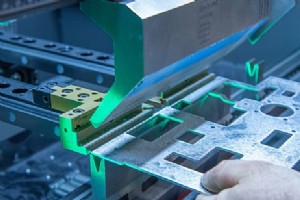
Take a piece of paper and try to fold just the middle inch of it to form a flap. You can’t do it because the rest of the paper wants to fold up, too. To do it, you need a way to ensure that only the one-inch width of paper can fold and leave the rest as a single, flat plane. But sheet m
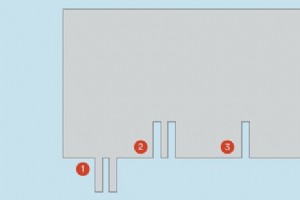
Notches and tabs are two of the most common features found in precision sheet metal parts, and it’s easy to see why. These features give you space so you can get tools into an area. Also, they help avoid space conflicts between parts or features, especially when incorporating parts toge

Sample of swirling effect from a nylon material with yellow colorant. Choosing a pre-compounded resin would have helped the customer avoid this issue. Basketball players who can’t miss a shot might say they’re in the zone. One psychologist described that phenomenon—finding flow—as
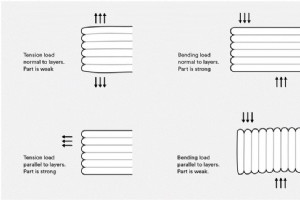
It may seem like a no-brainer to opt for the orientation that offers the minimum z-height, and thus the quickest build time. But, orienting solely for z-height may not always make the most sense in terms of your part requirements. There are a few other technical factors that come into p
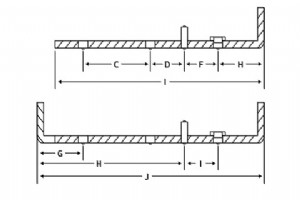
When choosing a manufacturer for your sheet metal parts, the term tolerance often comes up. Everyone wants their parts to be exact replicas of their models, but in truth, there always has to be some wiggle room in the definition of perfection. That variation is what we all call toleranc
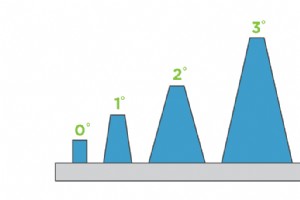
Usually, we like to write about best design practices to heed to help ensure your parts are perfection. In the spirit of all things spooky and Halloween-y, let’s cover some service line specific tips on “what not to do” to avoid downright scary bad parts. Having manufactured hundreds of
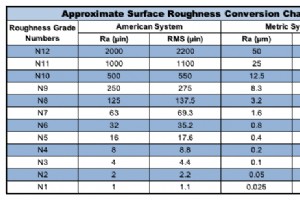
A Reference Tool for Metal Surface Finish Characteristics A metal surface finish chart is a reference material we at Metal Cutting sometimes use internally as part of our quality assurance process. (You can read more about our quality measures on the Quality Commitment page of our webs

How does the surface grinding process achieve parallelism and squareness? At its most basic, precision surface grinding is used to achieve two things: to make cubic shapes of metal square and parallel. Utilized for many applications, but typically fixtures, molds, and dies, surface grinding serv
Achieving Tight Tolerances for Roundness Requirements Specifying tolerances for the mission-critical features of a part is a crucial element of optimizing for manufacturability. When customers come to Metal Cutting Corporation with a request for a certain circularity tolerance on the small me
Making Sure Parts Fit and Work Together GD&T tolerances are an aspect of Geometric Dimensioning and Tolerancing (GD&T), a system of communicating how a part is to be produced. Typically, a series of 14 standard symbols are used to help guide the people who are making a part. Along
Saving Time and Cost in Small Metal Parts Inspection We often talk about how important inspections are to the manufacture of small metal parts, helping to ensure the quality of components that make up thousands, if not millions, of products. Yet, 100% inspection eats up significant time and c
It’s Round, It’s Straight, It’s 3D! An important element of optimizing for the manufacturability of small metal parts is the Geometric Dimensioning and Tolerancing (GD&T) standards that are used to communicate how parts should be manufactured. As part of our continuing explorati
What makes lapping and honing similar and yet so different? Honing and lapping are often mentioned in the same breath, even though the two are not the same process. In fact, when comparing honing and lapping in the world of precision metal parts, you might say the two are remarkably similar yet
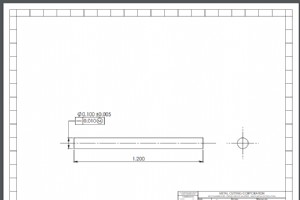
Where Qualitative Beats Quantitative At Metal Cutting Corporation, where every day we produce thousands of rods, tubes, and wires cut to length, straightness is a feature that we work with frequently. That’s because when we centerless grind, we get optimal results when the parts we grind are str
What Is Perpendicularity? Perpendicularity is one of the GD&T features sometimes indicated on engineering drawings. Represented by an upside-down “T” and called out in inches or in degrees, it generally refers to a GD&T tolerance that controls either: The perpendiculari
What Is Runout in GD&T? In the world of small metal parts manufacturing, the Geometric Dimensioning and Tolerancing (GD&T) system uses a combination of symbols and GD&T tolerances to provide insights into how to produce the features that are essential to a part’s form and function.
The Standards Are Either Simple and Obvious — or They’re Not Instrument calibration is a vital aspect of quality control, touching everything from the geometric parameters on drawing specifications to the methods used to measure and inspect precision metal parts. Yet, there are some cha
Celebrating 50 Years of Precision Manufacturing Metal Cutting Corporation is genuinely thrilled to say we have just passed a significant milestone in our company history. We turned 50! Our company was founded on December 7, 1967, and we are very proud to still be here and thriving in 2017. We are im
Metal Cutting Is Recertified for ISO 9001:2015 Standards Metal Cutting Corporation is pleased to announce we have once again been certified in the ISO 9001:2015 standards for quality management. This news comes on the heels of successfully completing the necessary independent recertification

More Than a Century of Innovation at Work Previously, we’ve talked a little about the National Institute of Standards and Technology (NIST) and how NIST traceable standards are an important part of our QMS standards. But NIST traceability is not just a cornerstone of our industry, setting the
Industrial Technology

Top Industries Reaping the Biggest Benefits from the Industrial Internet of Things (IIoT)
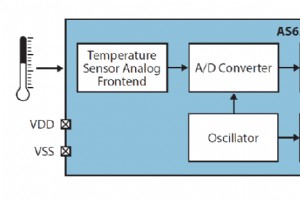
AMS Launches AS621x Series: Ultra‑Low‑Power, High‑Accuracy Temperature Sensors in a Tiny Package

Arevo Introduces Scotsman: A High-Performance 3D-Printed Carbon Fiber Electric Scooter
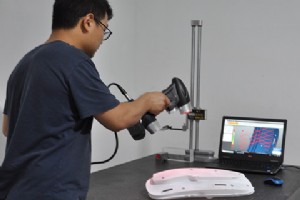
How Coordinate Measuring Machines (CMMs) Optimize Precision in Modern Manufacturing
