Industrial manufacturing
Industrial Technology

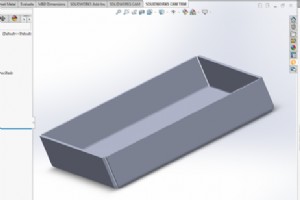
Design, quote, order, manufacture, and deliver. The process seems frictionless, but in today’s engineering economy this simple and efficient process is far from the norm. The missing part is the days or even weeks of downtime between each step. With a number of businesses measuring time
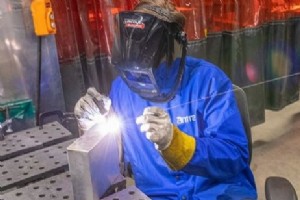
If you’re designing a part that requires you to fuse two pieces of sheet metal together, it’s time to think about welding vs. riveting. Knowing the strengths and drawbacks of each method will get you a stronger, longer lasting part. Welding: Advantages We all know that welding is cool to
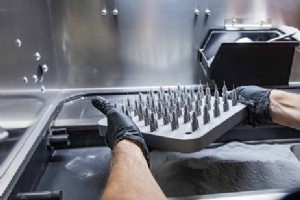
Metals and alloys can be suitable for medical applications, including those produced by Protolabs 3D printing process direct metal laser sintering (DMLS). The public health crisis brought on by the COVID-19 virus adds to the urgency of those designers and engineers who work on medic
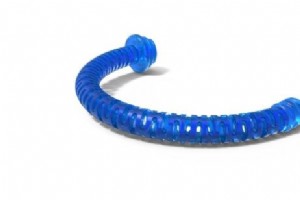
In the universe of manufacturing materials, elastomers are polymers characterized by weak intermolecular forces. This weakness is useful in that it allows the material to change shape when subjected to external force and then return to its original form when the force is no longer applie
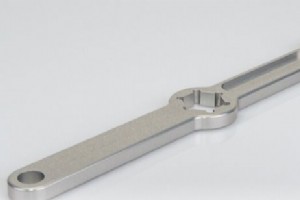
Anodizing and chromate plating are great ways to protect your aluminum or titanium machined or sheet metal parts from general wear and tear and corrosion. You can also protect steel, stainless steel, copper, and others, but aluminum and titanium are the most common materials. Beyond corr
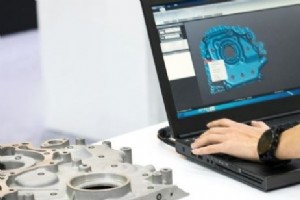
Digital manufacturing has significantly transformed thanks to the evolution of 3D design. Using 3D CAD technology offers multiple advantages, including richer design context, a much lower margin for error, and a much swifter route to manufacturing. Ultimately, great design is about optim

Did you know that living hinges are possible with 3D printing? Here are a few things areas to keep in mind when designing hinge functions so your part’s functionality and integrity remain intact. An SLS part with living hinge functionality. ProcessWe offer two processes for 3D print
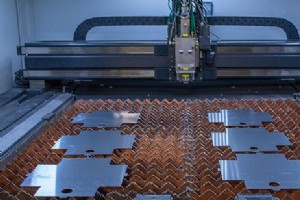
At one time, lasers were nothing more than science fiction dreams. In the last 60 years, we’ve transitioned from imaginary cosmic ray guns to harnessing the power of light strategically. Today, lasers are everywhere, in subtle surgical equipment, optical media readers, and in the brute-f
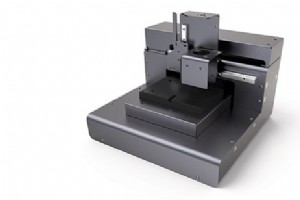
There’s a lot more to creating custom sheet metal parts than just cutting and bending a slab of metal. For each part you design, you have to consider the metal’s material qualities and the environment in which the part will be installed. Corrosion could destroy a part in short order if y
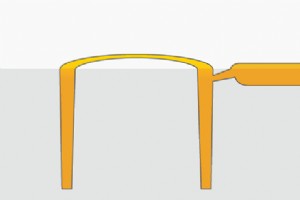
Tunnel gates, also known as pin or post gates, deliver resin to the mold cavity. They are machined at an angle and below the parting line. When designing parts for injection molding, key elements of the mold that you will need to work out are the gates, which control the flow of the

When designing injection-molded parts, you may need to apply finishing options after your parts are manufactured to improve mechanical properties, enhance surface finish, facilitate the assembly process, or further customize parts. Another benefit? You can streamline your supply chain an
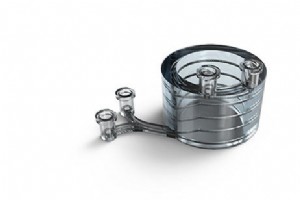
Stereolithography is capable of producing ultrafine features that are found in microfluidic designs. Manufacturing small volumes of microfluidic devices or a Lab-on-a-Chip, has traditionally been difficult using CNC machining or injection molding, but Protolabs offers microfluidic f
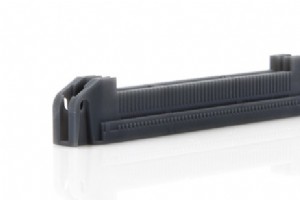
MicroFine Gray™ is an exclusive material developed at Protolabs in order to build small parts with ultrafine features. When building a part with 3D printing, the machine’s resolution can have a significant impact on the final part by determining the minimum feature size, surface fin
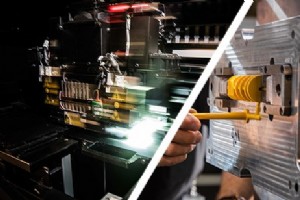
The precision and repeatability of industrial-grade 3D printing has established additive manufacturing as an effective and accurate process for functional prototyping. At the same time, plastic injection molding has long been a reliable and cost- and time-efficient way to produce parts f
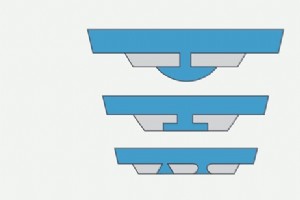
Overmolding is not a new manufacturing technology, but there is still some confusion about how to design for the two-part process. One of the largest areas to consider? Bonding. A number of materials can be used to overmold components together, but without a chemical bond or mechanical i
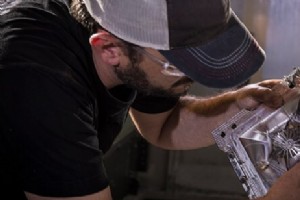
Aluminum molds are milled in rapid CNC machines. Conventional injection molding typically uses steel tooling capable of producing millions of parts, however, it often takes months to manufacture a mold and a capital investment of $50,000 or more. But what if production demands call
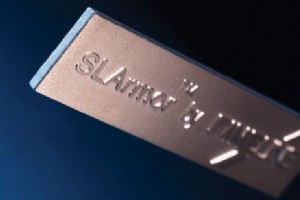
Industrial 3D printing creates functional plastic parts quickly, but often times the parts can benefit from secondary operations that improve on cosmetic appearance and functionality. SLArmor adds mechanical strength to 3D-printed parts. It uses DSM Somos Nanotool to nickel plate SL p
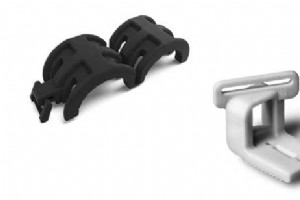
Multi Jet Fusion parts (left) will typically have improved surface finishes and mechanical properties compared to SLS parts (right). 3D printing’s capabilities continue to evolve with the introduction of HP’s all-new technology, Multi Jet Fusion. This additive manufacturing process
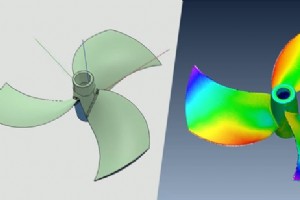
Product manufacturing information, or PMI, is critical to digital inspection reporting. PMI is any non-geometric data included within a 3D CAD file. Rather than relying on 2D drawings or digital documents to convey engineering or manufacturing data, it can all be embedded within the orig
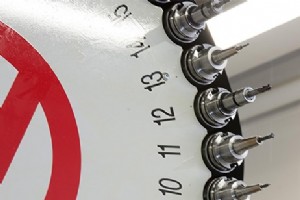
Similar to our injection molding service, CNC machining at Protolabs is a bit unconventional. In order to machine parts as fast as possible, we’ve developed automated processes to quote parts, analyze design manufacturability, and generate toolpaths. Additionally, our standardized toolse
Industrial Technology