Industrial manufacturing
Industrial Technology

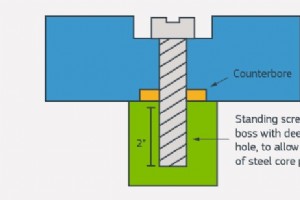
Boss features are commonly found in injection molding designs. They are used to aid in the assembly of molded parts by providing a channel for a screw. Designing plastic screw bosses is fairly straightforward but there are a few considerations to ensure a strong connection between parts
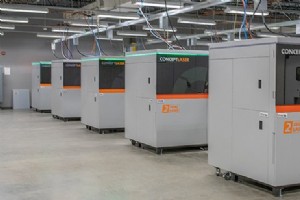
As product development speeds up, the design rules are changing. Nowhere is this more apparent than when at metal additive manufacturing. Direct metal laser sintering is a metal additive manufacturing technology with significant potential in medical and aerospace industries. But it requi

CNC machining is a subtractive manufacturing process that mills away at a block of solid plastic or metal. Most are familiar with machining, but what makes it unique at Protolabs? These are a few of the most common questions we receive about our rapid CNC machining service. These an
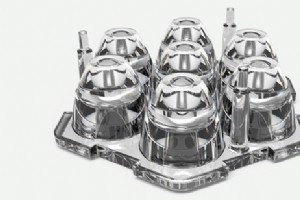
We offer many manufacturing processes and materials for prototype and production parts. But one process has a material that separates itself from the rest, optical liquid silicone rubber (OLSR). OLSR is an advanced material that has many properties that make it a preferred material
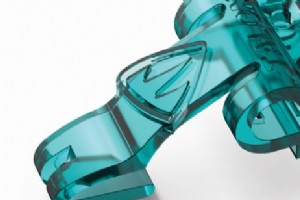
So, you’re designing a part that requires flexibility and you need to choose a material. You might first spring to your familiar list of thermoplastic elastomers, but don’t forget about thermoplastic polyurethane materials, commonly known as TPU. Depending on your application’s requireme

At Protolabs we offer dyeing and painting, which not only adds color to 3D-printed parts, but also improves surface finish quality. Once a 3D printing build is complete, there are a few steps we can take to improve the cosmetics and performance of the part. Our standard post-build p
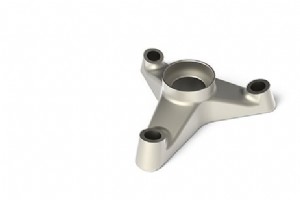
In addition to supporting more complex geometries, 5-axis indexed milling can also improve finishes on non-orthogonal surfaces. Conventional CNC machining consists of 3-dimensional processing controlled by side-side (X), front-back (Y), and up-down (Z) movements to remove material f
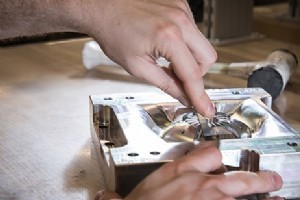
Deciding whether and when to invest in production tooling is no simple matter. For starters, there’s the initial investment cost, which in some cases might exceed that of a luxury sports car. Add to that the months of waiting, the risk of downstream design changes, associated rework cost

If your ultimate product development plan involves a move to injection molding, CNC machining offers a material selection conducive to a transition into increased molded quantities. Protolabs has more than 30 engineering-grade thermoplastic materials with various benefits. To illustrate
We offer two high-temperature thermoplastics: PEEK and PEI. Both high-performance materials can be machined and injection molded, and produce parts that can withstand extreme temperatures. PEEK PEEK parts contain excellent mechanical and chemical resistance during high-temperature applic
We’ve expanded our selection of liquid silicone rubber (LSR) materials, which have some distinct elastic and optical advantages over certain thermoplastics. In addition to three durometers of general-use Elastosil LSR, and medical- and optical-grade Dow Corning materials, we now ha
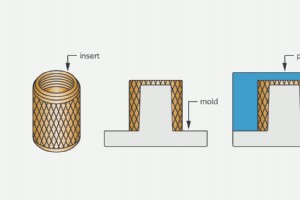
Low-volume injection molding isn’t limited to just simple parts. At Protolabs, we have the ability to manufacture complicated parts using side-actions, hand-loaded inserts, overmolding, and have now started beta testing our insert molding process. Instead of a mold that produces a f
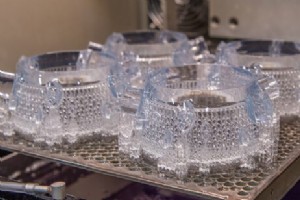
Zeroing in on which of our six 3D printing technologies you want to use is totally dependent on your project needs, part applications, material selection, and overall desired aesthetic. Two of our most popular 3D printing services, stereolithography (SLA) and selective laser sintering (
UL 94 is a plastics flammability standard released by the Underwriters Laboratories (USA). The standard classifies plastics according to how they burn in various orientations and part thicknesses from the lowest flame-retardant to most flame-retardant in six different classifications.
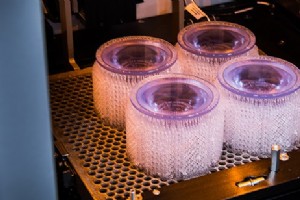
The term 3D printing encompasses several manufacturing technologies that build parts layer-by-layer. Each vary in the way they form plastic and metal parts and can differ in material selection, surface finish, durability, and manufacturing speed and cost. There are several types of 3D p
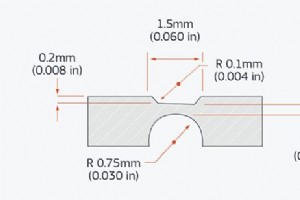
Designing plastic parts can be challenging enough, let alone designing a living hinge that can fold and flex repeatedly. Hinges are often found in plastic part design in order to reduce the number of components within an assembly or cut down manufacturing costs. A living hinge is
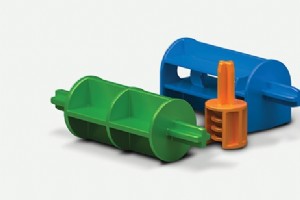
Shops may use different types of jigs for various tasks inside manufacturing equipment. Jigs or fixtures? The two terms are easy to confuse. You’ll often find them paired together and despite sharing similar functions, the two are not interchangeable. Let’s learn the subtle differe
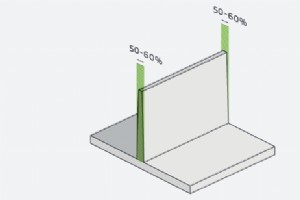
Thin walls are features we see often in designs, and they can present a range of issues for injection-molded parts (more on those later). The easiest way to avoid potential problems is to amend your design to beef up the walls or include minor adjustments. Due to part functionality re
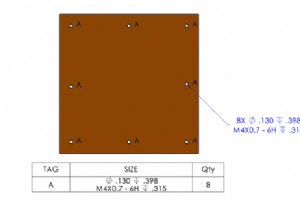
Looking for a better way to quickly move your sheet metal quotes through our systems and, in the process, improve your designs? We can help. When it comes to getting a fabricated sheet metal part that is consistent with a complex set of technical requirements, ensuring that a supplier

Electronic devices are everywhere, from smartphones and laptops for consumers to sophisticated medical devices, critical aircraft flight controls, as well as safety, performance, and entertainment systems in electronic and other vehicles. Despite their widely varying applications, man
Industrial Technology